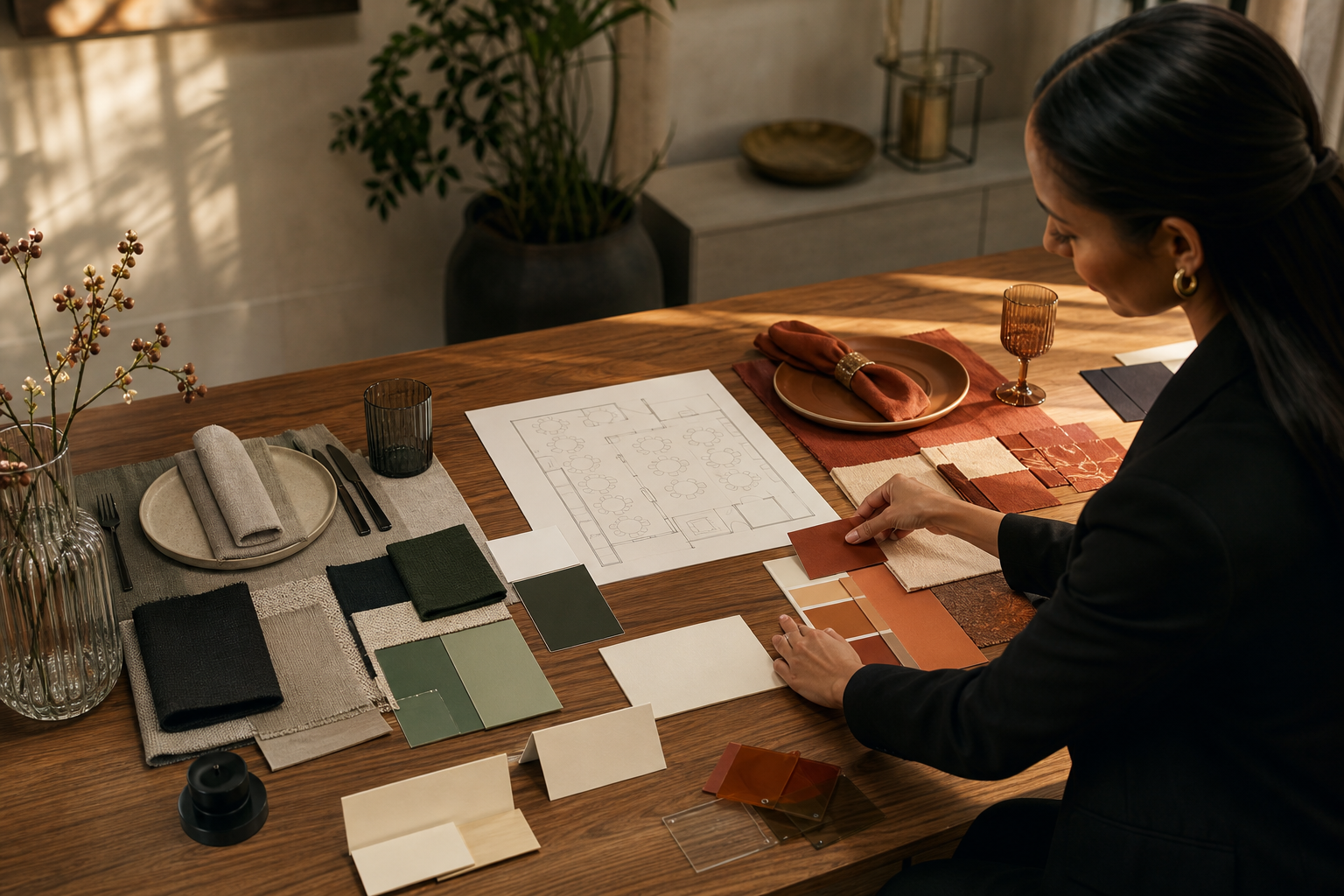
The strongest year-end function theme ideas work as an event brief, not only a decor reference. A useful theme helps the team make consistent choices about the venue, invitation, dress guidance, food, music, activities and formal programme. It should also be easy for guests to understand without requiring everyone to wear a costume or perform.
Choose the theme after the purpose, venue format and guest expectations are clear. Then decide which details will carry the idea and which parts of the event should stay simple.
Test year-end function theme ideas against four decisions
Before comparing colours or props, answer four practical questions.
- What must the function do? A thank-you evening, awards programme, relaxed team social and client-facing celebration need different levels of formality.
- What can the venue support? Look at the existing room character, indoor and outdoor areas, lighting controls, service routes, sound limits and setup window.
- What are guests being asked to do? Dress guidance, games, speeches and interactive activities all create different participation demands.
- Can every supplier interpret the same idea? The venue, caterer, entertainment, technical team and photographer should not be working from separate mood boards.
If the theme only works when every guest dresses up, every wall is covered and the programme runs perfectly, it is fragile. A stronger direction remains visible through a few deliberate choices even when the room is busy.
The Johannesburg year-end function ideas guide is the better starting point when the event format or participation level is still undecided.
Six theme directions with different participation levels
These are starting directions, not fixed packages. Adapt the language and supplier brief to the actual venue, audience and event purpose.
A studio awards night
Use a restrained formal palette, a deliberate arrival portrait, clear stage lighting and a programme built around recognition. Guests can follow normal formal or cocktail guidance rather than a costume brief. This direction suits a seated dinner or awards-led event where speeches and presentation cues are the main structure.
Keep the visual hierarchy clear: entrance, stage and one portrait position. Adding unrelated games, signs and themed props can weaken the room rather than enrich it.
An after-hours gallery
Treat the venue as a sequence of curated zones. Use focused lighting, generous space, a limited number of display moments and a calm music brief. Food can be served in smaller stages so guests move naturally instead of being called into one activity.
This direction asks little of the dress code and can suit a mixed-energy group. It depends on careful placement and lighting more than a large volume of decor.
A contemporary South African table
Build from a considered palette, locally relevant materials or food direction, and contributions that have been properly briefed and credited. Avoid turning cultures into generic props. The theme should be specific about the creative source and who has approved its use.
This can work as a formal dinner, a shared-table lunch or a relaxed reception. The common thread should be visible in the material choices, menu presentation, music direction and welcome rather than in borrowed symbols.
A food-market social
Make the food service part of the movement through the event. Several clear service points, casual seating and a simple entertainment layer can create a sociable format without a rigid dinner schedule.
The floor plan matters more than decorative volume. Check queue space, dietary communication, waste collection, weather fallback and the route between food, drinks and seating before approving the concept.
A decade, lightly applied
Choose one period and translate it through music, colour, lighting and a few recognisable details. Give guests optional dress guidance rather than making a full costume the price of entry. A single accessory suggestion or a colour direction is easier to follow than a complicated character brief.
This theme needs a firm editing rule. Mixing several decades, novelty props and unrelated activities quickly turns the event into a general retro party with no clear visual language.
A summer garden social
Use the actual landscape, shaded seating, evening lighting and a relaxed food format as the main ingredients. Keep an approved indoor fallback and decide who may activate it. The invitation should explain footwear, temperature or surface considerations that affect guest comfort.
Do not build the whole theme around weather behaving as expected. The indoor version should retain the same palette, music and service style so a move does not erase the idea.
Carry the theme through the whole event
A coherent theme does not mean placing a matching object everywhere. Give each event touchpoint one job.
| Touchpoint | Decision to make | What to avoid |
|---|---|---|
| Invitation | Name the tone, level of formality and any optional dress guidance | A mysterious label that leaves guests unsure what to wear |
| Arrival | Establish the theme through lighting, sound or one visual moment | A congested entrance filled with unrelated props |
| Room | Choose a limited palette and clear focal areas | Decorating service routes or reducing practical circulation |
| Food and drink | Align the service style and presentation with the format | Forcing a themed menu that ignores dietary needs or service timing |
| Music and entertainment | Support the energy required at each point in the programme | One continuous high-energy brief that competes with speeches or dinner |
| Activities | Give guests an obvious, low-pressure way to join | Requiring the whole room to participate at the same time |
| Portraits and keepsakes | Match the visual direction and output to the event | Adding a separate visual concept that looks disconnected from the room |
| Formal programme | Use theme language only where it helps recognition or storytelling | Turning every speech into a themed performance |
For the approval sequence, supplier handovers and final run sheet, use the year-end function planning checklist.
Write one supplier theme brief
Create a one-page brief after the internal team has chosen the direction. It should be concrete enough for each supplier to respond without guessing.
Include:
- the event purpose and audience;
- the approved theme name and one-sentence interpretation;
- three to five visual or material cues;
- the level of formality and guest dress guidance;
- the venue areas included in the brief;
- the arrival, formal, food-service and departure moments;
- what each supplier should apply the theme to;
- any cultural, brand, accessibility or venue constraints;
- what is deliberately excluded;
- the owner and deadline for each approval.
Ask suppliers to show how their proposal answers this brief. A list of available items is not the same as a recommendation for the event.
Decide how portraits and prints fit the theme
If the function includes a staffed portrait experience, agree whether it should follow the room closely or create one controlled variation. A studio awards night may call for a polished editorial direction. A light retro theme may use a period-inspired treatment while keeping the guest recognisable and the choice easy to understand.
The corporate AI photo booth service includes a staffed setup, AI-styled portraits, 4x6 prints and digital sharing. Brief the portrait direction, print treatment, booth position and operating window with the rest of the event rather than adding them after the room is designed.
Use a final theme approval test
Before artwork or supplier orders are approved, ask:
- Can a guest understand the tone from the invitation?
- Does the venue already support the idea, or does it require a difficult transformation?
- Can a guest enjoy the event without dressing up or joining every activity?
- Do food, music, lighting, entertainment and portraits feel like parts of the same event?
- Is there a workable fallback for weather, timing or a reduced setup window?
- Does one person own the final decision when two interpretations conflict?
The best year-end function theme ideas make these answers easier. Once the theme, venue and programme are agreed, share the brief with AI Booth to plan a staffed portrait experience that fits the event direction.