It fills the quiet parts of the day
Wedding timelines contain small gaps. The couple is away for photographs. Guests have finished dinner but speeches have not started. The dance floor is open, but not everybody wants to be first on it.
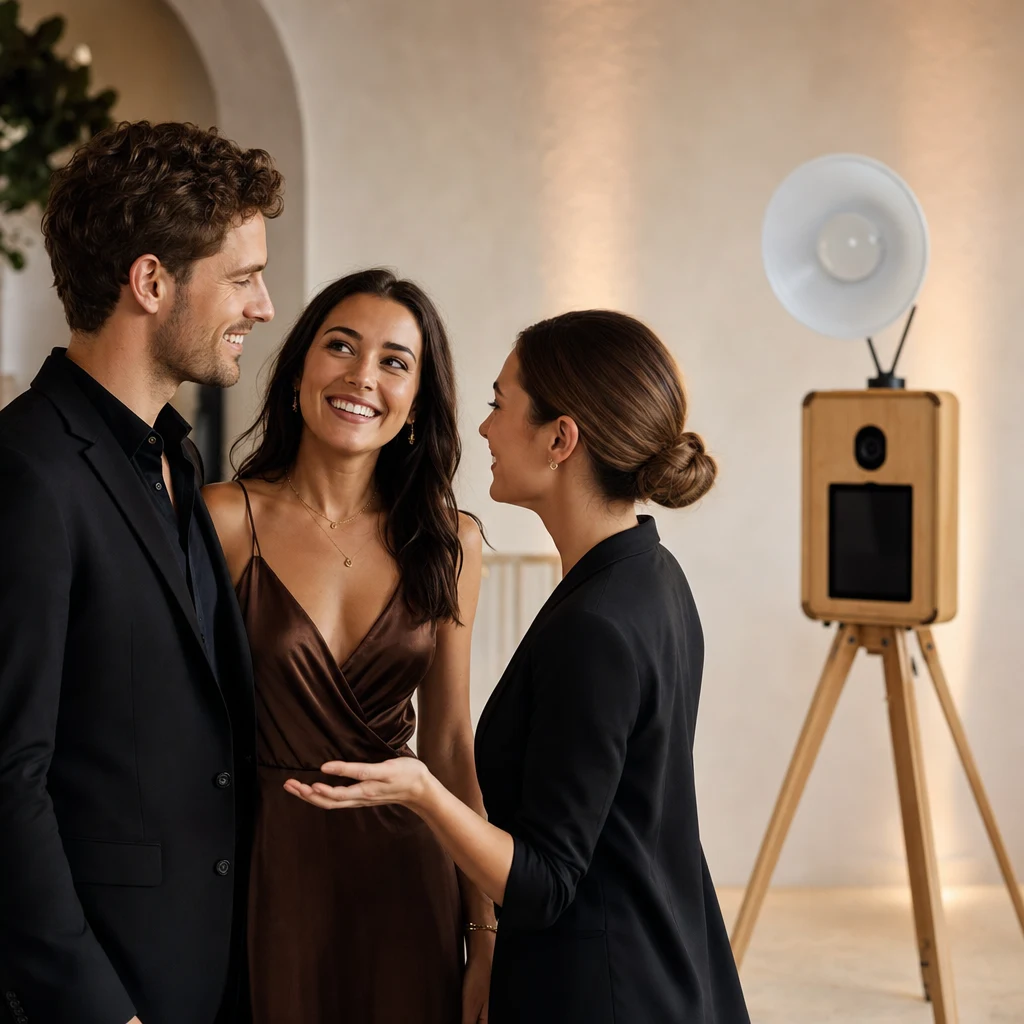
An AI photo booth gives those moments a centre without demanding everyone’s attention at once. Guests approach in their own time, choose a portrait direction and wait for the reveal with the people around them.
That makes it less like scheduled entertainment and more like a part of the room.
Johannesburg weddings often move across several spaces: ceremony lawn, cocktail courtyard, reception room and dance floor. The booth works when it follows that movement logically, not when it occupies the prettiest empty corner. Summer storms can collapse an outdoor plan quickly, while winter guests may head inside as soon as the sun drops. Agree on a sheltered fallback.
It gives guests a role
A wedding photographer is watching for real moments across the whole day. The booth does something different: it lets each guest deliberately make an image.
The result is not a substitute for a wedding photograph. It is a stylised portrait shaped by the guest’s choice. Someone may become a classic cinema character, step into a period portrait or try a polished editorial treatment. Friends compare results and often return to test a different look.
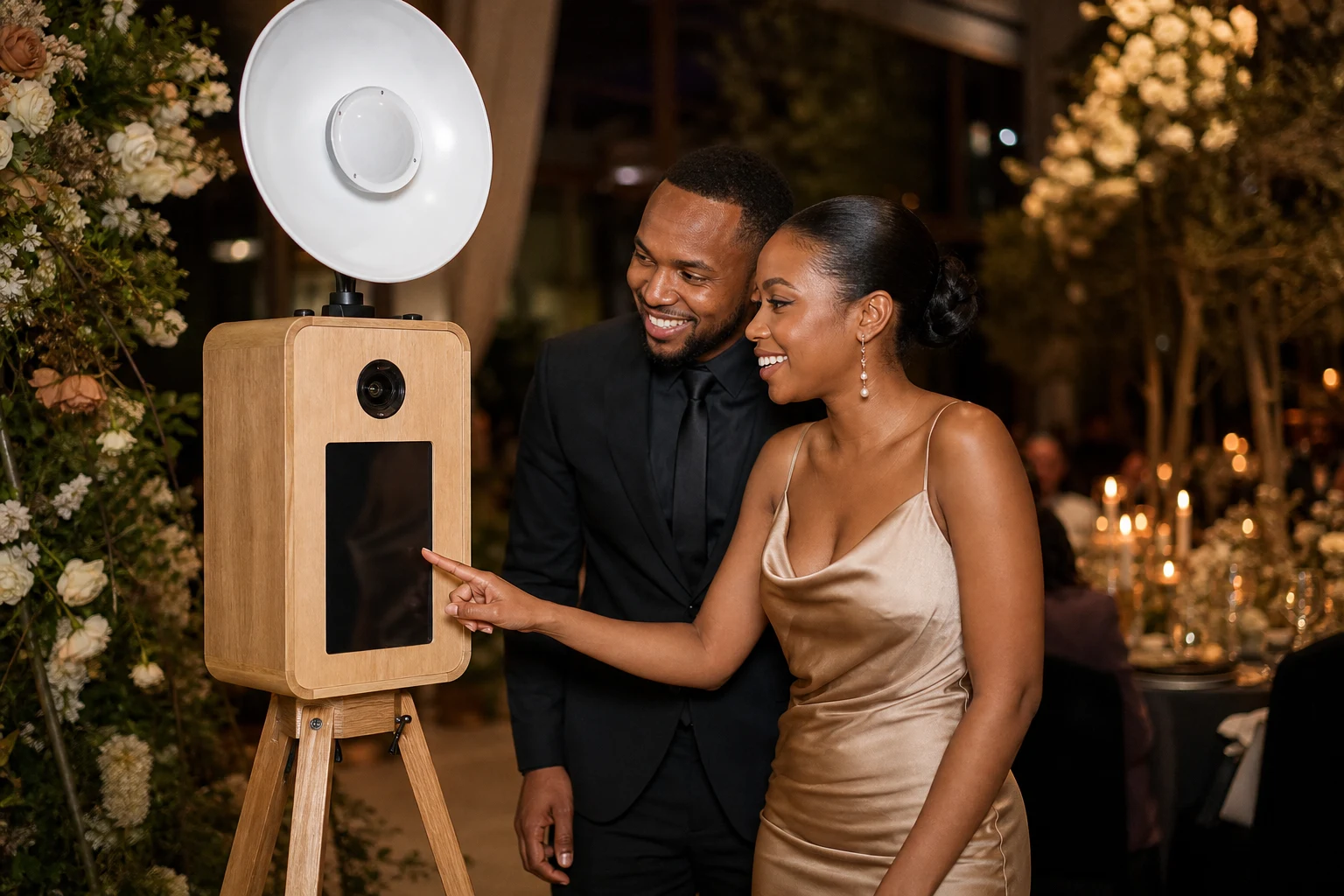
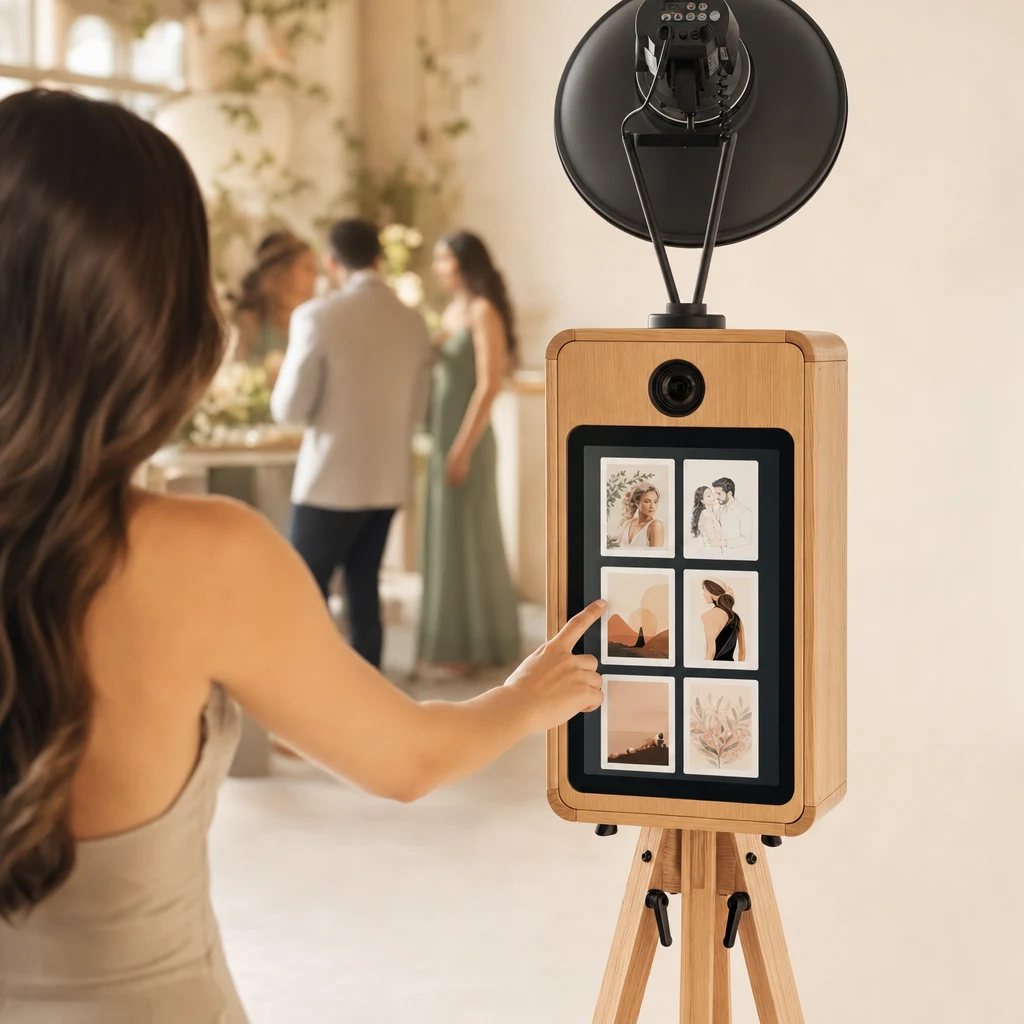
The guest journey is short: choose a style on the smaller front screen, face the camera above it, then move to the larger screen on the rear to review the transformation before collecting the agreed output. A host guides the process, which matters for older guests and anyone cautious about unfamiliar technology. Exact turnaround and group suitability depend on the event setup and are confirmed in the brief.
The reveal creates its own audience
People understand a normal camera before they see the output. AI transformation adds a short period of uncertainty. That is useful at an event because the reveal draws in people who were not part of the original session.
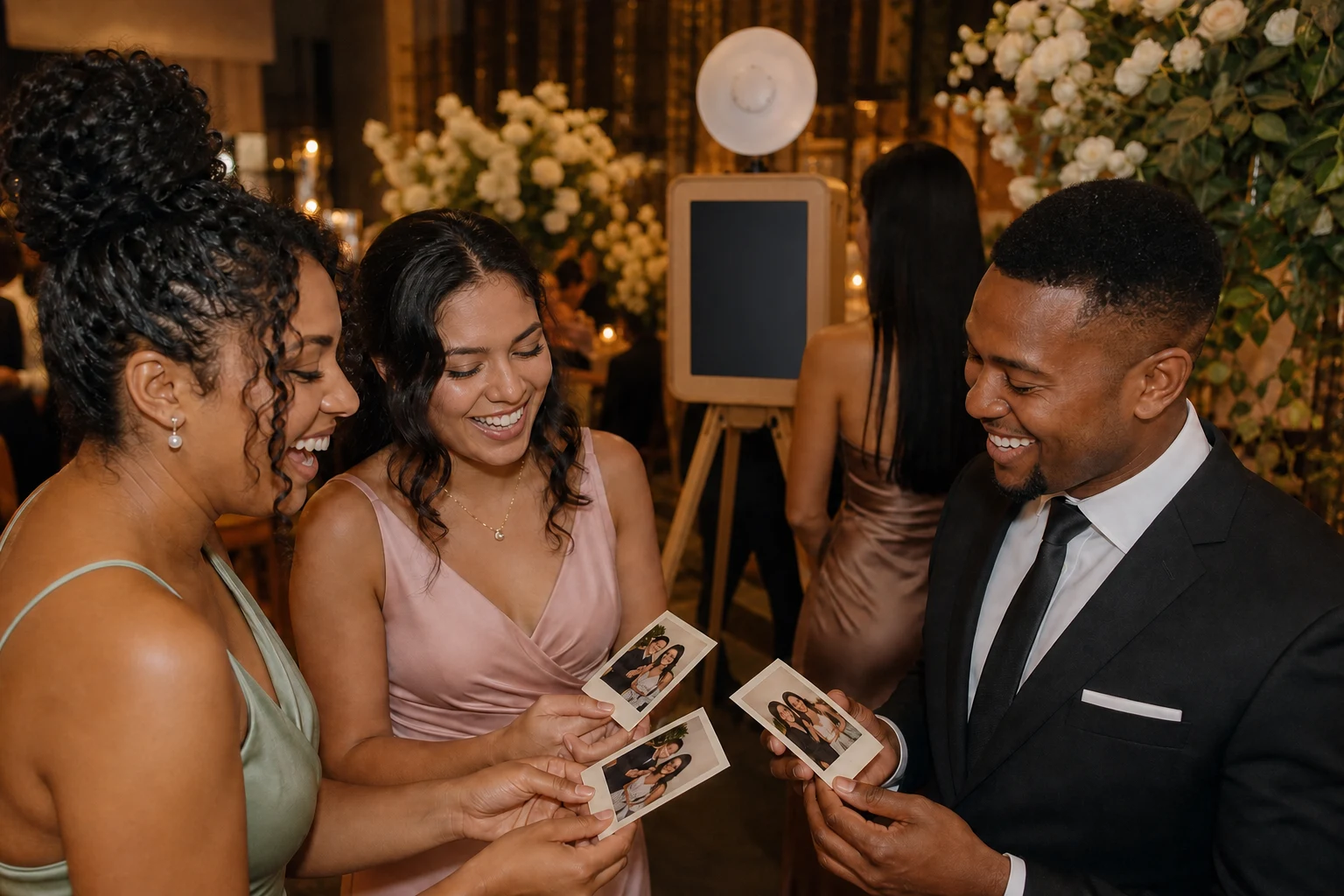
The larger rear screen is the correct place to view completed work; guests should not gather around the camera side as though it were the results display. A print in someone’s hand then carries the reveal into the rest of the room.
The strongest reveal does not need a public slideshow. A guest carrying a portrait back to the table creates a quieter recommendation, and this gives couples flexibility when a public display does not suit their privacy expectations.
Prints make the experience feel complete
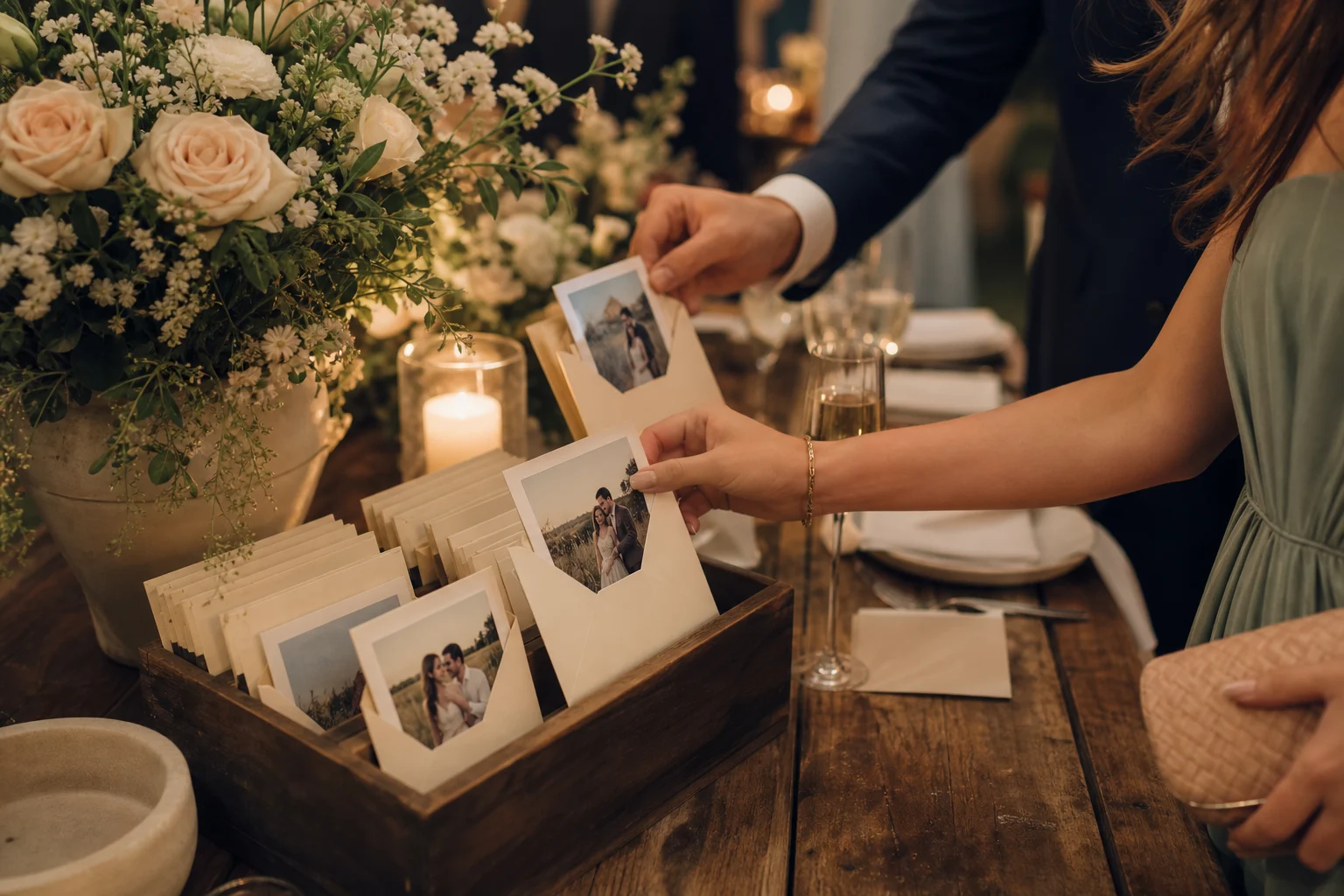
Digital delivery is convenient, but a physical portrait changes the way the result is treated. Guests carry it, show it to the table and take it home.
AI Booth uses a portrait-format 4x6 print, giving the transformed image space to breathe. It can sit beside a guest-book message or work as a wedding favour without needing another object. For more ideas, see wedding favours guests actually keep.
Timing and position still matter
Even a good activity can be wasted in the wrong place. The booth needs a visible, comfortable position with room for a small queue. It should not block the bar, kitchen route or entrance to the dance floor.
Opening it during speeches is rarely useful. Cocktail hour and the first movement after formalities are more reliable. The guide to choosing the opening time explains the trade-offs.
| Wedding moment | Likely fit | Planning note |
|---|---|---|
| Couple away for photographs | Strong | Keep it near cocktails and under weather cover |
| Dinner service | Weak | Guests and venue staff need clear routes |
| Speeches | Weak | Attention belongs on the speaker |
| After first dance | Strong | Avoid blocking the dance floor |
| Late party | Mixed | Check transport departures and visibility |
Accessibility belongs in the plan. Reserve a step-free approach and room for a guest using a mobility aid to participate without standing in the queue. Keep the booth away from the loudest speaker edge so guests can hear the host. The space-planning guide helps when reviewing the venue drawing.
The simplest version is usually the strongest
A wedding booth does not need twenty styles, a table of props and an elaborate set. A short menu that fits the celebration helps guests choose quickly and keeps the gallery coherent.
The host handles the screen, queue and prints. The couple only needs to agree on timing, access and the creative direction before the day.
Before final approval, settle the style menu, print treatment, venue position, operating window, weather fallback and event-specific digital delivery. Commercial terms and privacy arrangements should accompany the quote or event brief rather than being assumed from an article.
An AI portrait booth is not right for every wedding. Couples wanting large group photographs, traditional strips or an entirely untransformed record may prefer a conventional booth; the comparison explains the difference. It should complement the photographer and run sheet, not compete with either.
For packages and availability, visit AI photo booth hire for weddings.