Make the exchange explicit
Event engagement ideas are strongest when the guest gets a real benefit and the brand gets a meaningful signal. That might be a helpful demonstration, an entertaining portrait, a personalised output or a conversation with the right expert.
If the value is only “give us your details”, the interaction has begun in the wrong place.
Start with one job
Choose the priority: product understanding, consideration, content creation, sales conversations or opt-in. Trying to achieve all of them in one small activation makes the brief unfocused.
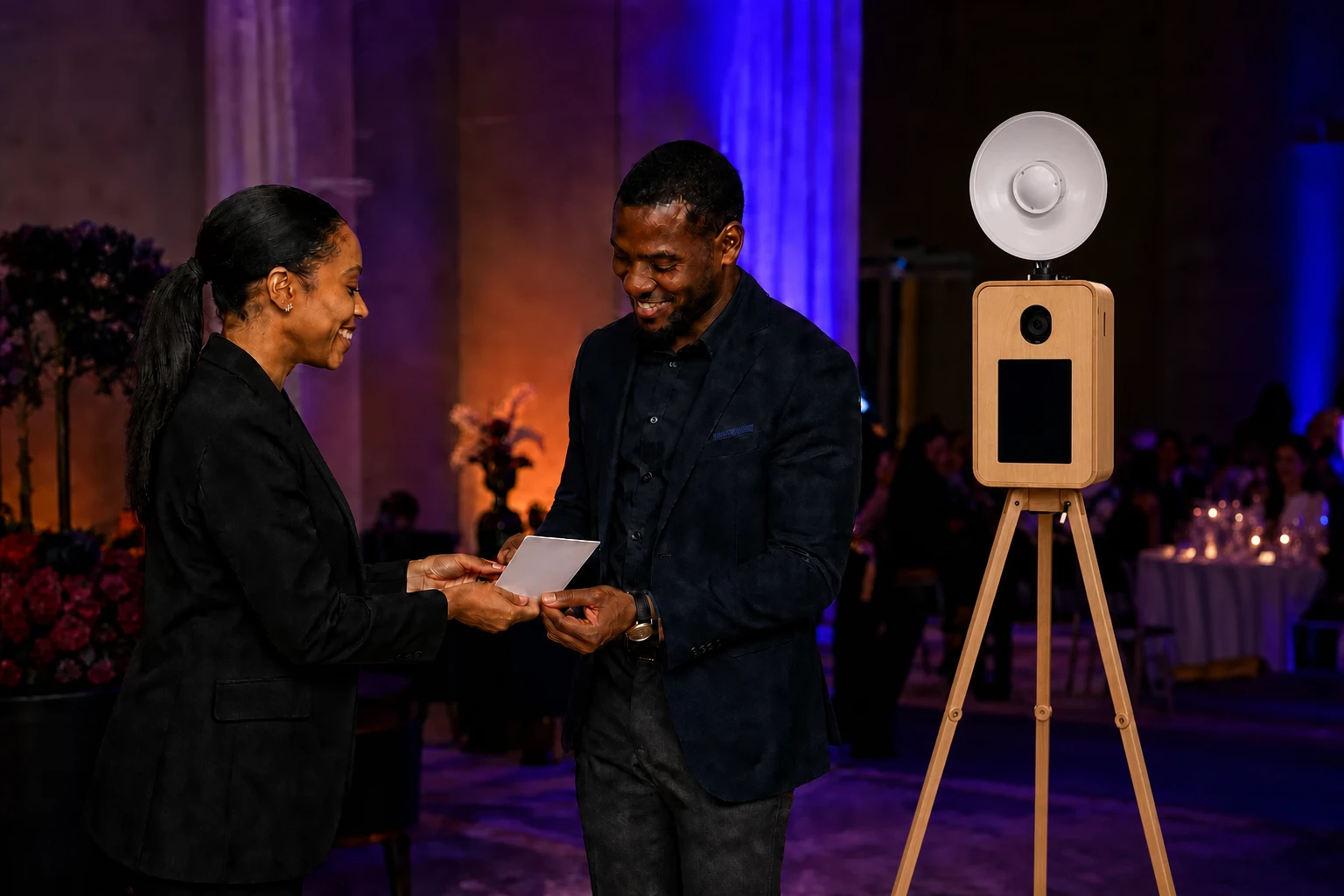
Once the job is clear, decide how a guest enters, what they do, what they receive and what happens next. A corporate AI photo activation can fit a content or campaign-world objective; it is not automatically the right answer for product education.
Let staff concentrate on people
The physical setup should help the team see who is interested and start a conversation without having to untangle a crowd. Keep instructions short. Keep any form after the guest has completed the experience. Give staff a simple handoff rule for people who want a follow-up.
Decide the data position early
Images, email addresses and campaign sharing require a clear purpose and handling plan. The privacy and consent article covers the questions to resolve before launch. The event team should never have to invent consent wording on the floor.
Review the outcome while it is fresh
Within a week, compare what you expected with what happened: where people stopped, what they asked, which output they kept and whether the next-step process worked. That review turns an event idea into a better next campaign.
Keep reporting close to the brief
Use a short event scorecard with the original objective, total interactions, useful conversations, opted-in next steps and practical observations. Include what staff heard repeatedly. That qualitative note often explains the numbers more clearly than a large post-event slide deck.