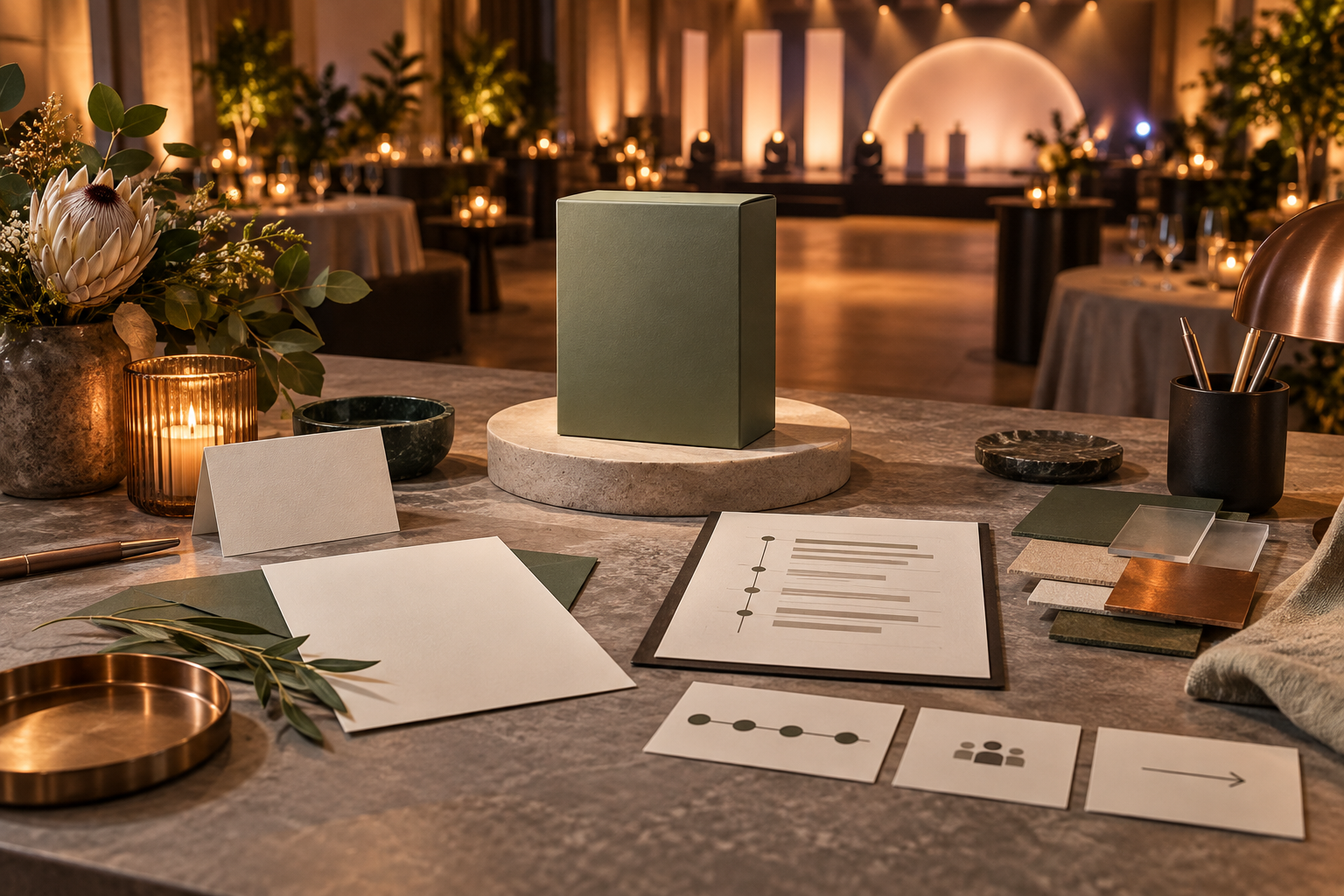
Good product launch party ideas begin with the product, not with a decoration package. Decide what guests should understand, feel or do, then let that decision shape the reveal, room, interaction, content capture and next step.
This guide is for brand and event teams planning a launch party that needs energy without letting the party become the whole story. For a broader launch-event framework, start with product launch event ideas in Johannesburg. The more specific decision here is how to make the product the organising principle of the evening.
Start with the product story, not the party theme
Before collecting mood boards, complete this sentence:
“By the end of the party, the right guests should understand, feel or do ______ because of ______.”
The first blank keeps the event focused on a useful audience response. The second names the product truth that the party needs to make tangible. A launch can be polished and social while still having a clear job.
| Launch job | Party direction to explore | Decision to make before production |
|---|---|---|
| Explain a new category or benefit | A concise demonstration with a guided conversation | Which part needs to be seen, tried or explained? |
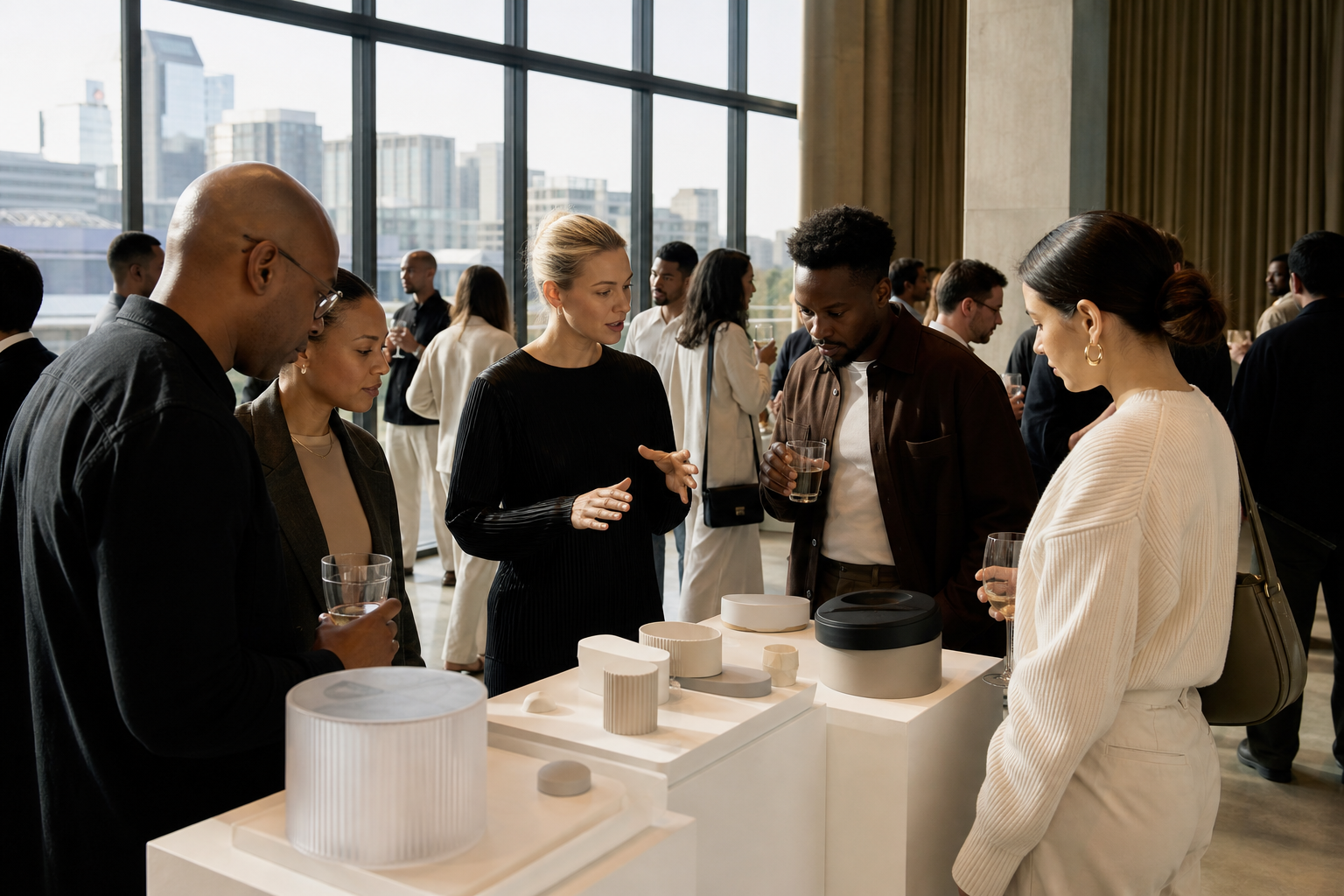
| Make a physical product tangible | A close-up product moment with a deliberate handling or testing path | Who may touch it, and who answers detailed questions? |
| Introduce a new visual world | A consistent setting, material palette and reveal language | Which creative cues belong to the product rather than the décor? |
| Open useful conversations | Small hosted discussion points around the reveal | Who should speak with whom, and what should happen next? |
| Create approved launch content | One camera-ready moment that guests can understand quickly | What will be captured, who approves it and where may it be used? |
These are planning directions, not fixed packages. The strongest option is the one that makes the product easier to remember without asking the room to decode an unrelated theme.
Use the reveal as the spine of the evening
A product launch party becomes easier to follow when the energy builds towards one clear reveal rather than several competing peaks. A useful sequence is:
- Orient guests on arrival. Give people enough context to understand why they are there and what they can explore.
- Build curiosity without hiding the point. Use a visual cue, a short host introduction or a guided prompt to frame the product question.
- Make the reveal easy to see and hear. Protect the sightline, the explanation and the person responsible for answering questions.
- Open a practical interaction. Let guests try, compare, ask, personalise or discuss something that follows naturally from the reveal.
- Give the evening a next step. Point people towards the agreed product page, demonstration, conversation, asset or follow-up owner.
The party can still feel generous and social. The running order simply makes sure that food, music, networking and content moments support the product instead of competing with it.
Product launch party ideas by the behaviour you need
Let guests see the product in use
Choose a live demonstration or guided experience when the product is easier to understand through action. Keep the demonstration narrow enough to follow in a social room. A short, repeatable explanation usually serves more people than a long technical presentation that only works for the first group.
Plan the handoff before inviting people to participate. Name the person who can answer technical or commercial questions, and decide where a guest goes if they need a deeper conversation. The launch party should make that next conversation easier, not force every guest into the same sales path.
Turn the product story into an environment
An immersive setting works when the visual world explains something about the product: its material, use, origin, mood or point of view. Carry one or two strong cues across the invitation, arrival, reveal, food, music, display and take-home piece.
Avoid building a generic “wow” environment around a product that still needs explaining. If the room is memorable but guests cannot repeat the product’s useful difference afterwards, the creative direction has taken over.
Give guests a choice that changes the experience
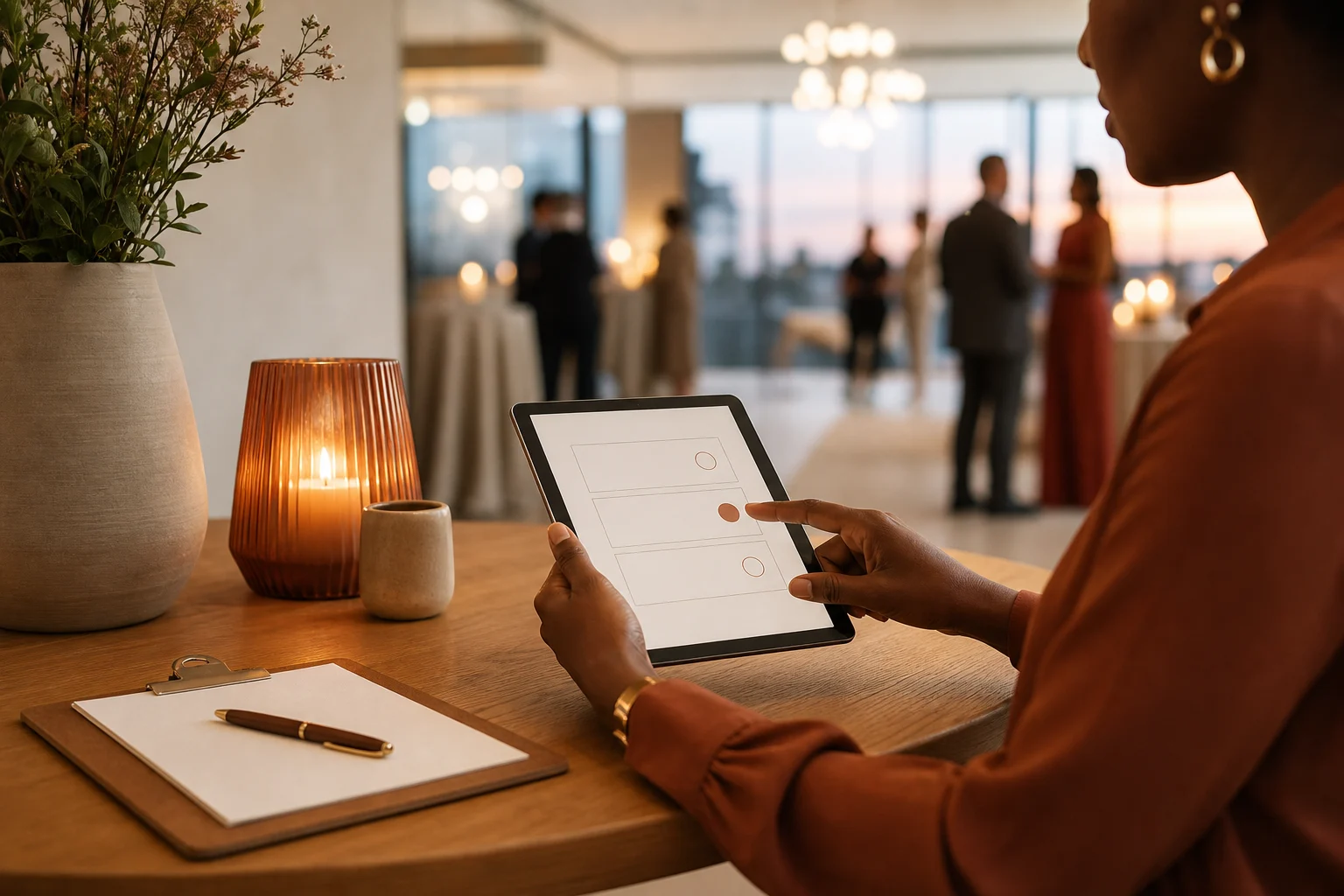
Choice can make a launch feel personal, but it should have a reason. Guests might choose between two ways to explore a product, select the version most relevant to them or create an output connected to the campaign world. Keep the menu short enough to understand without a staff member giving a long speech.
If the interaction creates a queue, decide where people wait, what they can learn while waiting and when the line closes. A visible result helps people decide whether the experience is for them, but it should not block the reveal, catering or the route to a useful conversation.
Make the keepsake part of the product story
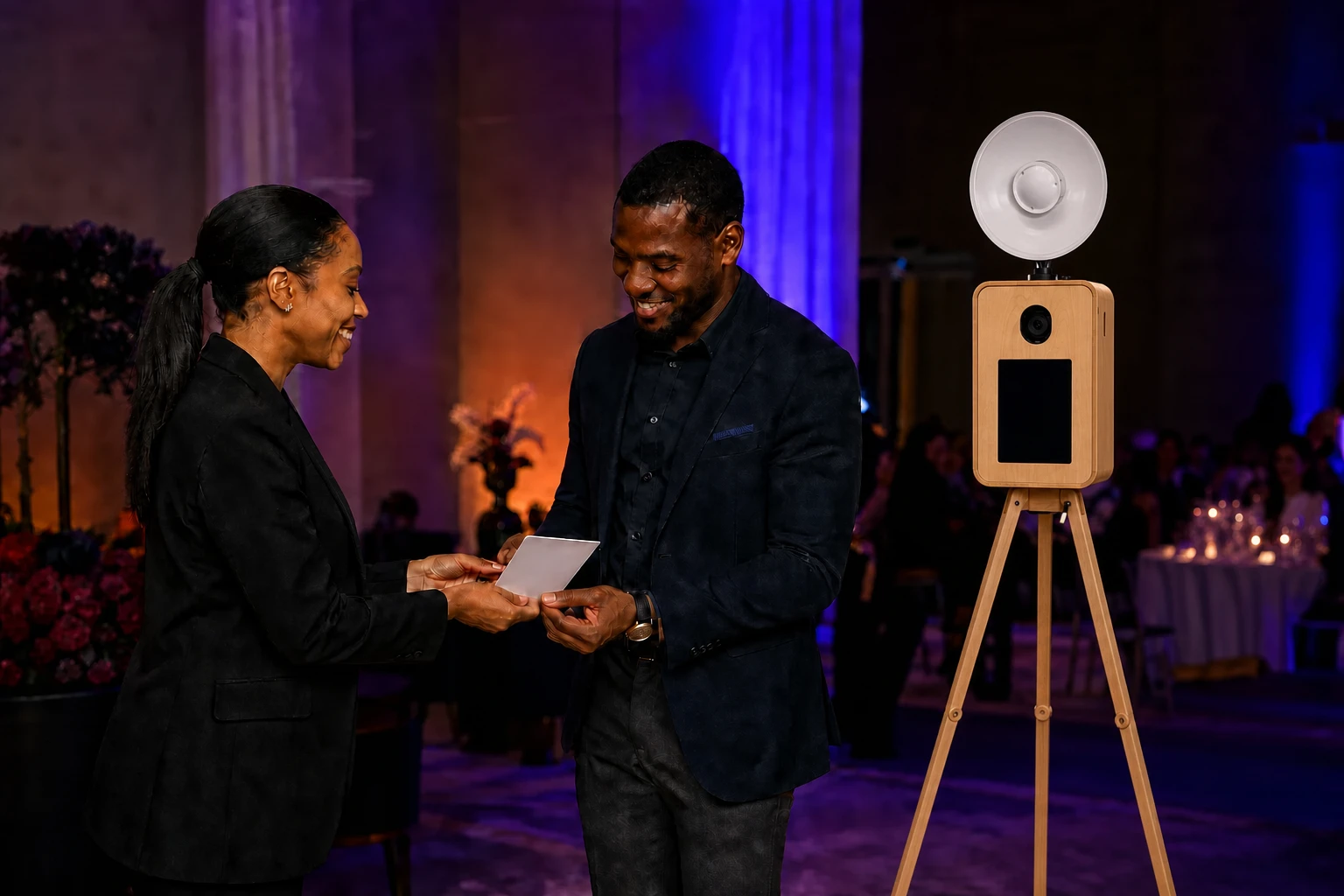
A take-home item works harder when it reminds guests of the product rather than only carrying the logo. That could be an approved sample, a considered printed piece, a useful follow-up resource or a personal image connected to the visual world.
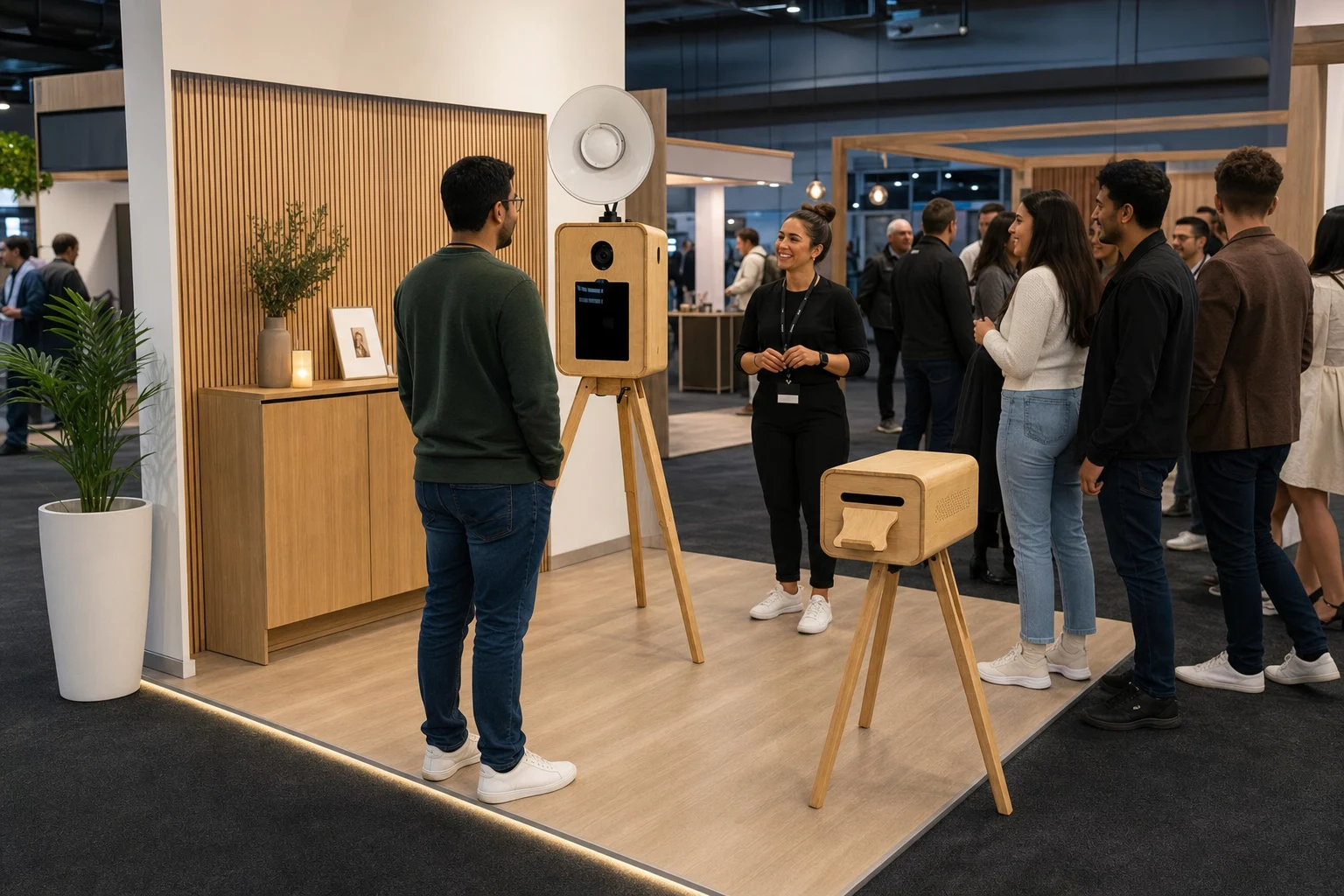
An AI portrait activation can fit when the product has a strong visual idea and a personal output helps guests remember it. In the configurable AI Booth flow, guests can choose an available portrait style on the portrait-oriented front screen, face the front camera for the photograph and review the completed result on the larger rear screen. A 4x6 print and configured digital delivery are booking-dependent, so confirm the exact style, operating window and agreed output in the brief. The AI photo booth brand activation service explains the commercial route, while the expo and product launch planning guide covers the different traffic pressures of a launch and an expo.
Treat capture and consent as separate workstreams
Product launches often involve photographs, video, guest details, social content or post-event reporting. Those are not one decision.
Write down what the guest receives as part of the core experience, what the organiser wants to capture, whether a public or private delivery route is involved, and whether any future marketing permission is optional. Give each decision an owner. The AI activation privacy and consent guide is a planning resource for those questions, not a substitute for the organiser’s legal or information-governance advice.
Separating the workstreams also improves the party. Guests can understand the value of joining before they are asked for anything extra, and the event team is less likely to improvise wording or data handling on the floor.
Build the follow-up before the invitations go out
The follow-up should be a continuation of the launch idea, not a generic “thanks for coming” message. Choose one primary route for each audience group:
- a product demonstration or sales conversation;
- a product page or approved information pack;
- a private digital asset or event recap;
- a sampling, trial or registration step; or
- a partner, press or internal handoff.
Name the owner, the approved content and the point at which the handoff happens. If the launch needs lead capture, decide what information is genuinely necessary and how it connects to the promised next step. Do not count a scan, form completion or social post as a success measure until the responsible team has defined what it means and how it will be recorded.
Turn the idea into a one-page supplier brief
Once the product-led direction is approved, give every supplier the same short source of truth. Include:
- Product story: the useful difference or feeling the evening must make clearer.
- Audience: who is attending, what they already know and what each group should do next.
- Party structure: arrival, reveal, interaction, formal moments, networking and close.
- Guest role: what people may see, try, make, receive or discuss, and what remains optional.
- Room reality: venue access, floor plan, sightlines, sound, power, connectivity and queue position to be confirmed against the actual event site.
- Creative inputs: approved colours, materials, wording, product assets and anything suppliers must not invent.
- Capture and consent: photography, video, portrait delivery, data fields, permissions and the named approver.
- Outputs and follow-up: print or digital requirements, handoff route, reporting fields and the owner after the event.
This brief makes it easier to remove a visually attractive idea that does not serve the product. It also gives the venue, production, creative, content and activation teams one decision to protect.
Final checklist for a product-led launch party
Before the concept is locked, ask:
- Can the product story be explained in one sentence without the mood board?
- Does the reveal have a protected place in the running order?
- Is there one clear guest interaction, with a visible benefit and a practical queue plan?
- Does the room help people understand the product rather than only photograph well?
- Are demonstrations, claims and responses approved by the right product owner?
- Are capture, delivery, public use and marketing consent clearly separated?
- Does the take-home output reinforce the product story?
- Does every supplier know who approves changes and owns the follow-up?
The best product launch party ideas leave guests with a clear memory of the product and a natural next step. If you want to discuss a hosted portrait experience as one part of that plan, start the AI Booth event conversation with the product story, audience and proposed party window.