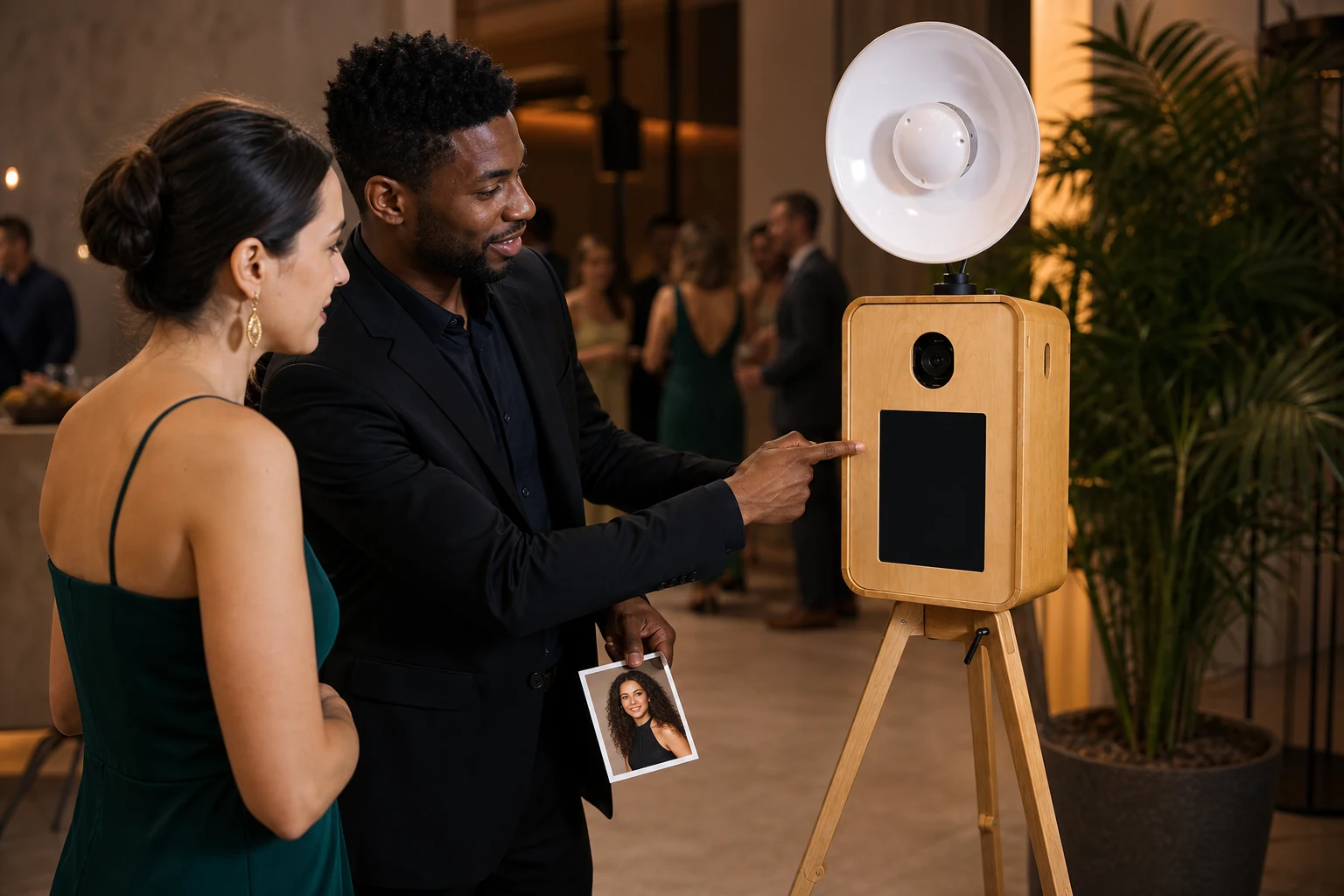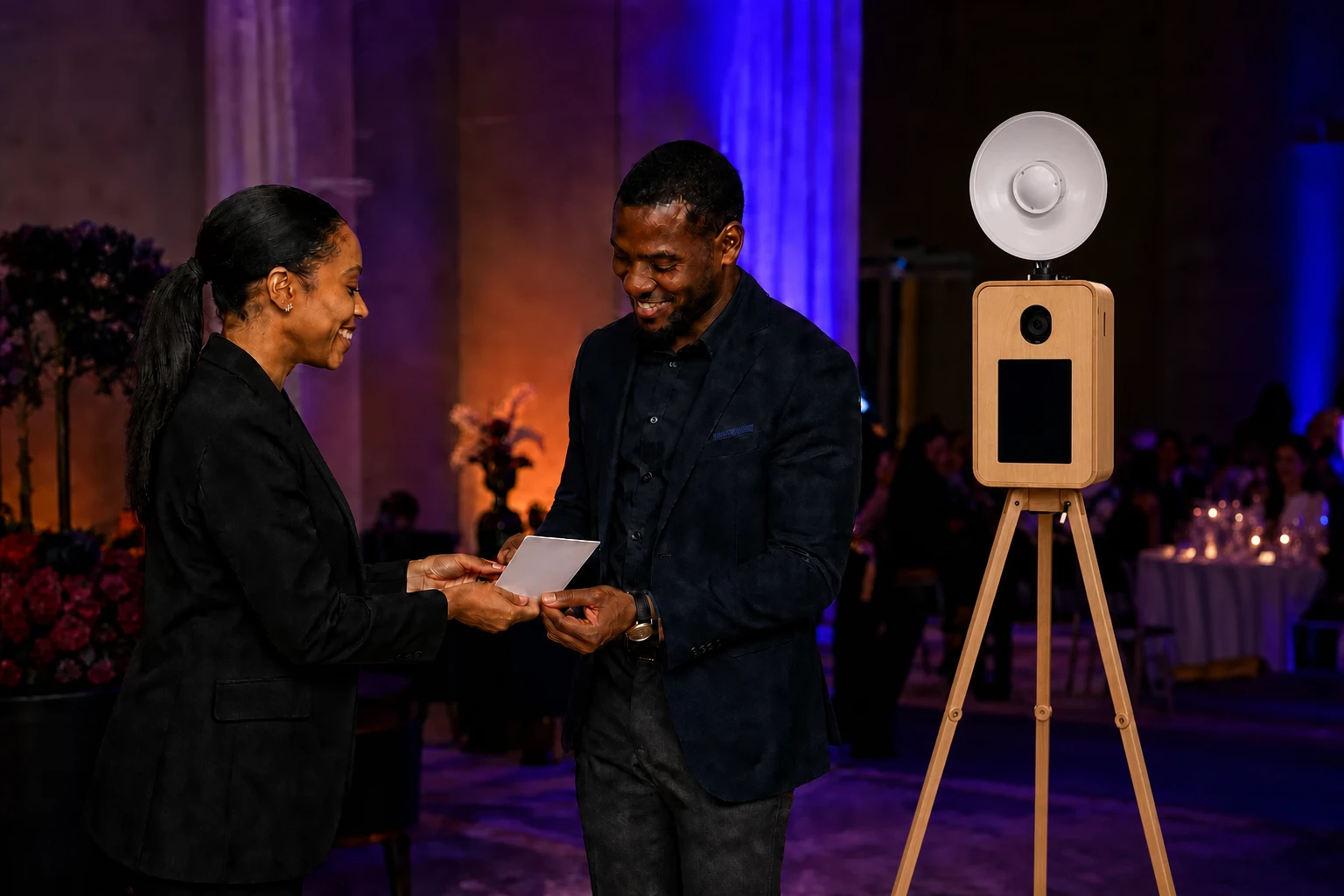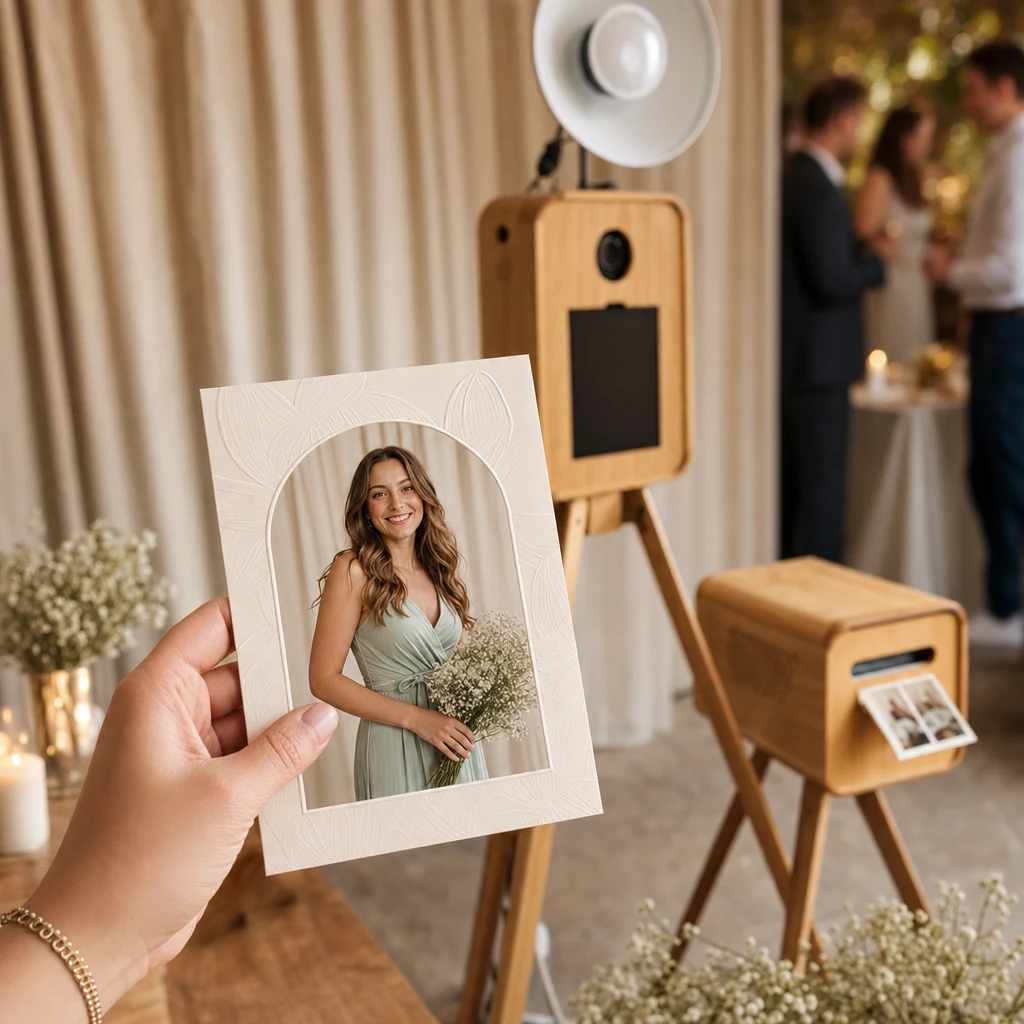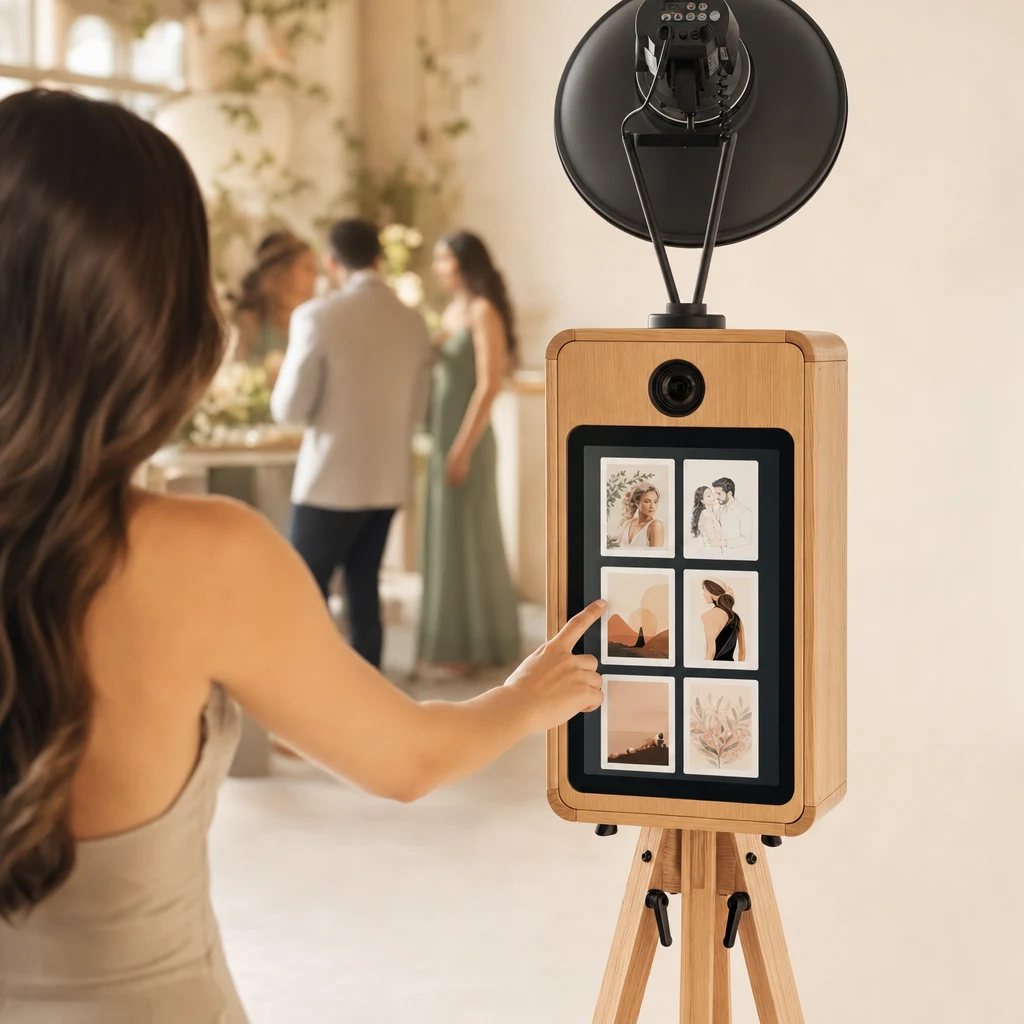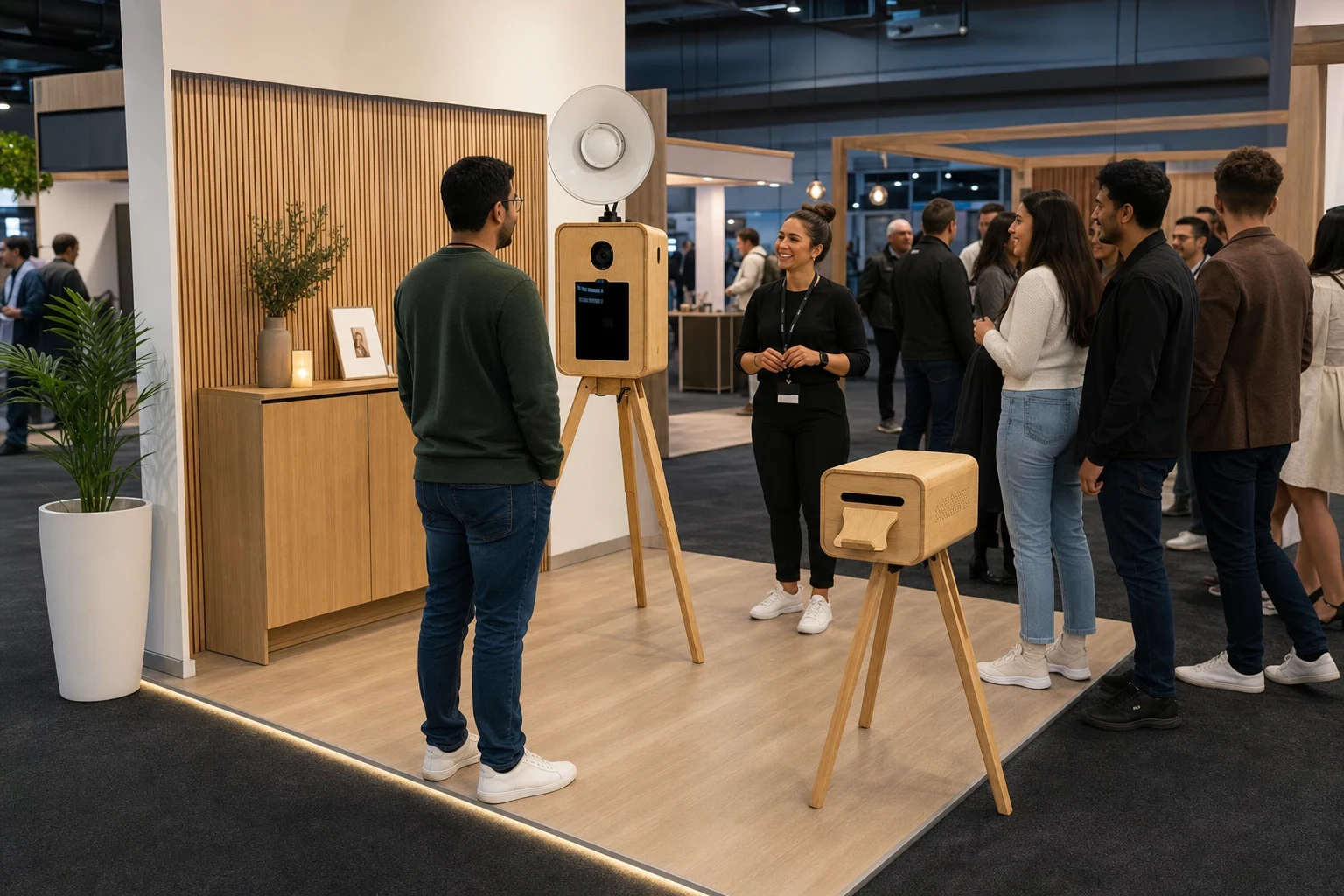
An expo and a product launch may use the same oak AI portrait booth, but they are not the same production job. An expo has passing traffic, neighbouring exhibitors and repeated peaks. A launch has a defined programme, invited guests and a moment the brand cannot afford to distract from.
Expo planning: win attention from the aisle
An expo visitor makes a stop-or-walk decision in seconds. The offer should be understandable through a visible finished portrait, a short line from the host and a small menu of clearly different styles. If the concept needs a paragraph before it becomes interesting, it will struggle on a busy floor.
Place the experience where people can see it without the queue crossing a shared aisle or blocking another exhibitor. The booth, guest position and collection point should form one deliberate route inside or beside the stand. Confirm the exact footprint with the stand designer and venue; do not rely on a rough floor-plan icon.
Expo handoff checklist
- Confirm exhibitor access, loading rules, stand completion and power availability.
- Decide whether the activation opens with the show or only during selected traffic periods.
- Give the host one approved explanation and a contact for brand questions.
- Display real output examples at a size that can be read from the aisle.
- Agree queue boundaries, collection position and how the line closes before show shutdown.
- Keep portrait delivery separate from optional lead capture or competition entry.
- Confirm what reporting is genuinely available from the chosen setup.
The eight-hour package at R10,500 is available for longer events, but the right operating plan still depends on show hours, access and expected peaks. A full-day booking is not a substitute for capacity planning. Map likely pressure around opening, tea and lunch breaks, conference session changes and the final hour.
Product launch planning: protect the reveal
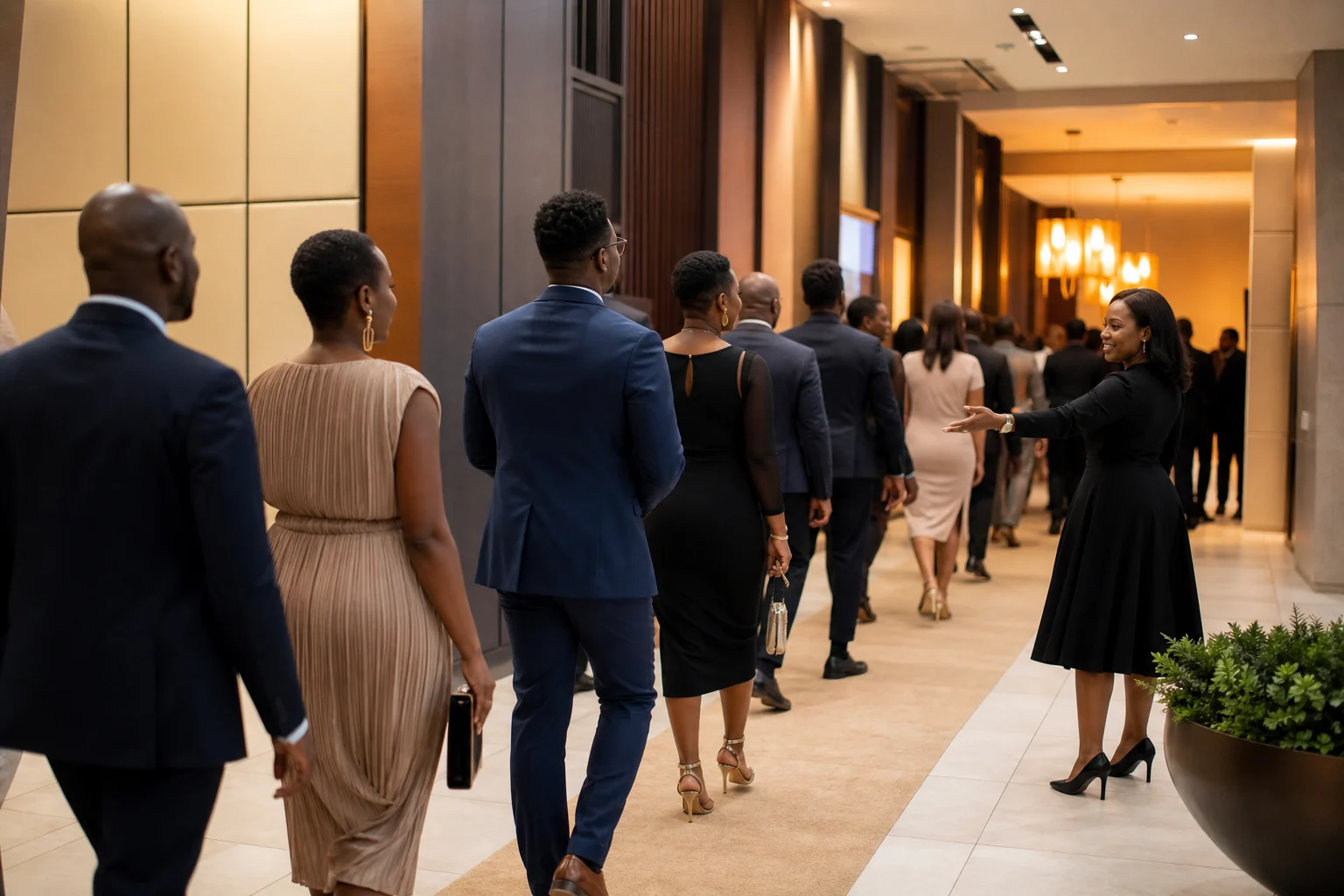
A launch audience usually arrives in a tighter wave and follows a shared programme. That creates an opportunity for a more specific portrait direction, but also a risk: a popular activation can pull attention away from the presentation, product demonstration or media moment.
Choose its place in the run sheet deliberately. Arrivals may work when the experience helps guests settle in. A post-presentation social window often works when the product reveal must remain the focus. Avoid opening the queue during speeches unless that is an intentional part of the event design.
Launch handoff checklist
- Identify the non-negotiable reveal, speech and media windows.
- Agree whether portraits open before, after or on both sides of the formal programme.
- Test styles against launch wardrobe, lighting and the campaign’s approved visual world.
- Proof the 4 x 6 inch print and any digital layout before event day.
- Decide how VIP, media and general guest flows will meet without creating awkward priority disputes.
- Name the producer who may approve a live operational change.
- Confirm post-event file, privacy and reporting handoffs in writing.
Make the product connection more than a logo
The strongest creative route places the guest inside the campaign idea. A travel launch might use destination-led portrait worlds; a technology product could use a considered future-facing art direction; a heritage brand might work with a period aesthetic. The concept should still render the guest recognisably and respectfully.
Use branding as a signature on the final output. The branded print guide covers proofing, glare and layout. Overloading the portrait with claims, legal copy and several calls to action makes it feel like a flyer rather than something worth keeping.
Treat data as its own workstream
Receiving a portrait and consenting to marketing are different actions. If the campaign needs lead capture, the brand’s responsible team should approve the wording, purpose, access and retention before launch. Children, public galleries and social reposting need specific decisions rather than assumptions. Use the AI activation privacy checklist as a production conversation, not as legal advice.
The AI photo booth brand activation service can be scoped for either environment. The useful distinction is not “expo versus premium event”; it is passing public traffic versus a controlled programme, and the plan should reflect that.