Start with the team size
Staff party ideas should change with the room. A group of 30 can share one table activity or a thoughtful dinner. A group of 300 needs circulation points, clear arrival information and enough space to avoid a single queue.
Do not simply scale the same format up. Think about the kinds of interaction the group needs most.
For a team of around 30
Choose a dinner, experience or shared prompt that gives people a way to talk beyond their normal desk group. Keep it warm and low-pressure. A long stage programme can make a small event feel unnecessarily formal.
For a team of around 100
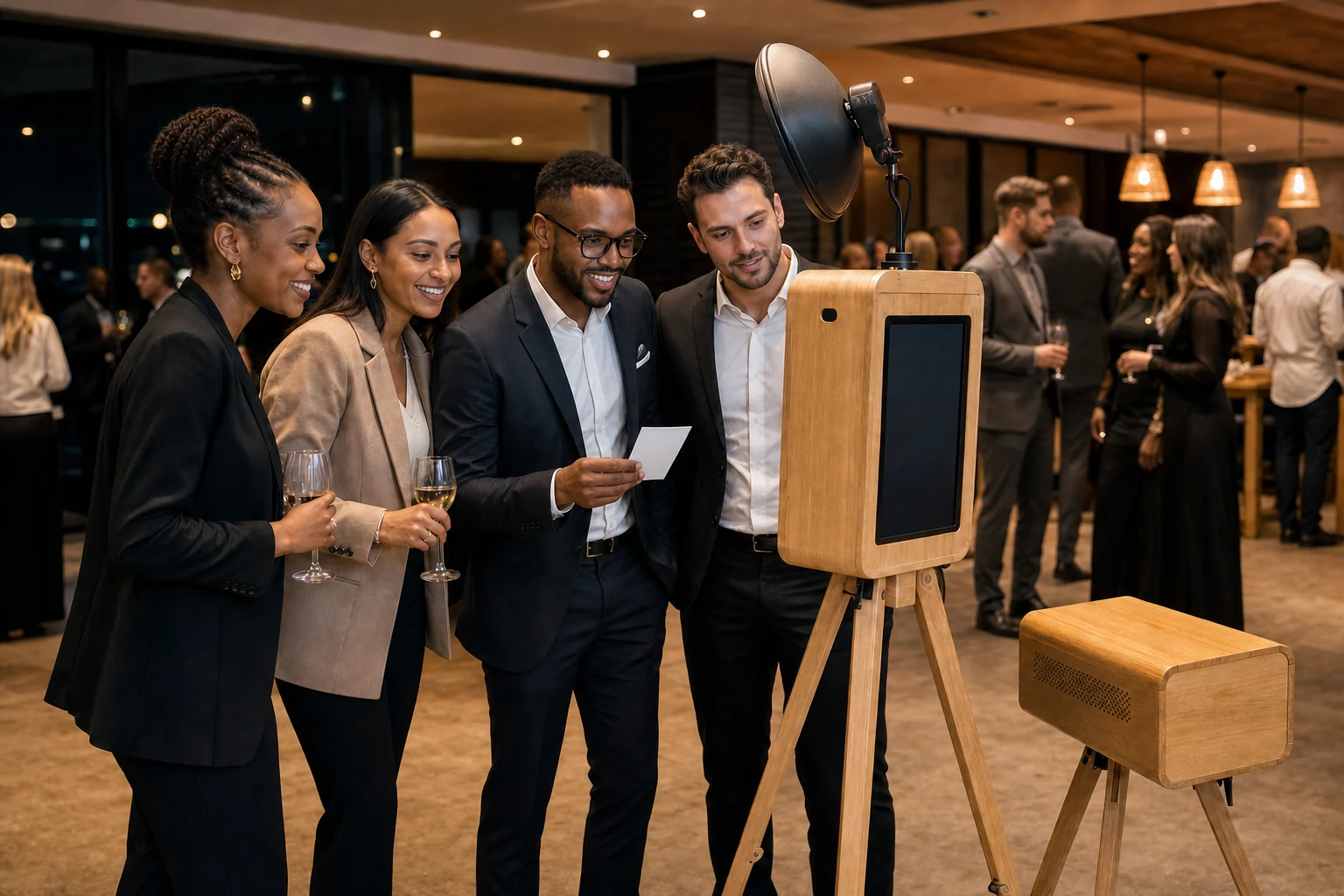
This is often the point where one social activity helps the room mix. Put it alongside arrival drinks or the post-formal portion, then let people move between it, food and conversation. A hosted corporate AI photo booth can give groups a simple reason to gather without asking everyone to be on stage.
For a team of around 300
At this size, focus on movement. Multiple food or drink points, a sensible registration route and an activity that runs for a useful window all matter. Guest count does not tell you exactly how long an experience needs to run; the programme and departure pattern matter too. Use the guest-flow guide when shaping that detail.
Leave room for different personalities
The event should work for a person who wants to dance, someone who wants one good conversation and a colleague who would rather leave after dinner. Optional moments are kinder and often more popular than a compulsory icebreaker.
Give the team something to remember
A printed portrait, good food, a shared story or a thoughtful thank-you can outlast the event itself. The detail matters less than whether it feels appropriate to the team. For a year-end version of this planning, see the Johannesburg year-end guide.
Keep the event brief human
Include access needs, dietary requirements, travel realities and the fact that not everyone wants to stay until late. A team event can be generous without being mandatory. When those details are recognised, people are more likely to feel the event was planned for them rather than imposed on them.