Map the full session
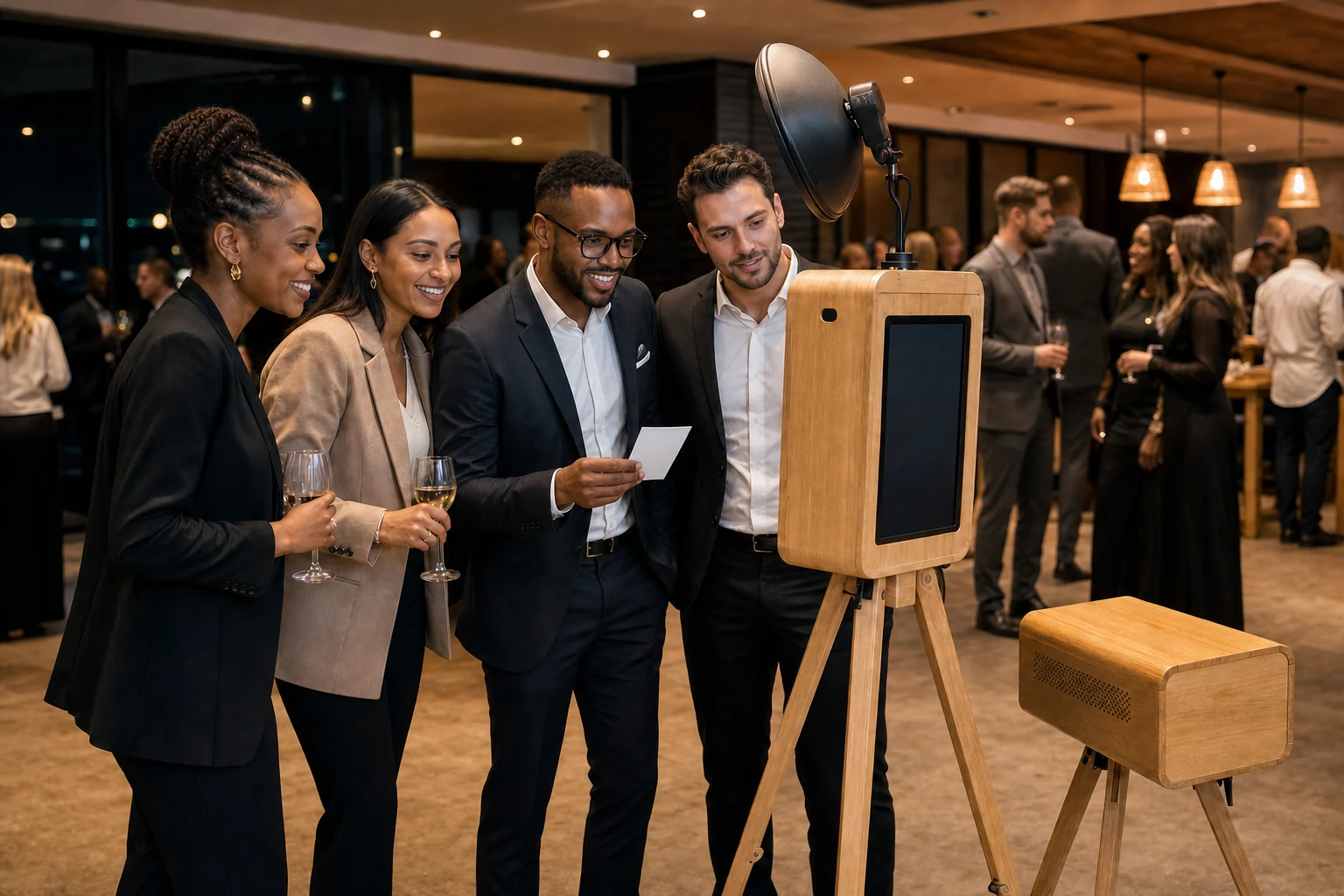
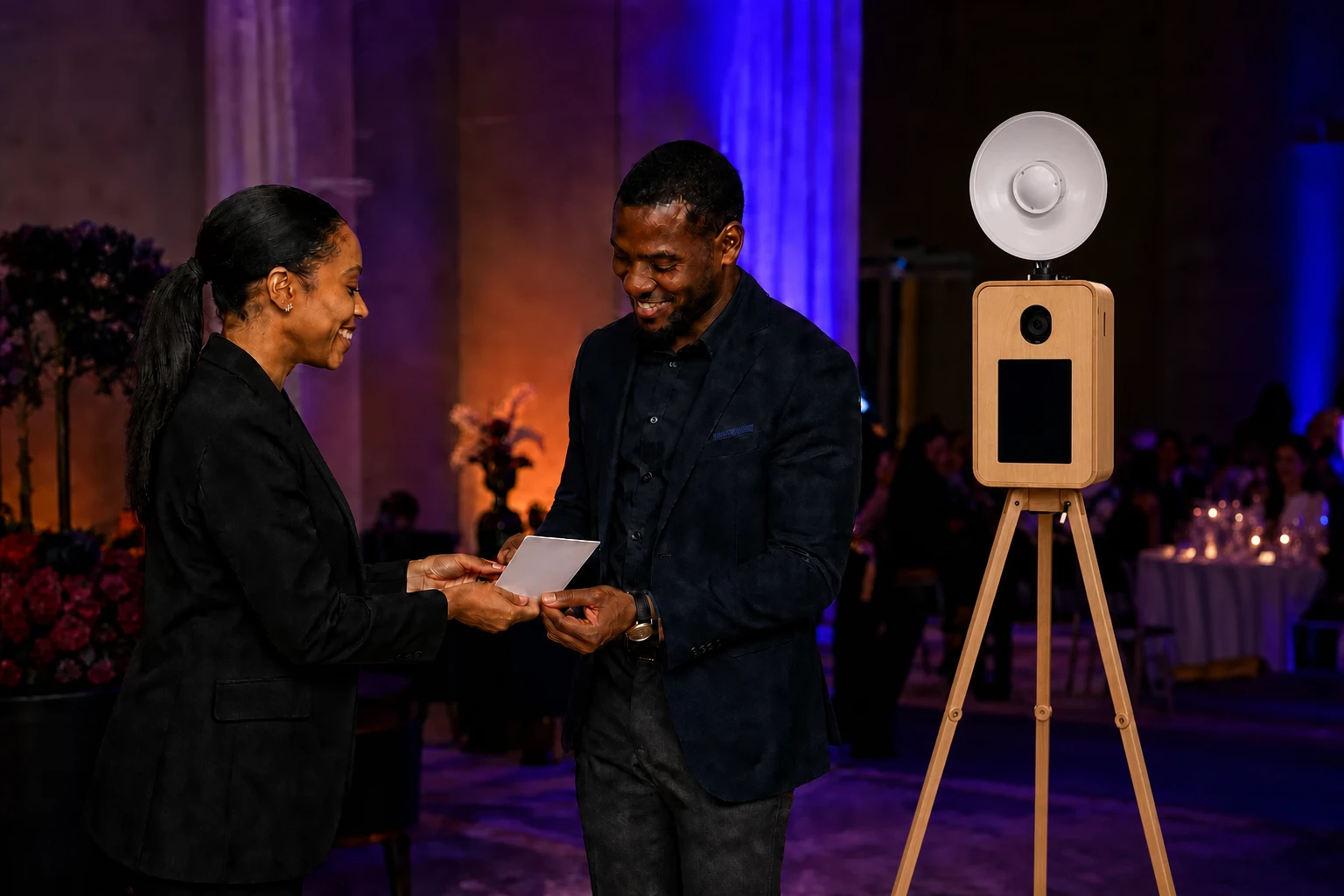
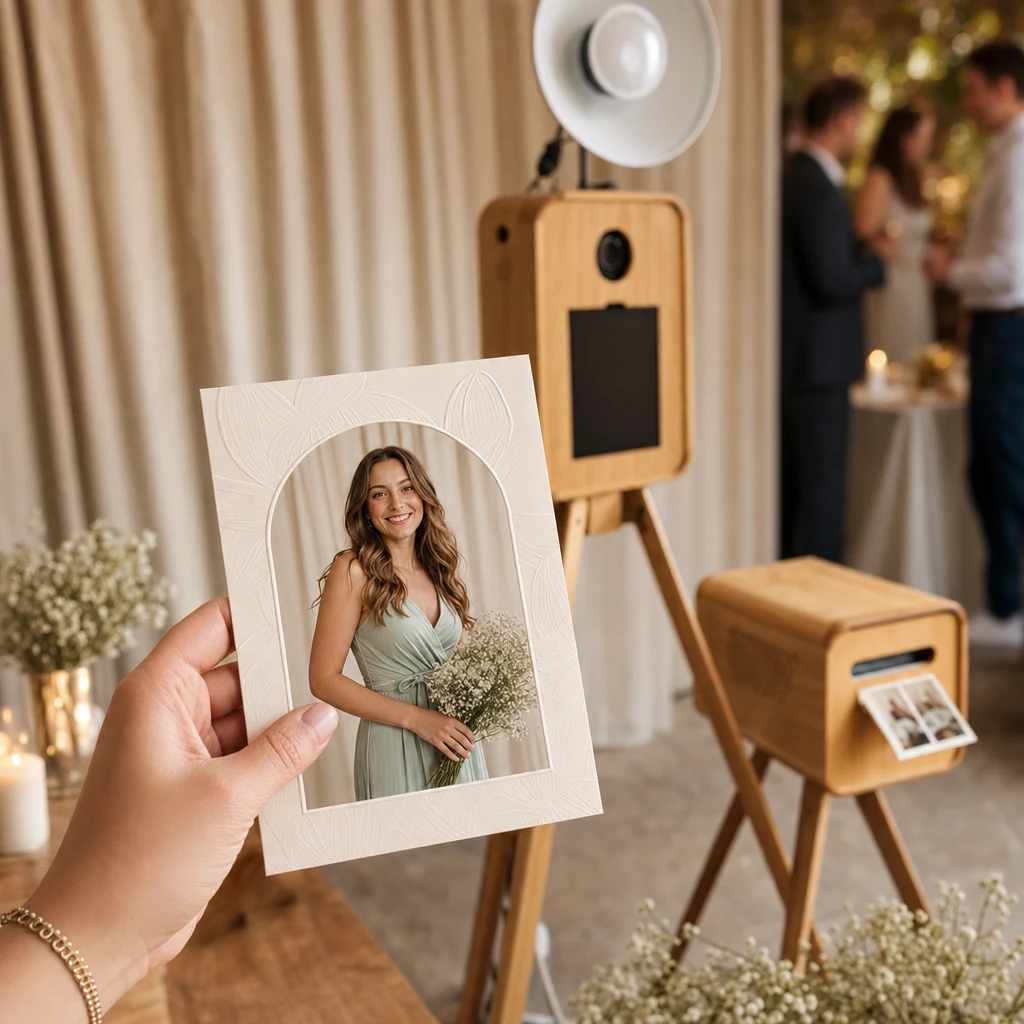
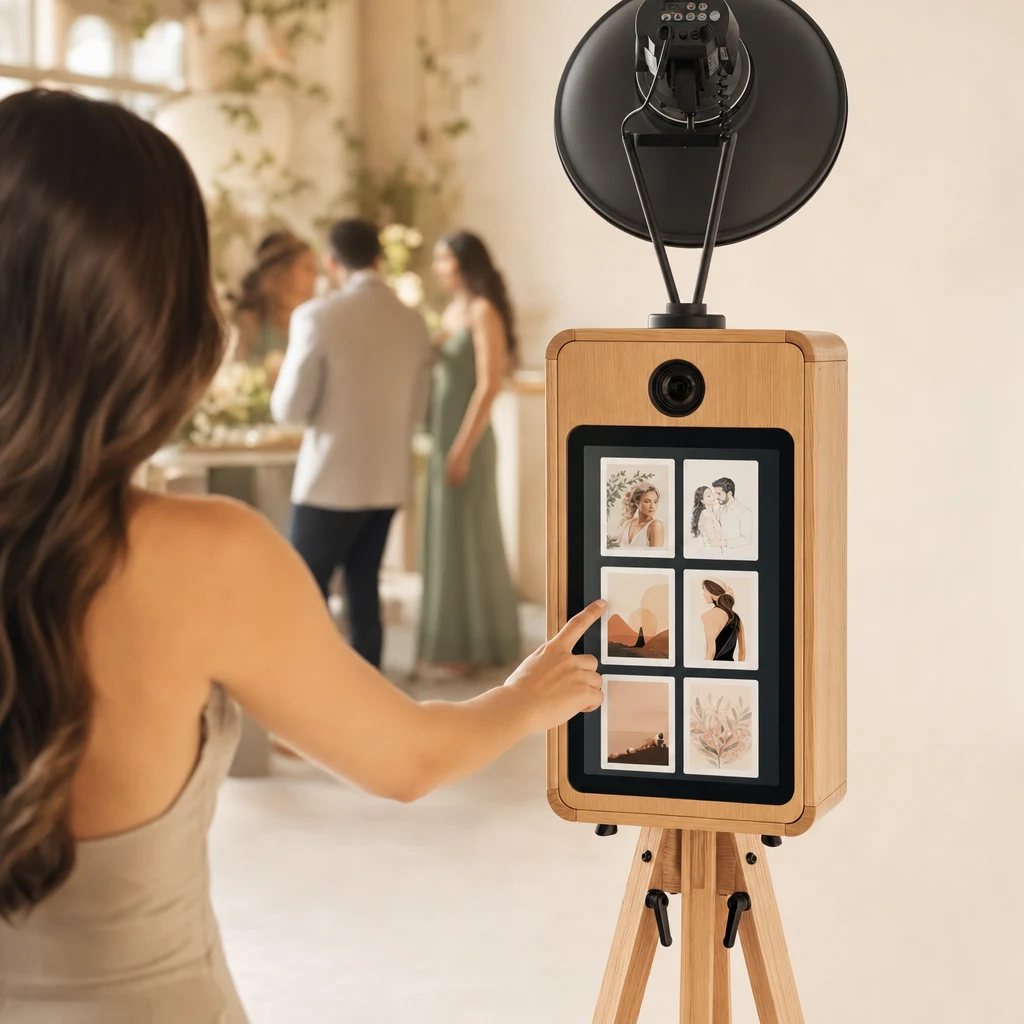
The guest journey includes noticing the booth, choosing a style, taking the portrait, waiting for the result, sharing it and collecting a print. Improving any one stage helps the whole queue.
Avoid promising a fixed hourly number without considering the event. Group size, guest confidence and print handling all change the pace.
Write the stages on the run sheet: discovery, decision, capture, generation, review, digital delivery and print collection. Then identify where guests wait at each stage. This is more useful than asking for a headline “people per hour” figure that has not been measured under your event conditions.
Use a planning formula, not a guessed rate
Start with variables the organiser can estimate:
Expected session demand = interested guests x planned sessions per interested guest
Then compare that demand with the available operating window:
Required average session flow = expected session demand / genuine operating hours
“Genuine operating hours” should exclude periods when the room is seated, the booth must be quiet or guests are elsewhere. The result is a planning target, not proof that the booth will deliver that rate. Compare it with a measured rehearsal or a supplier-confirmed operating test before making a capacity commitment.
For example, an organiser can model low, middle and high interest without publishing invented throughput:
| Scenario | Interested guests | Repeat behaviour | What to test |
|---|---|---|---|
| Conservative | Smaller share of attendees | Mostly one session | Whether the chosen window is still worthwhile |
| Working case | Expected audience share | Some guests return | Style decision time and collection flow |
| Peak case | Strong interest after a programme break | Several repeat visits | Queue space, host briefing and closing procedure |
If the required flow has not been observed in a realistic test, either broaden the operating window, simplify the journey or discuss an alternative configuration. Do not disguise uncertainty with a precise-looking number.
Reduce decision time
A small menu with clearly different styles moves faster than a long list of similar options. Show enough of each result for a guest to understand the choice at a glance.
The host can guide uncertain guests while keeping the next person ready.
Put style examples where the next guest can see them before reaching the front screen. A campaign team that explains every style from scratch will slow the line even if capture itself is quick.
Separate waiting from collecting
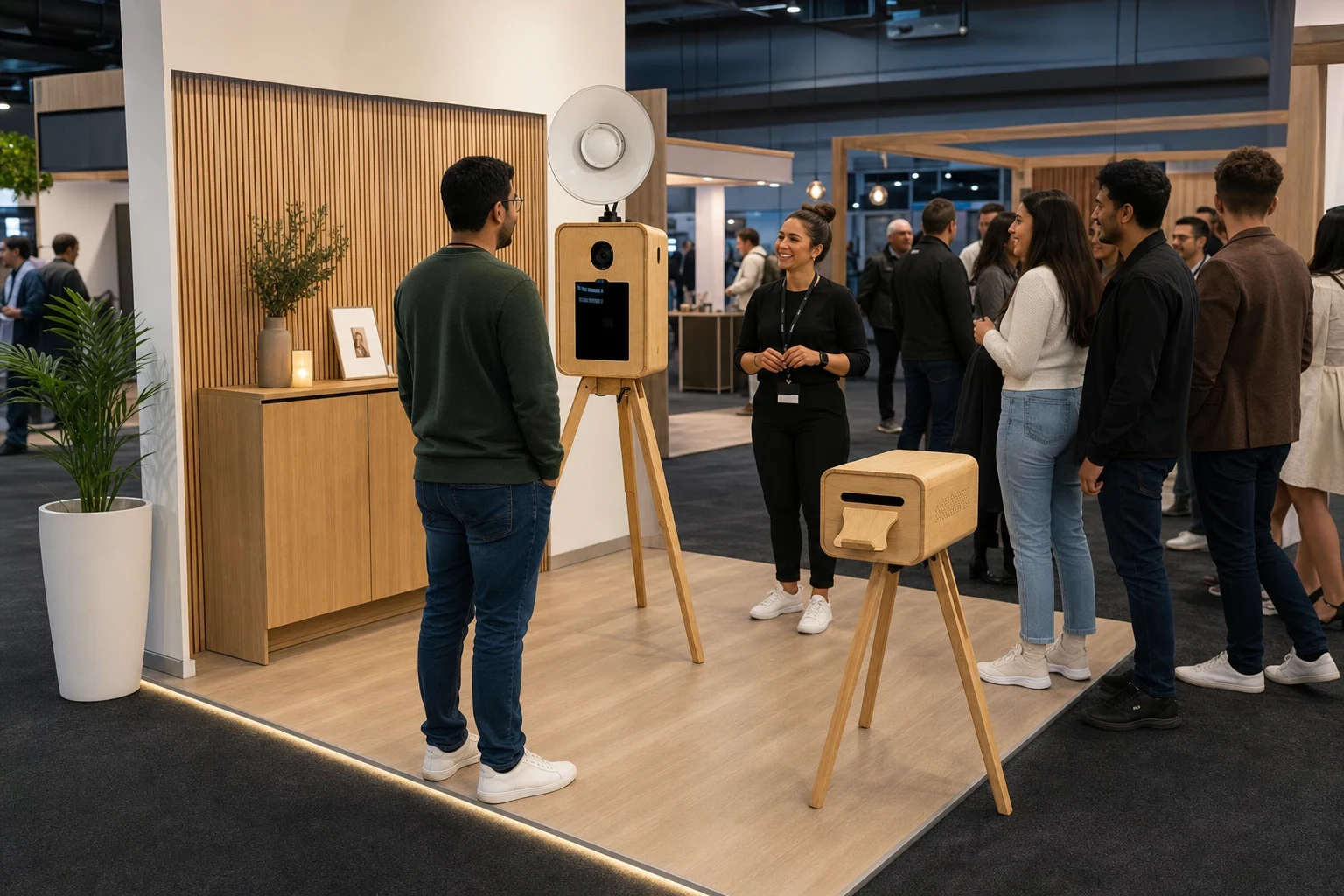
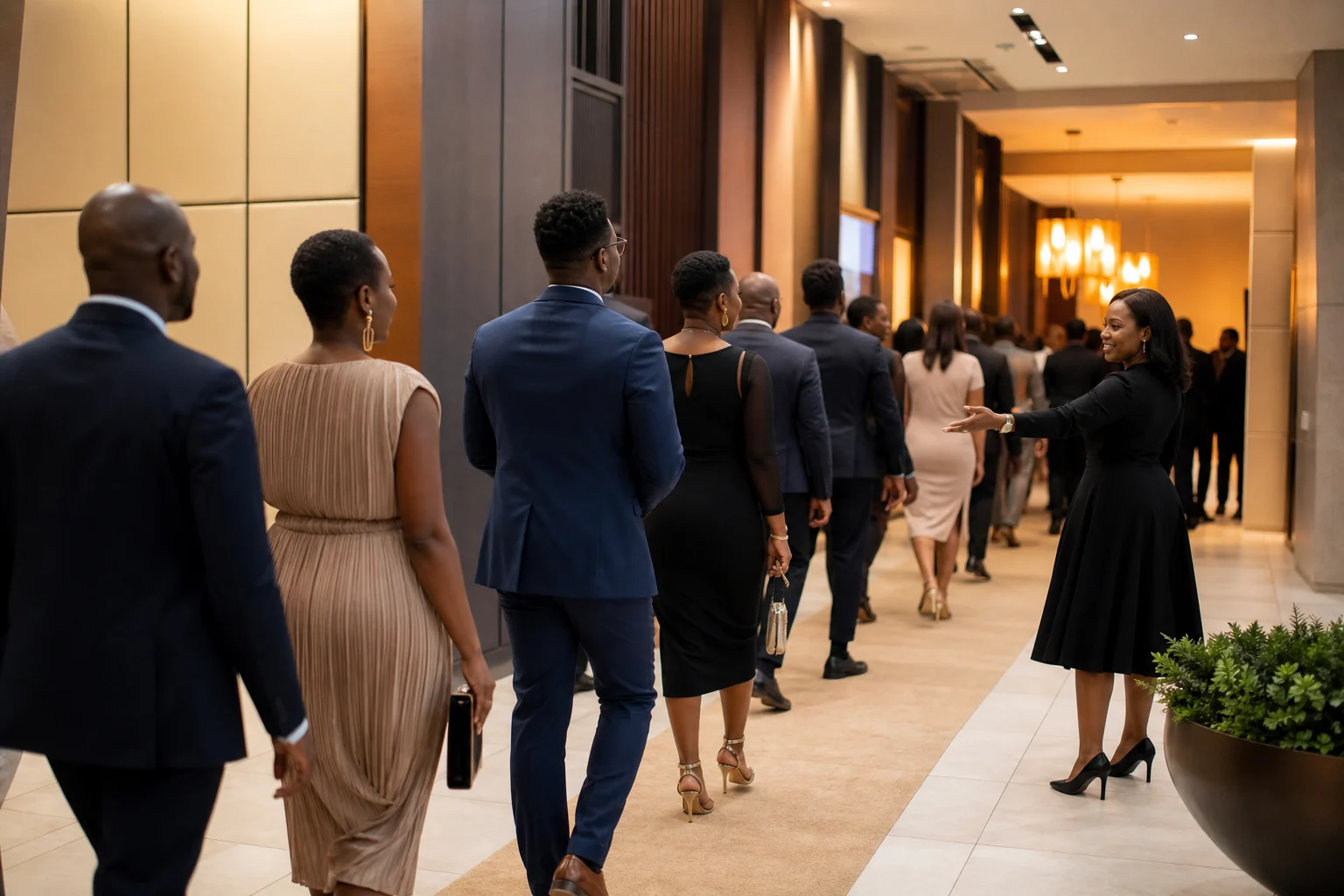
Where space permits, guests waiting to take a portrait should not stand in the same spot as those receiving prints. A small sideways flow prevents people from bunching around the front screen.
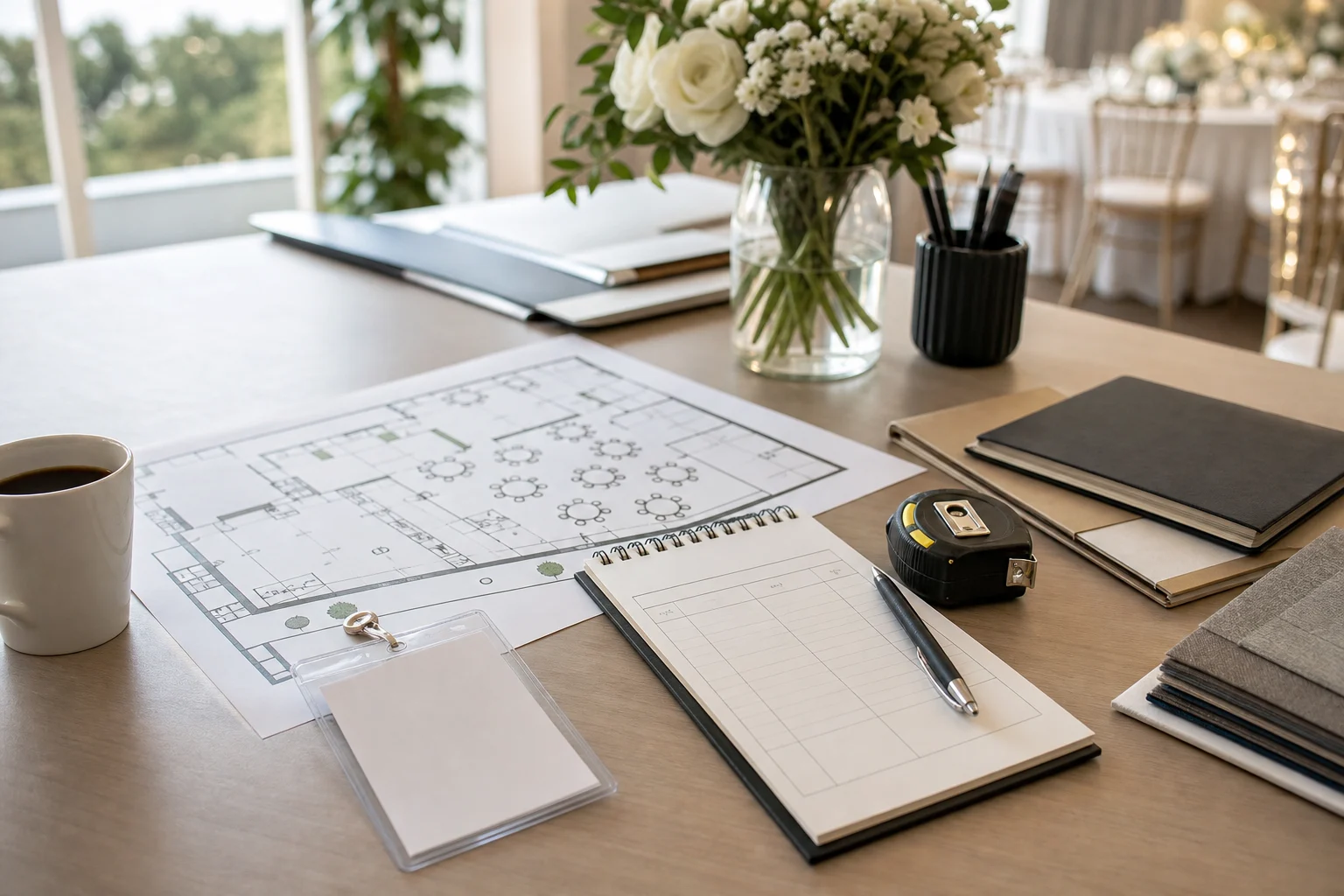
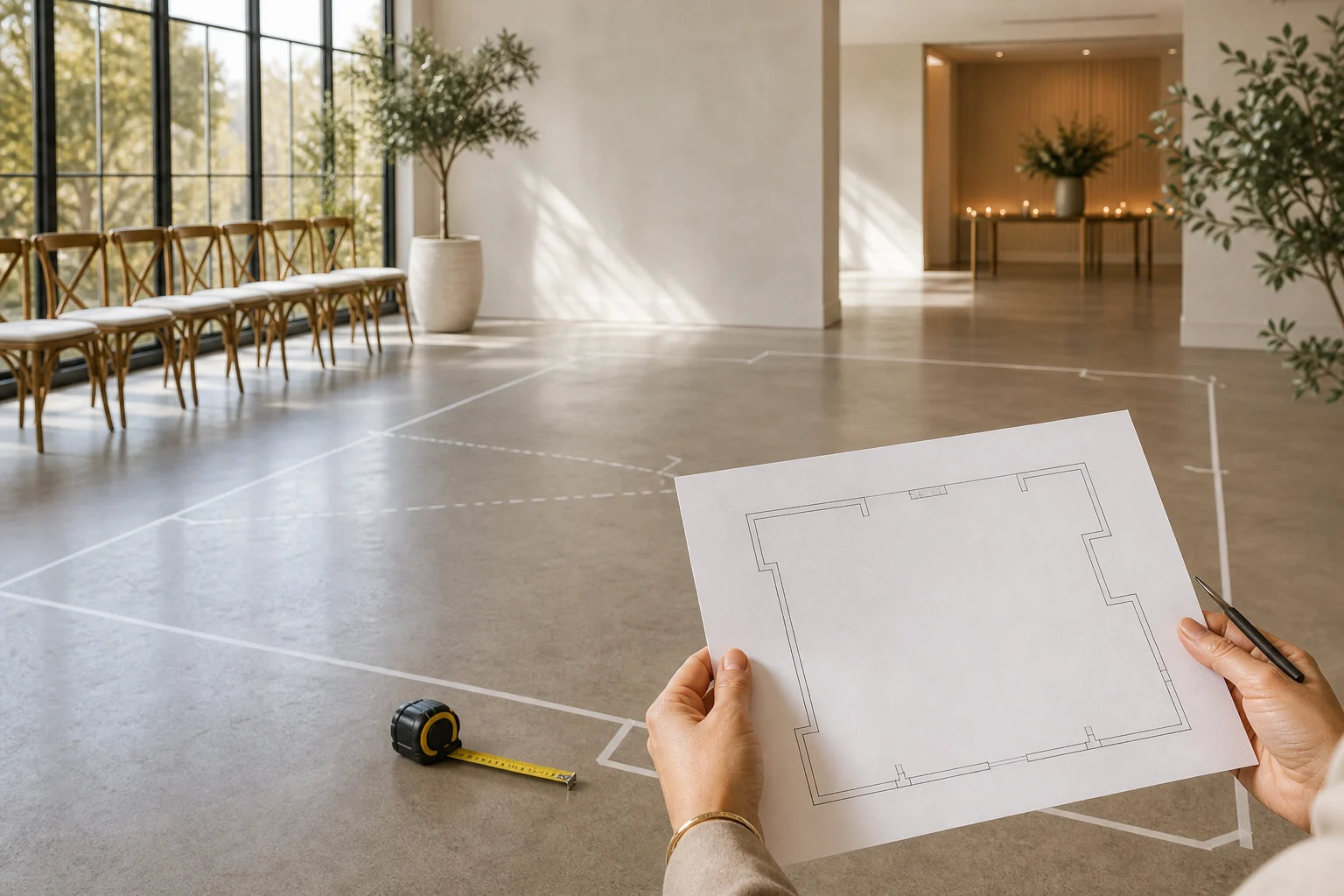
Confirm the exact footprint against the venue plan. Keep emergency routes, service doors, registration, catering and bar approaches clear. Include an accessible waiting position and enough turning space for the guests expected at the event; do not treat the queue as leftover floor area.
Expect repeat visits
Guests may return to try another style. That is a sign the experience is working, but it should be included in the time plan.
For large events, keep the operating window broad enough that first-time guests are not crowded out by the early enthusiasts.
The host can manage this socially by inviting first-time guests forward near a closing rush, but any formal priority rule should be agreed with the organiser. For a lead-generation activation, separate participation, portrait delivery and marketing opt-in so consent does not become another confusing queue stage.
Use the programme
Demand will fall during speeches and rise when a session ends. Tell the host about those transitions so the queue can be prepared and the booth can remain unobtrusive during formal moments.
Name the people who can act
- Event lead: shares live programme changes and approves queue-closing decisions.
- Venue floor manager: protects service and emergency routes.
- Booth host: explains the journey, prepares the next guest and manages collection flow.
- Brand representative: resolves campaign wording or style questions without interrupting every session.
- Privacy owner: approves any lead-capture or public-gallery process before the event.
Set a check-in before opening and another before the expected peak. The group should know who may request a pause, change the style menu or approve additional time.
Build a contingency conversation
Ask what the event team will do if arrivals bunch together, speeches run late, venue connectivity changes or a technical issue pauses the planned journey. Confirm the event-specific digital-delivery method and fallback in the brief. Do not advertise backup equipment, offline operation or turnaround times unless those arrangements have been documented.
Before committing a large conference or activation to a flow assumption, run a representative test using the actual style menu and output steps. Record the result and conditions. That evidence can support the event plan; a generic online estimate cannot.
The corporate AI photo booth service and brand activation service can both be shaped around planned traffic windows.
For placement and venue handoffs, continue with the corporate planning checklist. Expo organisers should also use the expo and product-launch guide because aisle traffic behaves differently from a private function.