Start with the output
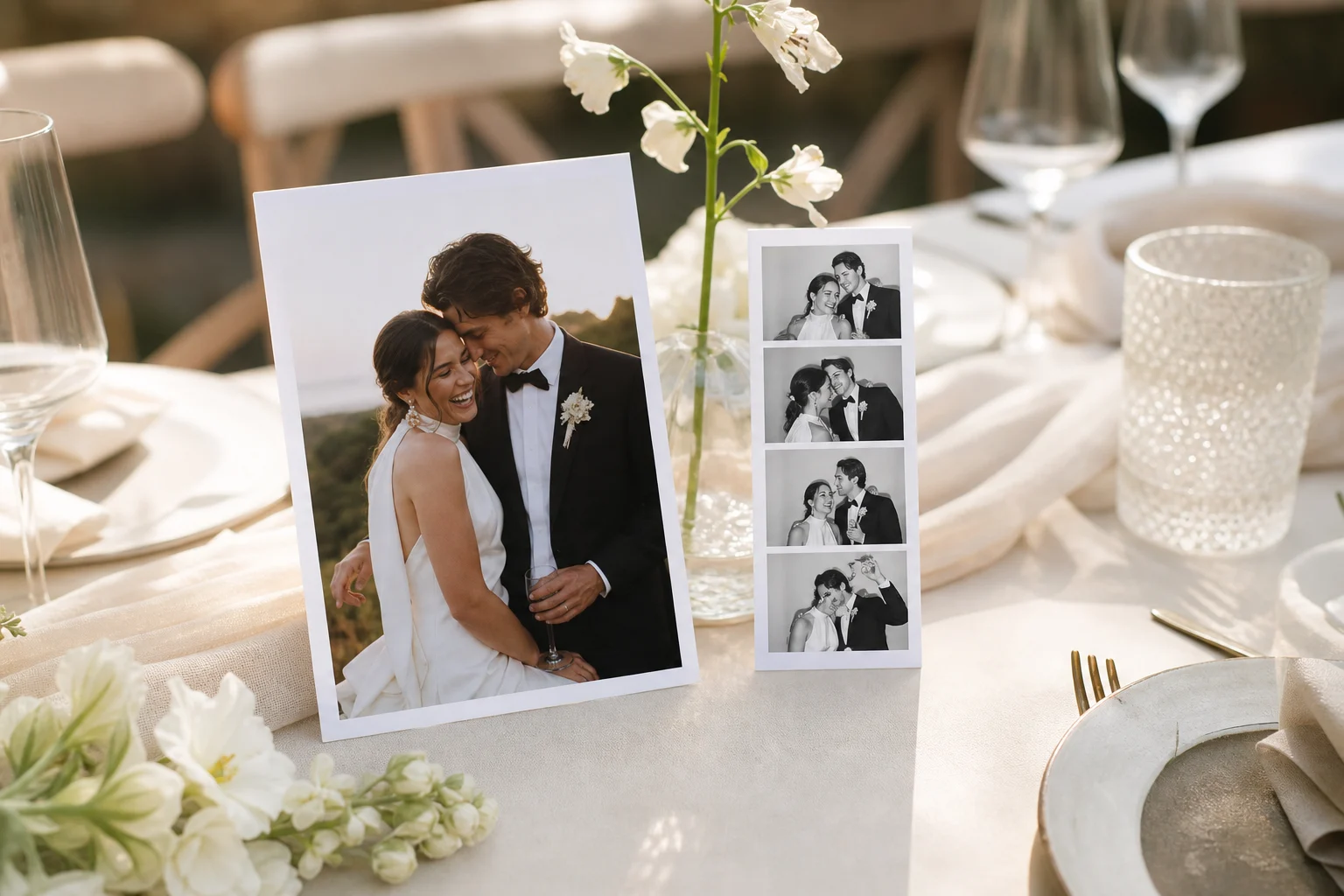
A traditional booth usually produces a conventional photograph, often in a strip or branded frame. Guests create variety through poses, props and group combinations. AI Booth starts with a portrait and changes the visual world around the person. The guest chooses the direction before the photograph, then waits to see how that idea is interpreted.
If you know which result you want on the guest’s fridge, the decision becomes easier.
Side-by-side comparison
| Question | AI portrait booth | Traditional photo booth |
|---|---|---|
| What creates variety? | The guest selects a visual transformation | Guests change poses, props and groupings |
| What is the reveal? | Seeing the portrait reimagined | Seeing the captured sequence |
| Who is it strongest for? | Individuals, pairs and portrait-led moments | Groups wanting familiar, playful photographs |
| What does the print feel like? | Portrait artwork in a 4x6 format | Often a strip or conventionally framed photograph |
| What should you approve? | Style menu and visual direction | Backdrop, props, template and print treatment |
| Why might guests return? | To try a different style | To pose with different people or props |
Suppliers configure both categories differently, so compare actual proposals rather than assuming every booth includes the same output or delivery.
The traditional booth experience
Traditional booths are familiar. Guests understand the countdown, crowd into frame and collect a sequence of photographs. They work well for groups and couples who enjoy photo-strip nostalgia. Familiarity is not a weakness: this may be the better choice when one photograph of a large friendship group matters more than individual keepsakes.
The AI portrait experience
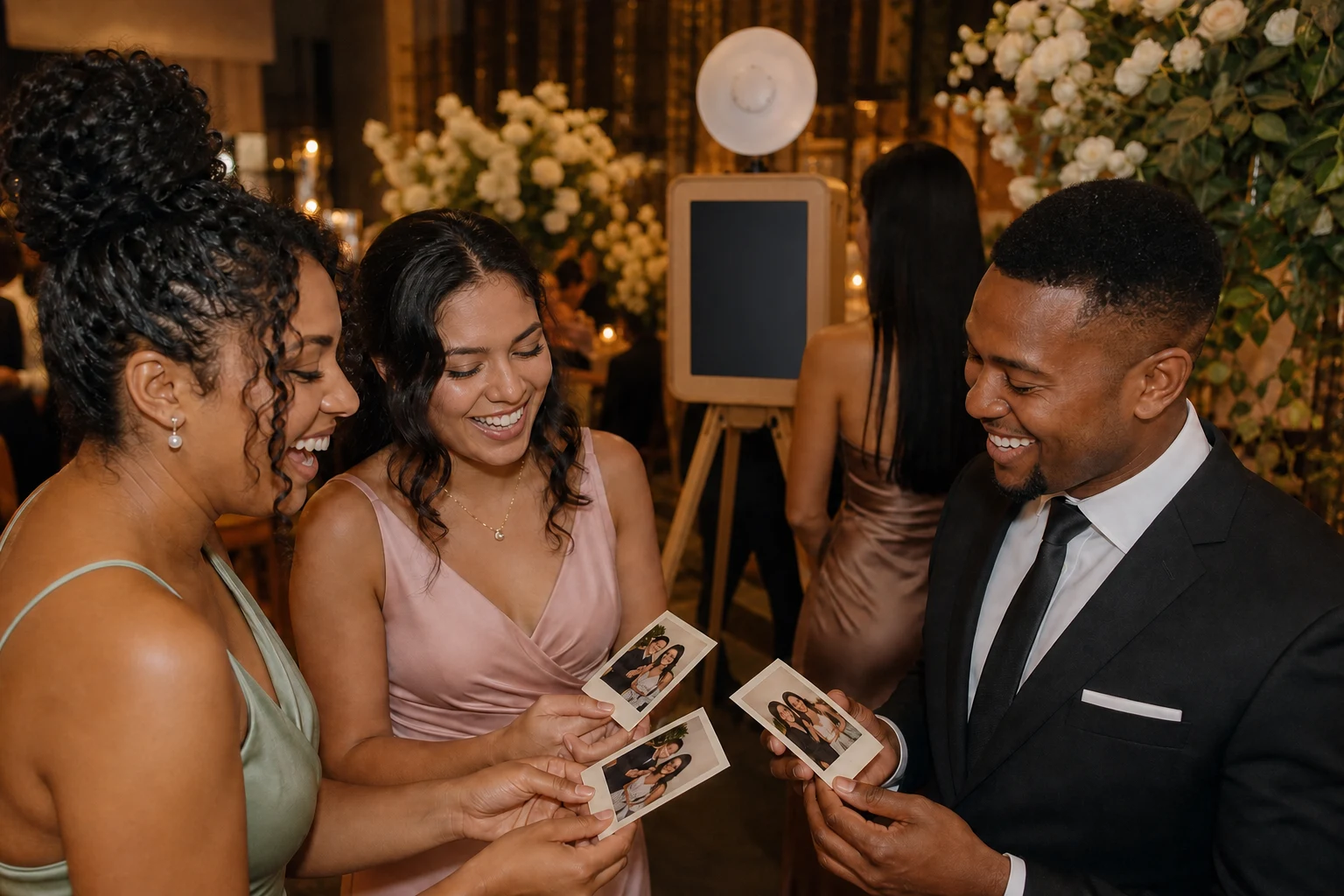
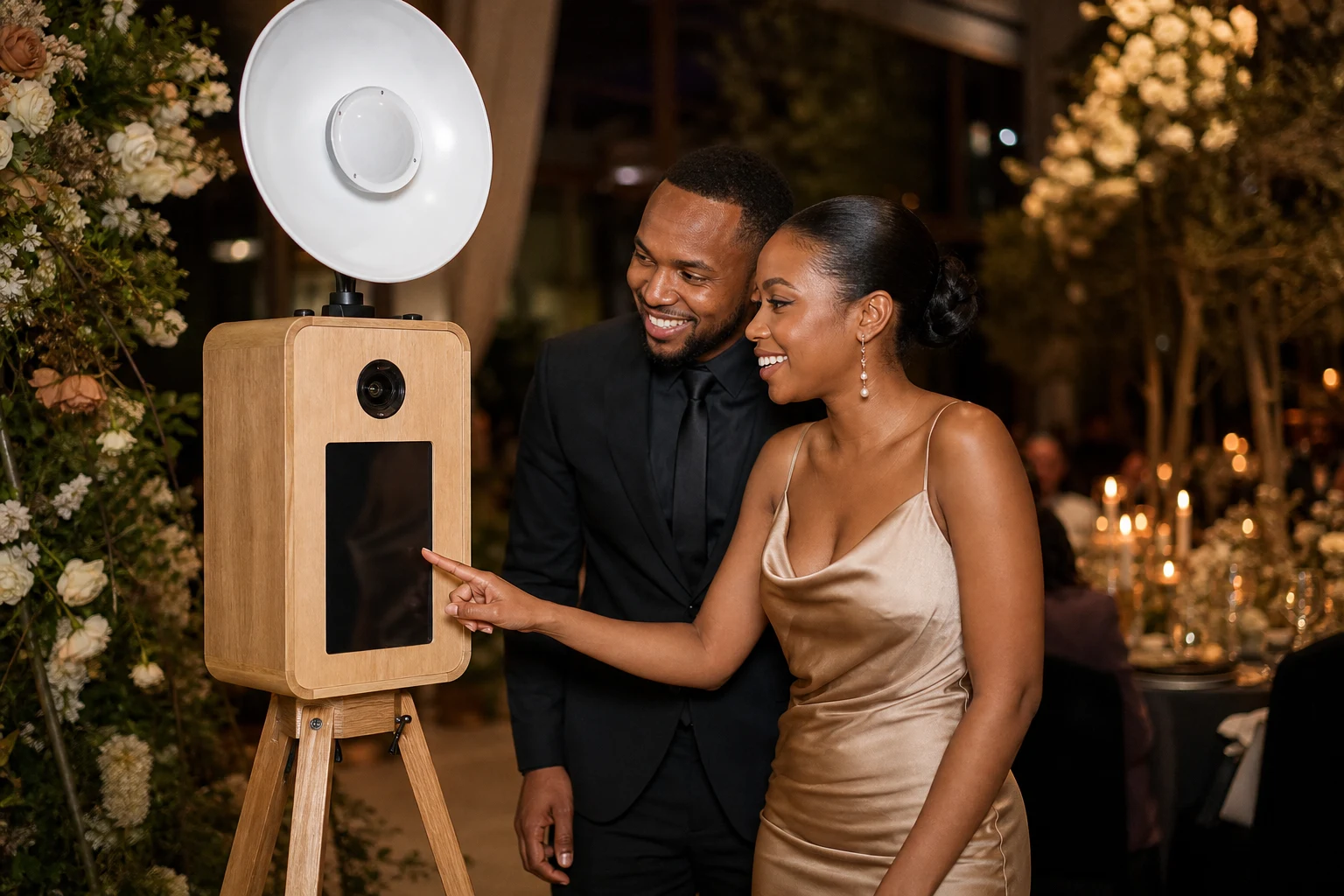
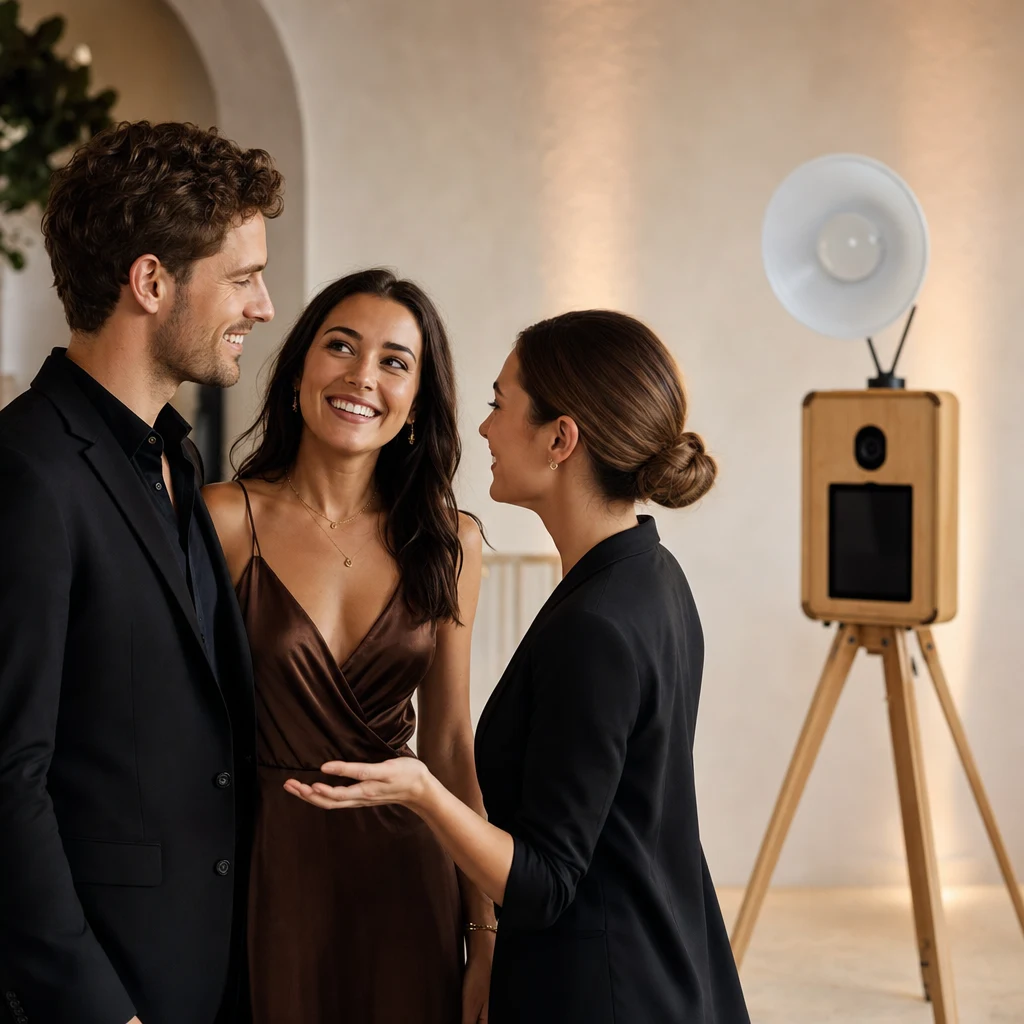
AI Booth needs fewer physical extras. Guests choose a portrait style on the front screen. The reveal creates the entertainment and the 4x6 print gives the result more room than a strip.
Guests may return because another style can create a genuinely different portrait. That choice still needs restraint. A short, coherent menu that suits the wedding usually feels more considered than a long list assembled for novelty.
Group size and queue behaviour
A conventional open booth can be better for large group photographs. AI portraits are strongest with individuals, pairs and carefully framed small groups. Exact group suitability is confirmed for the event rather than promised as one universal number.
Traditional groups may take time to assemble; AI Booth guests may return for another style. Neither format is automatically faster. Ask how the guest journey works and how the host manages participation instead of relying on an untested capacity claim.
Six questions that settle the choice
- Do you want one photograph of the whole table, or a portrait each person might frame?
- Will grandparents and less tech-confident guests have someone to guide them?
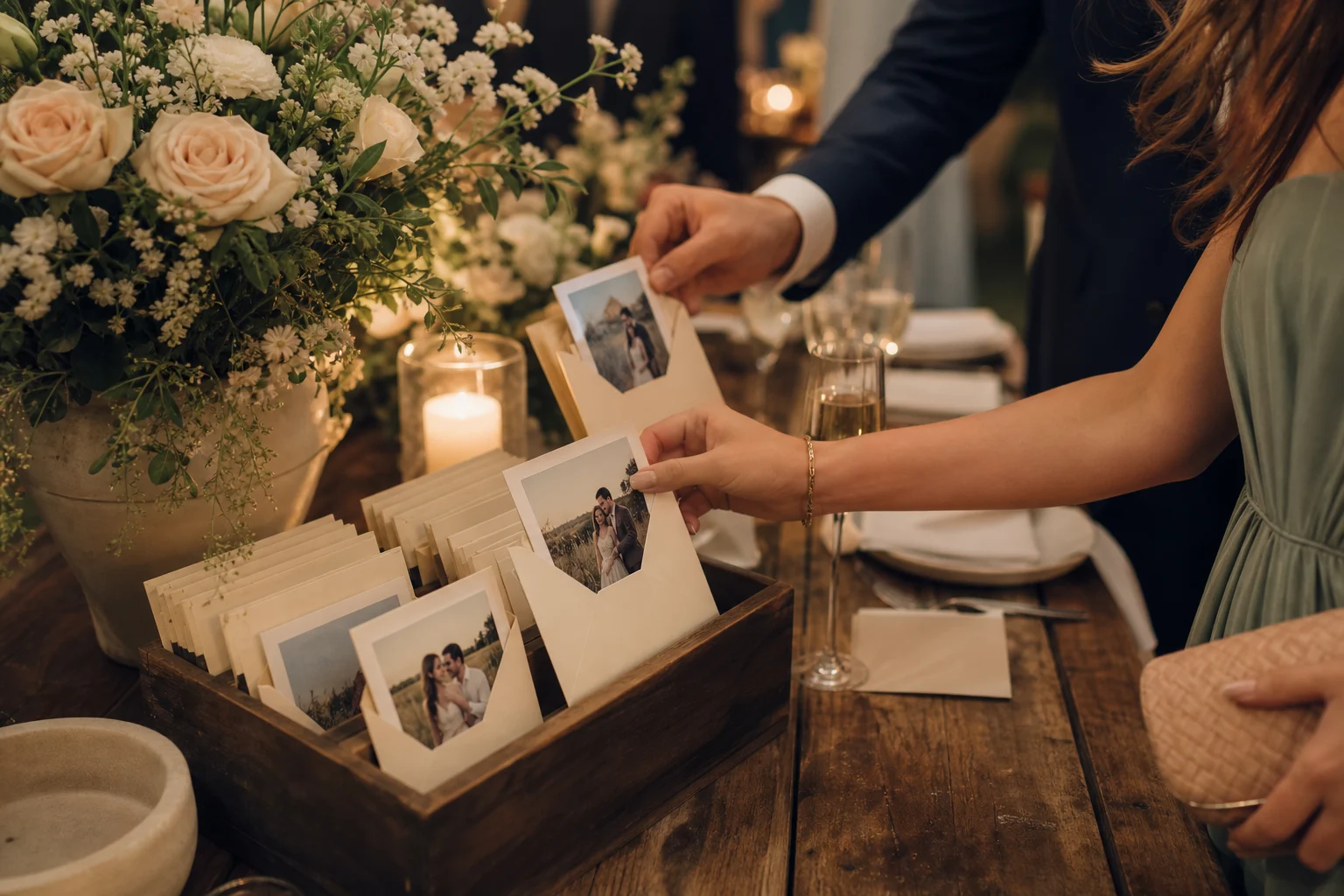
- Does the output suit the invitations, flowers and room?
- Is the booth filling cocktail hour or joining the evening party?
- Would guests enjoy trying different identities, or is the group pose the attraction?
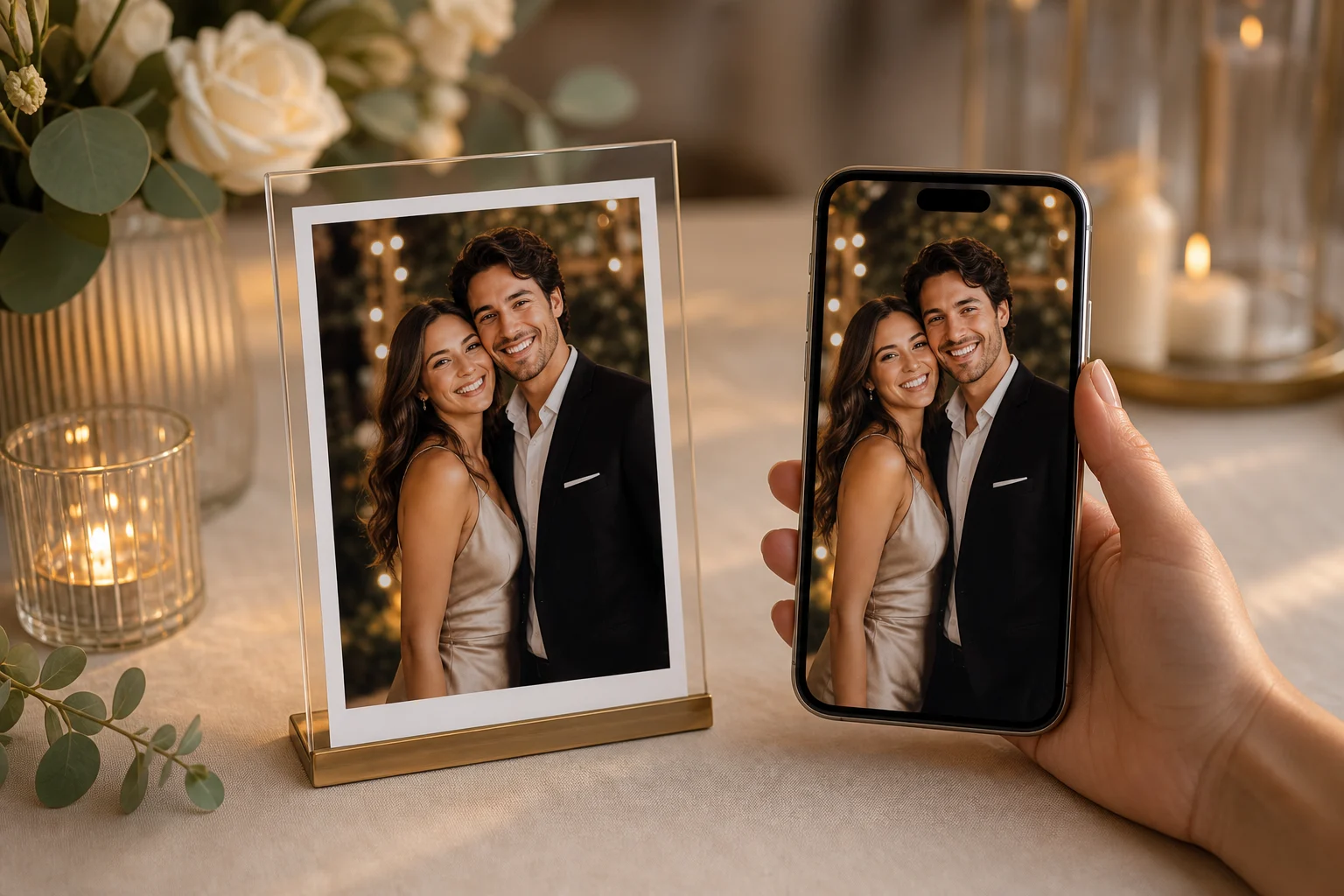
- Are physical prints, phone copies or both important?
For the last question, compare instant prints and digital photos. If the booth must fit a specific programme gap, decide how many hours the wedding needs before choosing on aesthetics alone.
When an AI booth may not be right
Choose another format when the priority is large group photographs, a traditional photo-strip scrapbook or a completely untransformed record of each session. The wedding photographer remains the right person to document real events, family groupings and the couple’s story.
It may also be unnecessary when the run sheet is already crowded. A good activity in a poor time slot still competes with speeches, food and dancing. Simplifying the programme can be the better decision.
Choose a traditional booth for familiar group photographs, props and strip nostalgia. Choose AI photo booth hire for weddings when the portrait transformation is the attraction and a 4x6 artwork suits the celebration. Match the format to the wedding tone, guest mix and the item people should leave with, not whichever technology sounds newer.