Use one simple test
Before ordering hundreds of anything, ask: what will a guest do with this tomorrow?
If the answer is clear, the favour has a chance. If it exists mainly because weddings are expected to have favours, it may remain on the table.
There are three dependable reasons to keep something: it is personal, useful, or can be enjoyed and finished. Then check whether it survives a warm Gauteng afternoon, fits into a handbag and still makes sense to a guest flying home.
Compare the main options
| Favour type | Cost pattern | Lead time | Easy to carry? | Personalisation | Waste risk |
|---|---|---|---|---|---|
| Edible treat | Usually per guest | Freshness matters | Usually, if sealed | Flavour, packaging or tag | Medium if dietary needs or heat are ignored |
| Useful object | Usually per item | Sourcing and branding | Depends on size | Best when discreet | High if quality is poor |
| Live portrait print | Part of an experience | Creative planning beforehand | Yes | Unique to each participant | Participation is voluntary; no item at every seat |
| Donation | One chosen amount | Communication and administration | Nothing to carry | Personal through the cause | No physical waste |
This is a decision aid, not a universal price comparison. Supplier minimums and delivery can change the maths.
Edible favours
Small jars, baked goods, chocolate and locally made treats are easy to understand. Guests can enjoy them immediately and do not need to find permanent space at home.
Packaging matters less than freshness and ease. Avoid containers that are difficult to carry or food that will struggle in a warm car.
Check dietary requirements before ordering one item for the room. Locally made biscuits, chocolate or preserves can feel generous without becoming elaborate, but they need a sensible summer storage plan.
Useful favours
Practical objects work when the quality is good enough to use again. A bottle opener, luggage tag or small candle can succeed; a novelty object with the couple’s names across it is harder to reuse.
Personalisation should remind guests of the wedding without making the item feel like someone else’s souvenir.
Ask to see a physical sample, not only a mock-up. A practical idea stops being useful when the material is too flimsy to use again.
A photograph with a story
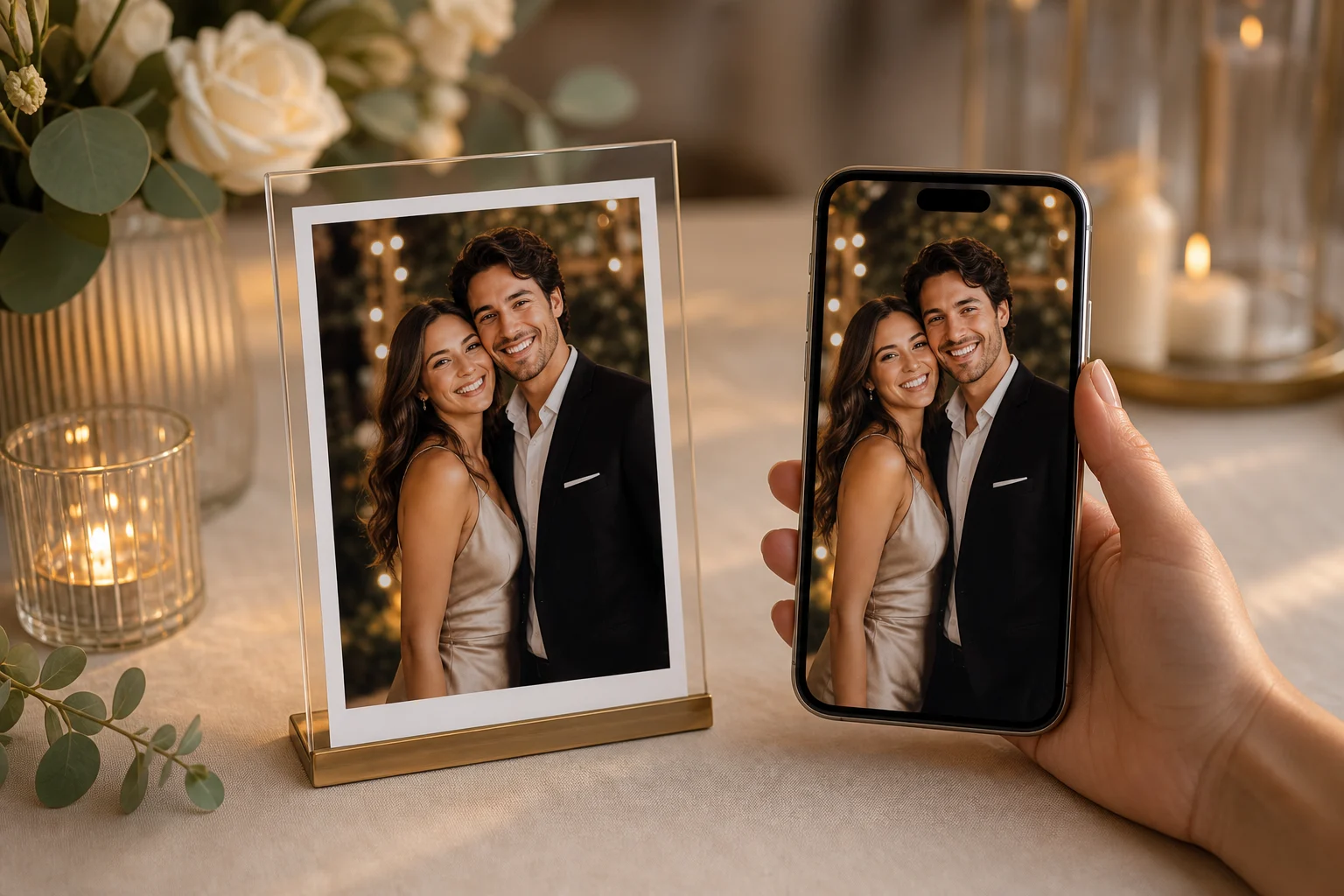
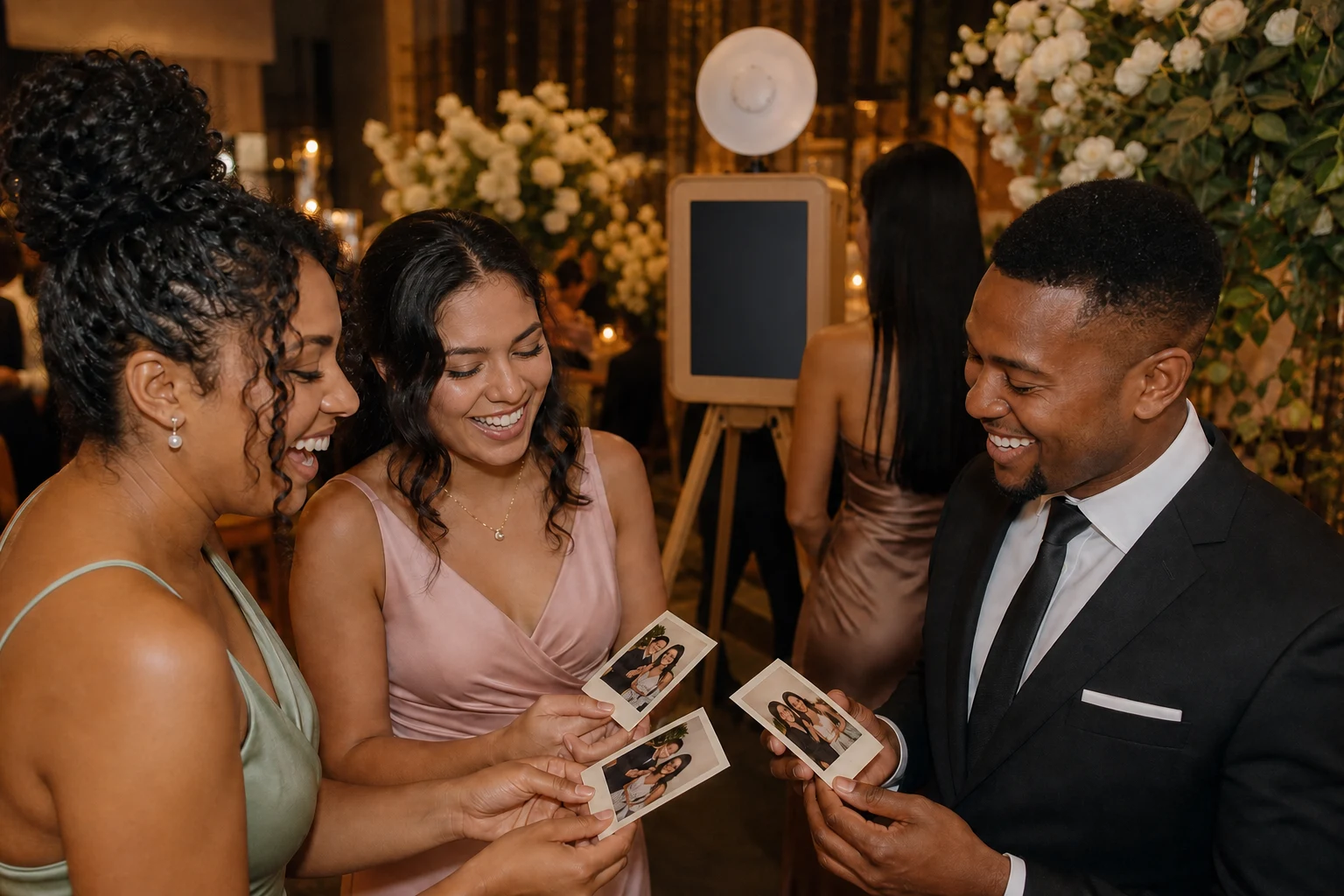
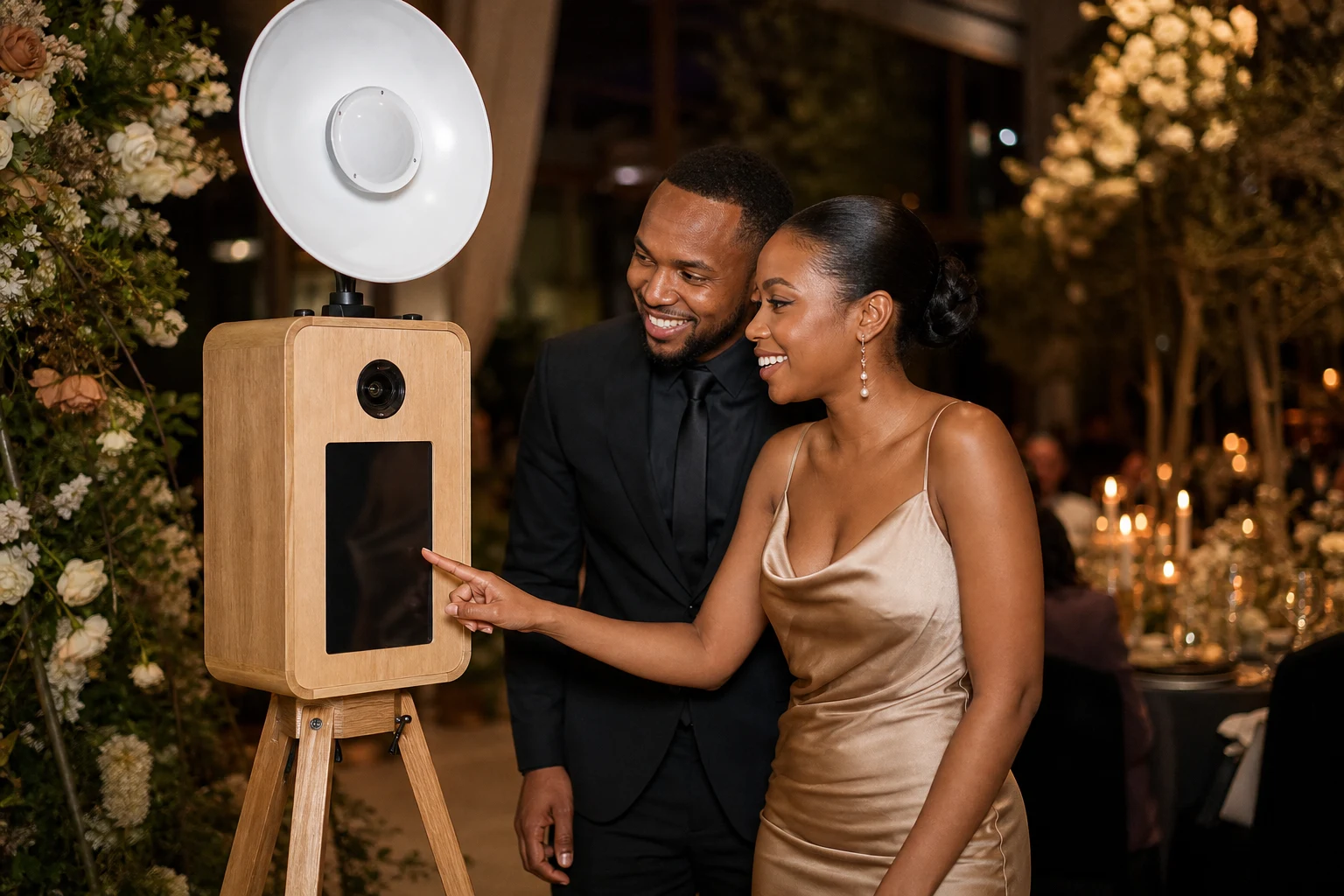
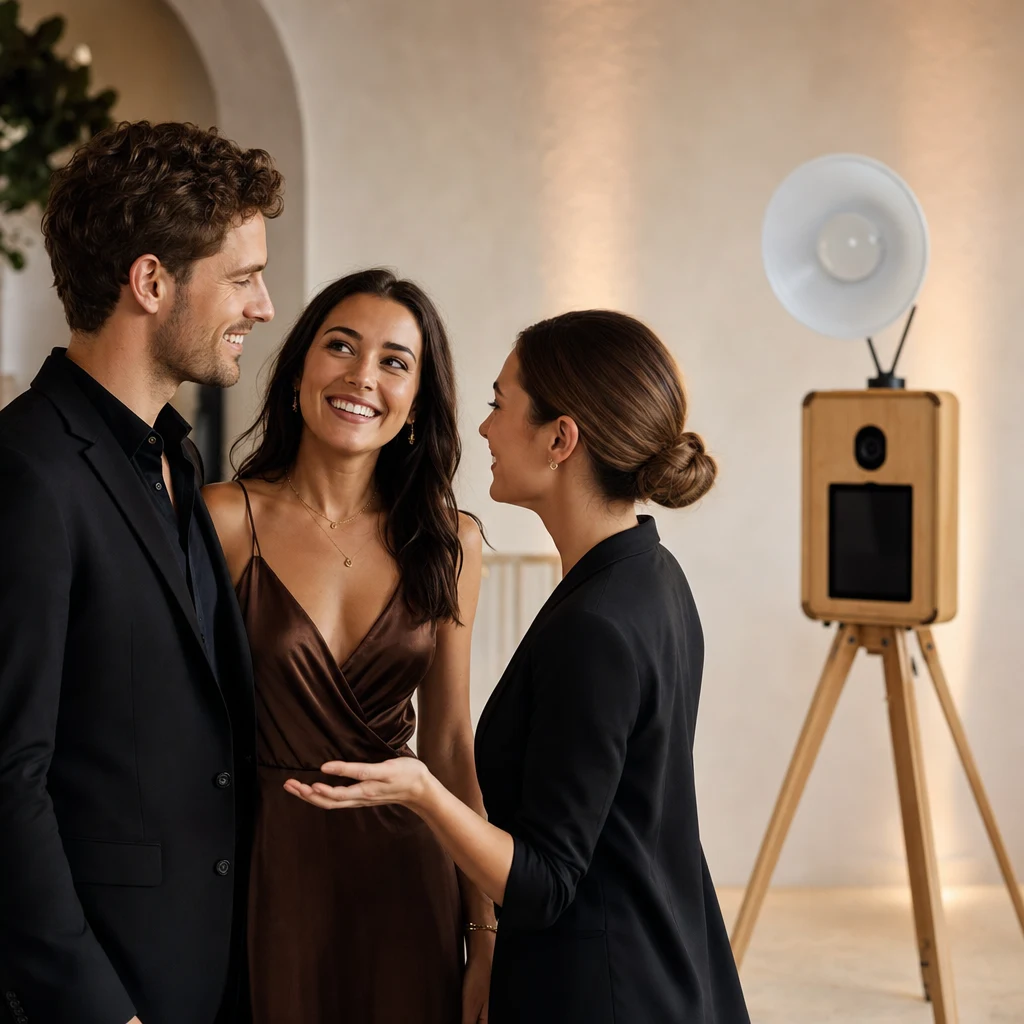
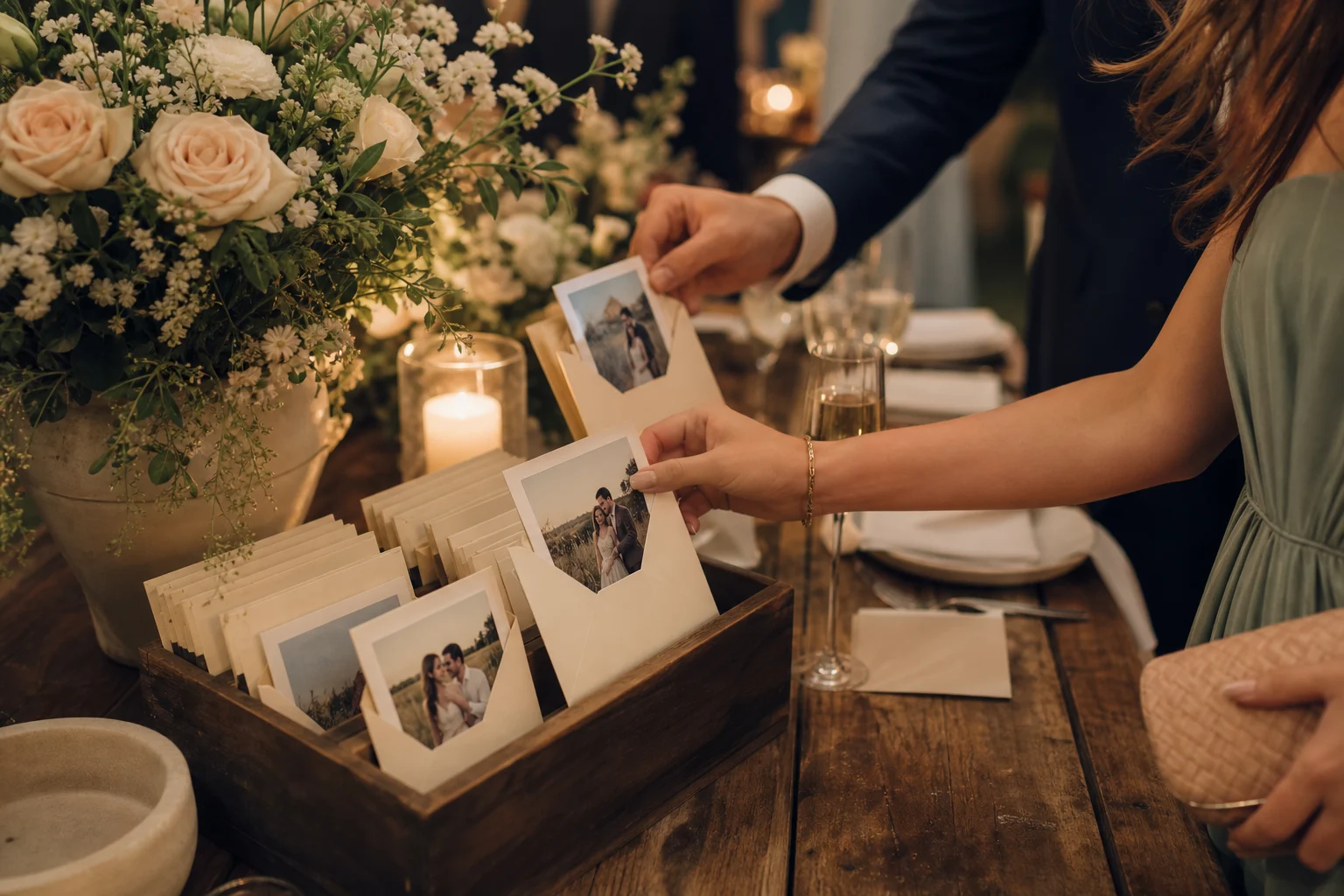
A photograph is personal by default because the guest is in it. A portrait booth can also give people something to do during the reception, so the favour is created through an experience rather than placed at every seat.
AI Booth produces a 4x6 transformed portrait. Guests choose the style, see the reveal and collect a glossy print. The wedding branding can stay discreet, leaving the image useful after the event.
This is not the right favour when the couple wants an identical item at every setting. Participation is voluntary and the portrait is created during the reception. It is stronger when entertainment and a keepsake should come from the same part of the plan.
Make the route accessible. Guests should not have to climb steps, cross a service path or squeeze past a packed dance floor. The venue-specific arrangement is agreed from its floor plan; the space-planning guide explains the zones to reserve.
Charitable and shared favours
Some couples prefer a donation or shared gesture instead of individual objects. If that choice reflects the couple and is communicated simply, it can feel more considered than a token item.
Avoid turning the table into a long explanation. A short card is enough.
Keep the wording factual about what has been donated. A shared gesture should reflect something the couple genuinely supports, not become a complicated statement guests have to decode.
Do not stack several ideas
One thoughtful favour is stronger than a bag filled with unrelated pieces. Budget that would have been divided across packaging, tags and filler can improve the quality of the main item or guest experience.
Before ordering, ask:
- Can guests understand it without instructions?
- Can it cope with the venue temperature and trip home?
- Is it per person, couple or household?
- Is the branding discreet enough to live beyond the wedding?
- Is there a plan for leftovers?
- Does it duplicate something the venue already supplies?
If photographs lead the shortlist, compare print and digital delivery before deciding whether guests need a physical object, a phone copy or both.
If a personalised portrait fits the celebration, explore AI photo booth hire for weddings. It can serve as entertainment, keepsake and digital memory without adding another table of objects to the venue.