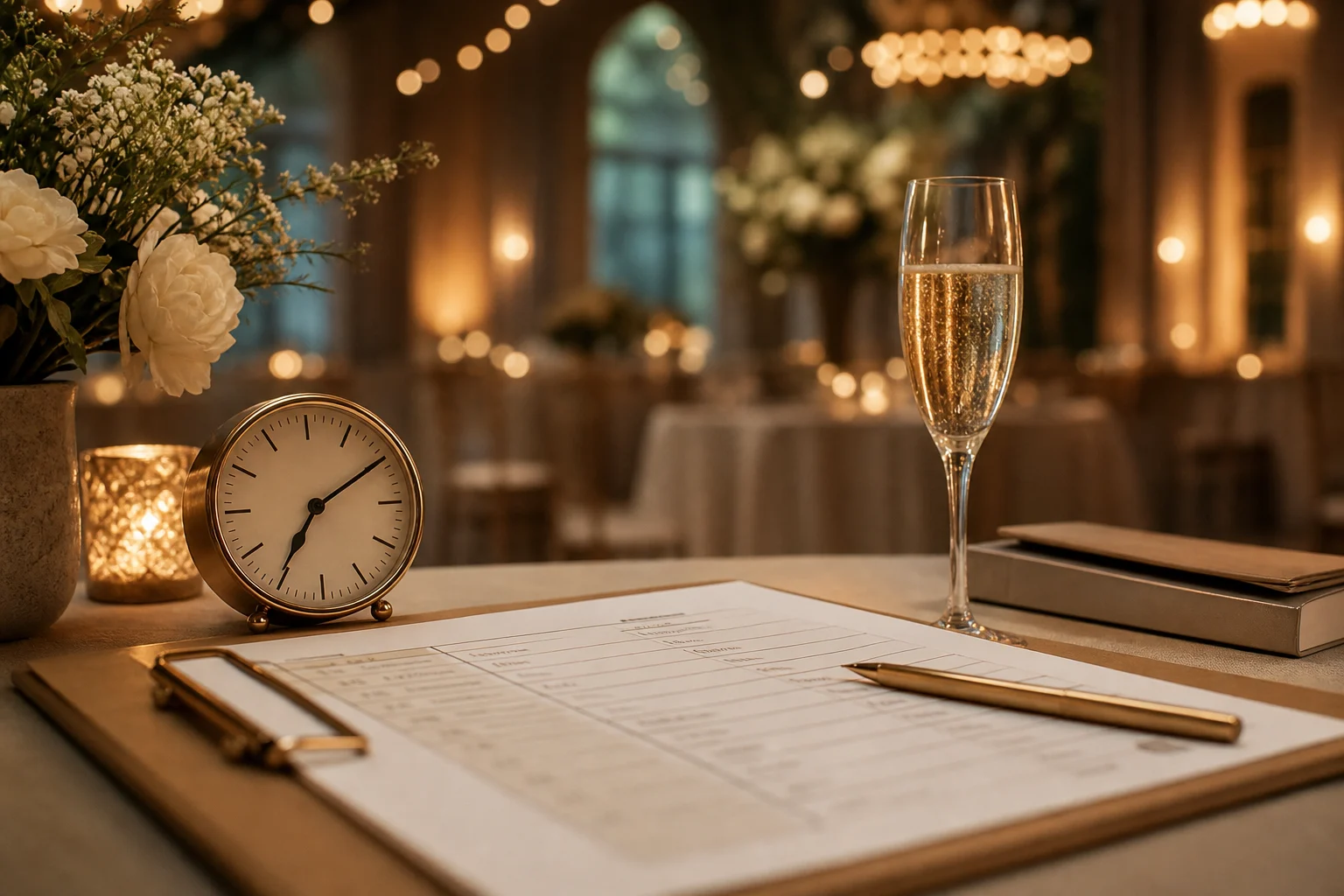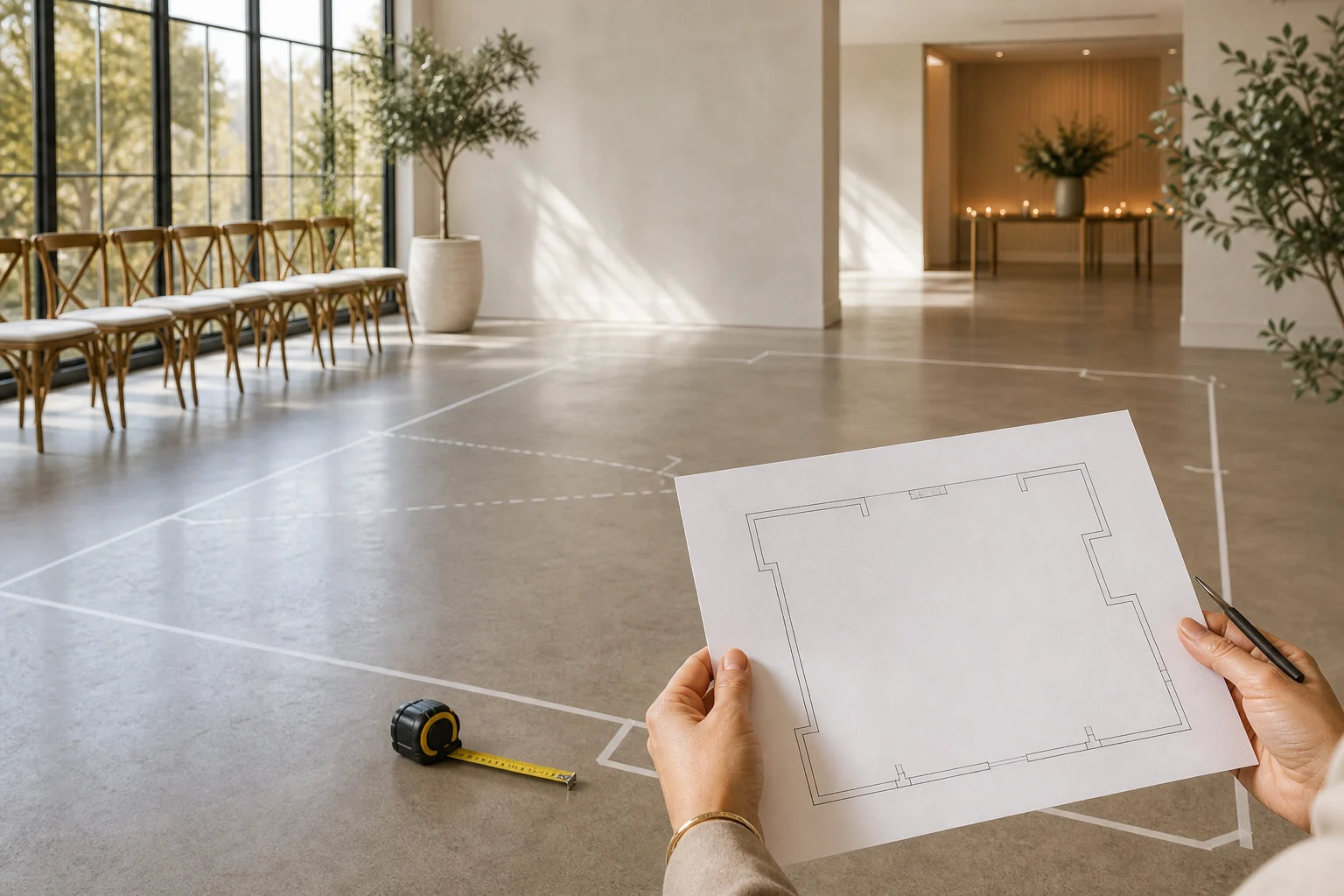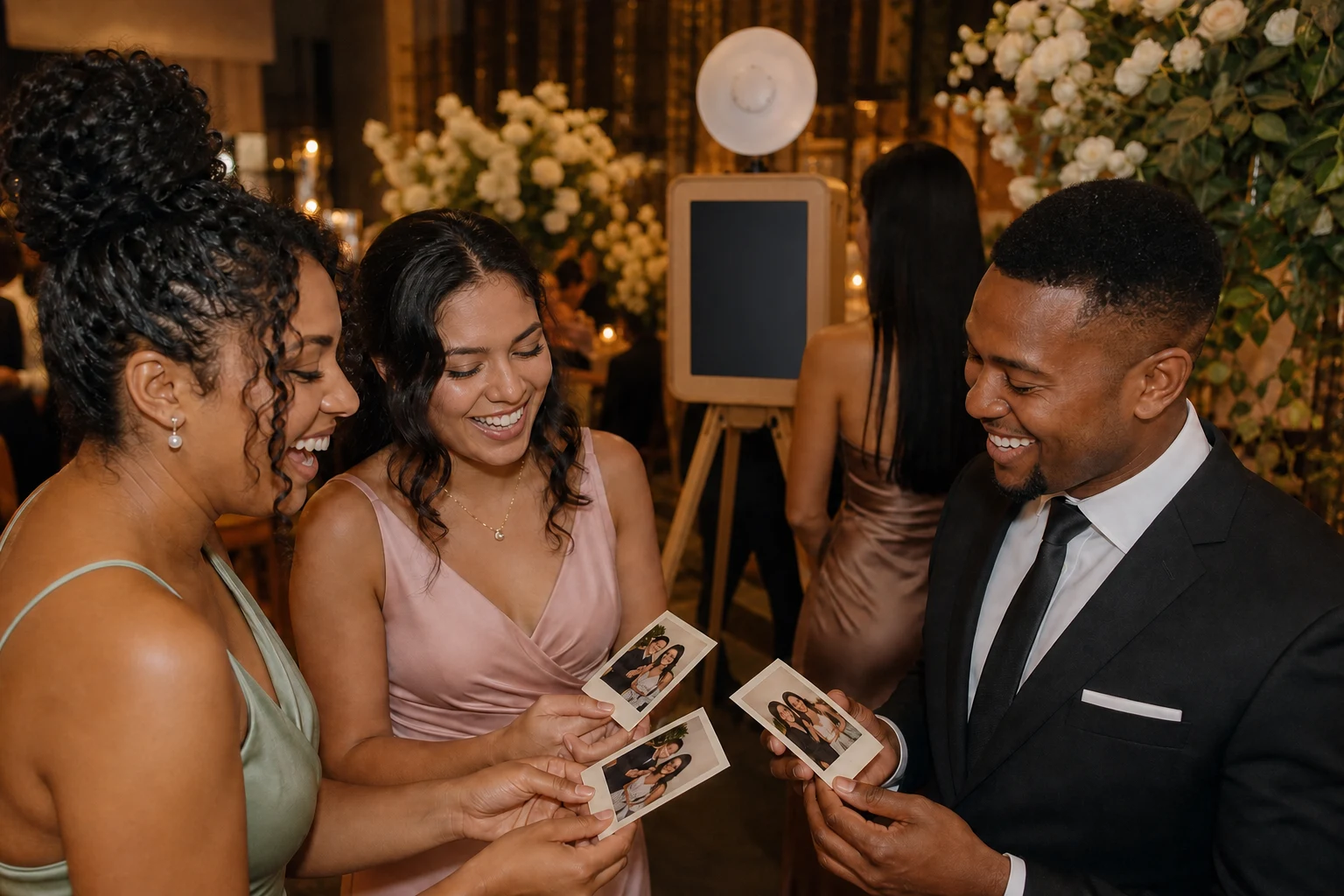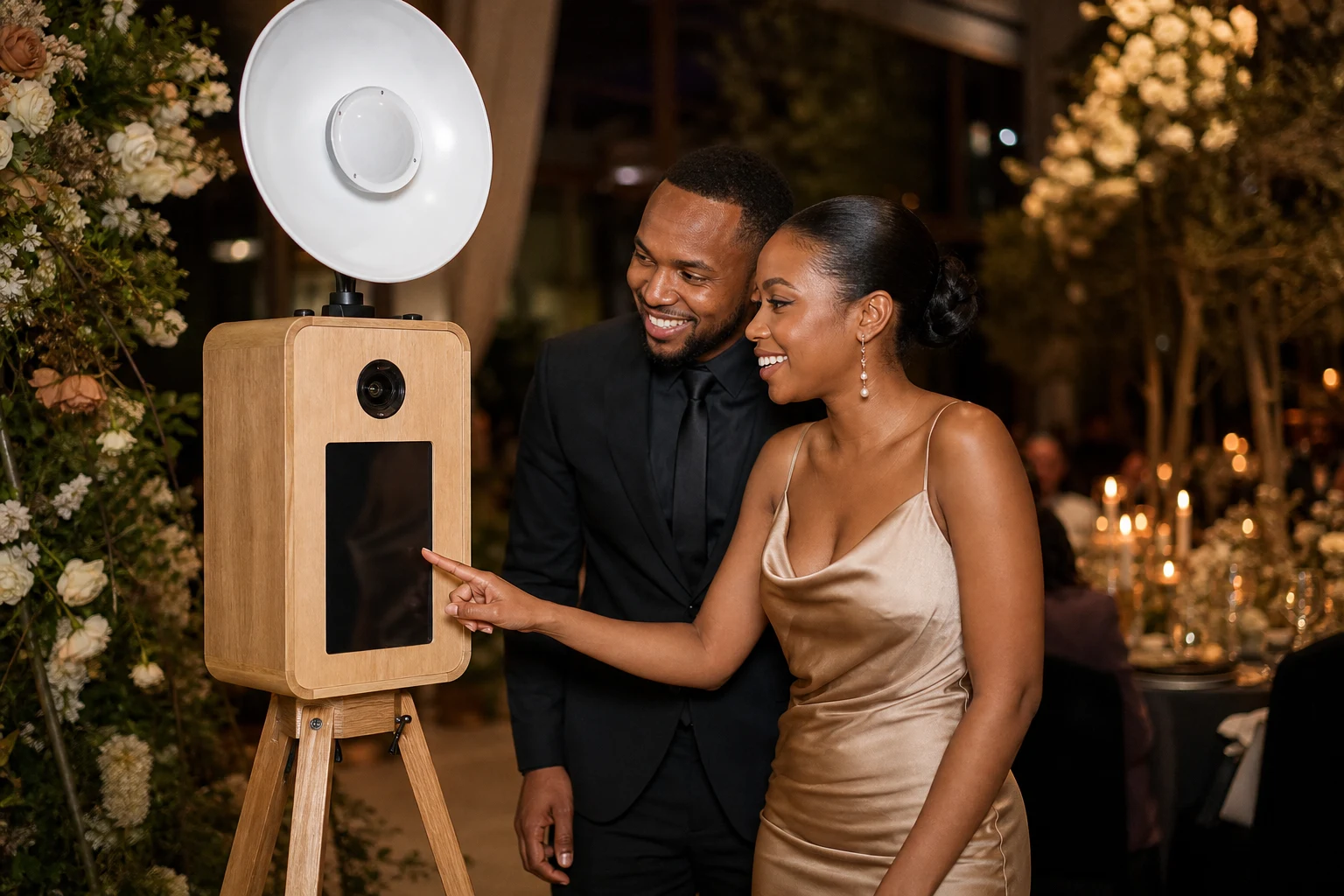
Start with the run sheet
Guest count is useful, but it does not tell the whole story. A wedding with a free-flowing reception can use a booth more easily than a smaller wedding with a long dinner, several speeches and a room change.
Mark the periods when guests are standing, moving and free to choose an activity. Those are the hours you are buying.
Also check what “open” means in the supplier quote. Setup and pack-down are included with AI Booth, but the booked duration is the guest-facing operating period. Venue access and setup timing are agreed against the actual venue plan.
A quick duration comparison
| Booking | Usually suits | Watch for |
|---|---|---|
| 2 hours | One concentrated window, such as cocktails or the first part of the party | Delays can consume a meaningful part of the booking |
| 3 hours | A reception with time for discovery and return visits | Do not spend the middle hour competing with speeches |
| 4 hours | Staggered arrivals, several social peaks or a longer reception | More time is not useful if the booth is hidden or guests are seated |
These are planning patterns, not capacity promises. The number of guests served depends on portrait choices, repeat visits, group behaviour and the agreed event setup.
Two hours: one clear window
A two-hour booking works when the booth has a defined job. Cocktail hour is the obvious example. Guests need something to do while the couple is away, and the booth can close before dinner.
It can also suit a smaller reception with a short formal programme. The risk is delay. If photographs or speeches run late, a large part of a two-hour window may pass while guests are unavailable.
Illustrative two-hour window:
| Time | Wedding activity | Booth plan |
|---|---|---|
| 16:30 | Ceremony ends; couple leaves for photographs | Open near the cocktail area |
| 17:30 | Guests begin moving toward reception | Keep operating if the route passes the booth |
| 18:30 | Guests are called for dinner | Close after the final waiting guests |
This example works only when the ceremony and reception spaces are close enough for guests to find the booth. At some Johannesburg and Muldersdrift venues, cocktails happen in a garden or courtyard while dinner is in a separate building. Confirm which space has power, shelter and supplier access before committing the whole booking to that gap.
Three hours: room to discover it
Three hours is the practical middle. Guests do not all need to arrive at once, and people who were busy during the first hour still have a chance to take part.
For many receptions, the booth opens after dinner or formalities and remains available through the first part of the party. That allows for repeat visits without keeping the booth open long after demand has peaked.
Illustrative three-hour window:
| Time | Wedding activity | Booth plan |
|---|---|---|
| 20:00 | Dinner ends; short formalities continue | Host prepares, but guests remain focused on the programme |
| 20:30 | First dance ends and the room loosens up | Open as guests begin moving |
| 21:30 | Dance floor and bar are active | Continue through the first strong social peak |
| 23:30 | Later party | Close at the agreed time |
Do not treat this as a template to copy blindly. A venue with an early curfew, shared transport or a long drive back to Johannesburg may peak earlier.
Four hours: several traffic peaks
Four hours is useful when the venue has separate spaces, guests arrive at different times or the formal programme divides the evening. It also gives a larger guest list more breathing room.
Choose it because the schedule needs it, not because longer automatically means better. A booth hidden during dinner for two of those hours is not creating more value.
Illustrative four-hour window: open for the last part of cocktails, pause guest encouragement during entrances or speeches, then continue into the party. Whether a pause affects booked operating time must be agreed in the event brief; do not assume the clock stops automatically.
Estimate demand honestly
Consider:
- total guests and the proportion likely to participate
- whether people will arrive together or in waves
- how long speeches and dinner will hold the room
- whether the booth is visible from the main social area
- whether guests are likely to return for another style
AI portraits tend to encourage repeat visits, so a little extra time can matter more than it would for a once-off headshot station.
Accessibility matters here too. Guests who use mobility aids, older relatives and anyone who prefers a quieter moment should not have to negotiate a dense dance-floor crowd to participate. A longer booking can spread demand, but good placement and active hosting matter more than duration alone. See how to plan the booth space before the venue freezes its floor plan.
Build in a small margin
Wedding schedules move. Photographs can run over, Highveld storms can move cocktails indoors, and speeches often grow on the night. If the booth must be available to as many guests as possible, do not place the whole plan inside a narrow gap with no alternative.
Use these questions before booking:
- Is the booth mainly filling cocktail hour, or is it part of the evening party?
- When are guests free rather than seated or listening?
- Will transport leave in waves?
- Does the venue move guests between ceremony, cocktails and reception spaces?
- Is there a sheltered fallback if weather changes the plan?
- Would guests reasonably have a second chance if they miss the first hour?
If timing is still unclear, compare the trade-offs in the best time to open a wedding photo booth.
Share the run sheet when requesting wedding AI photo booth hire. We can recommend a sensible opening time and duration before the final schedule is locked.