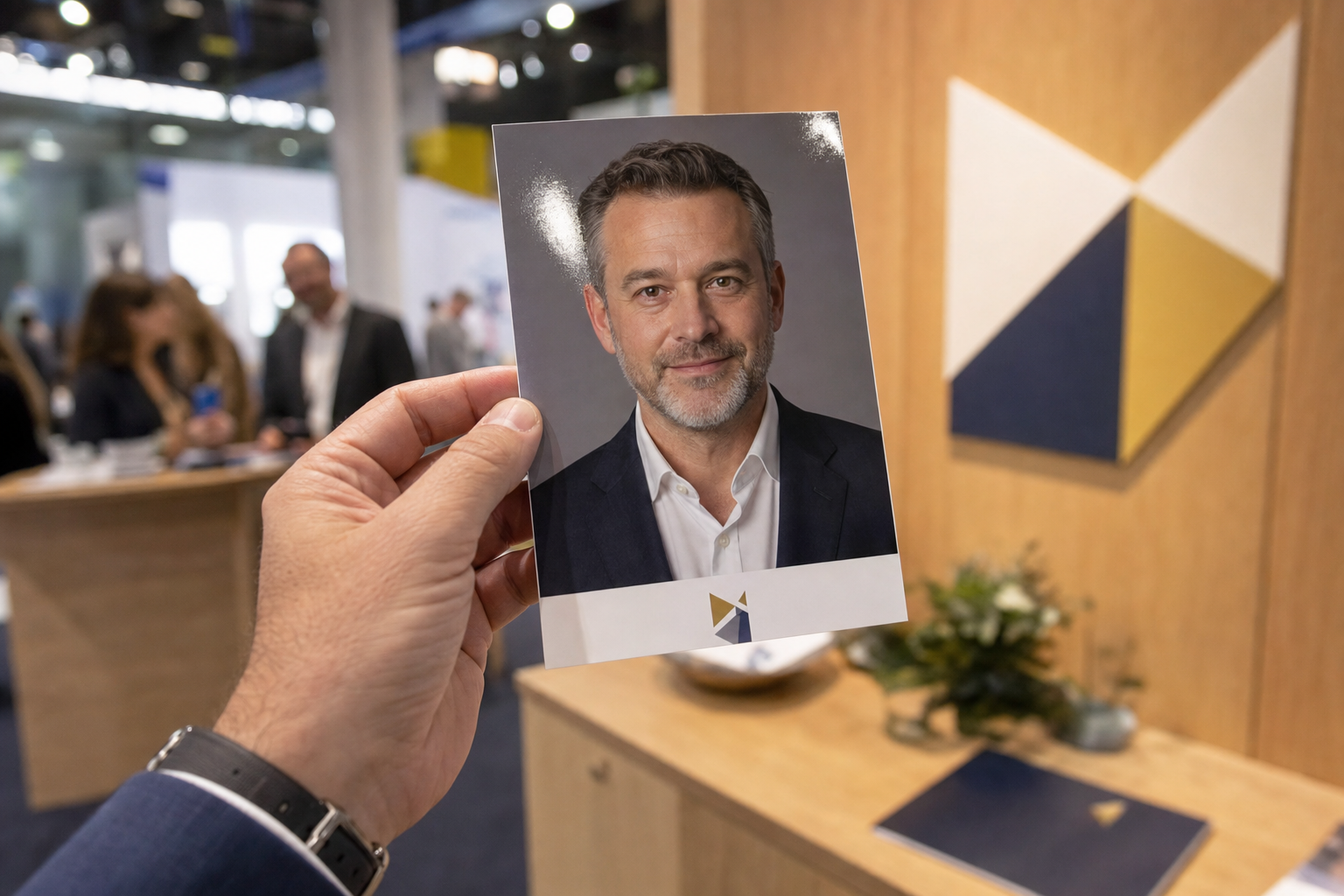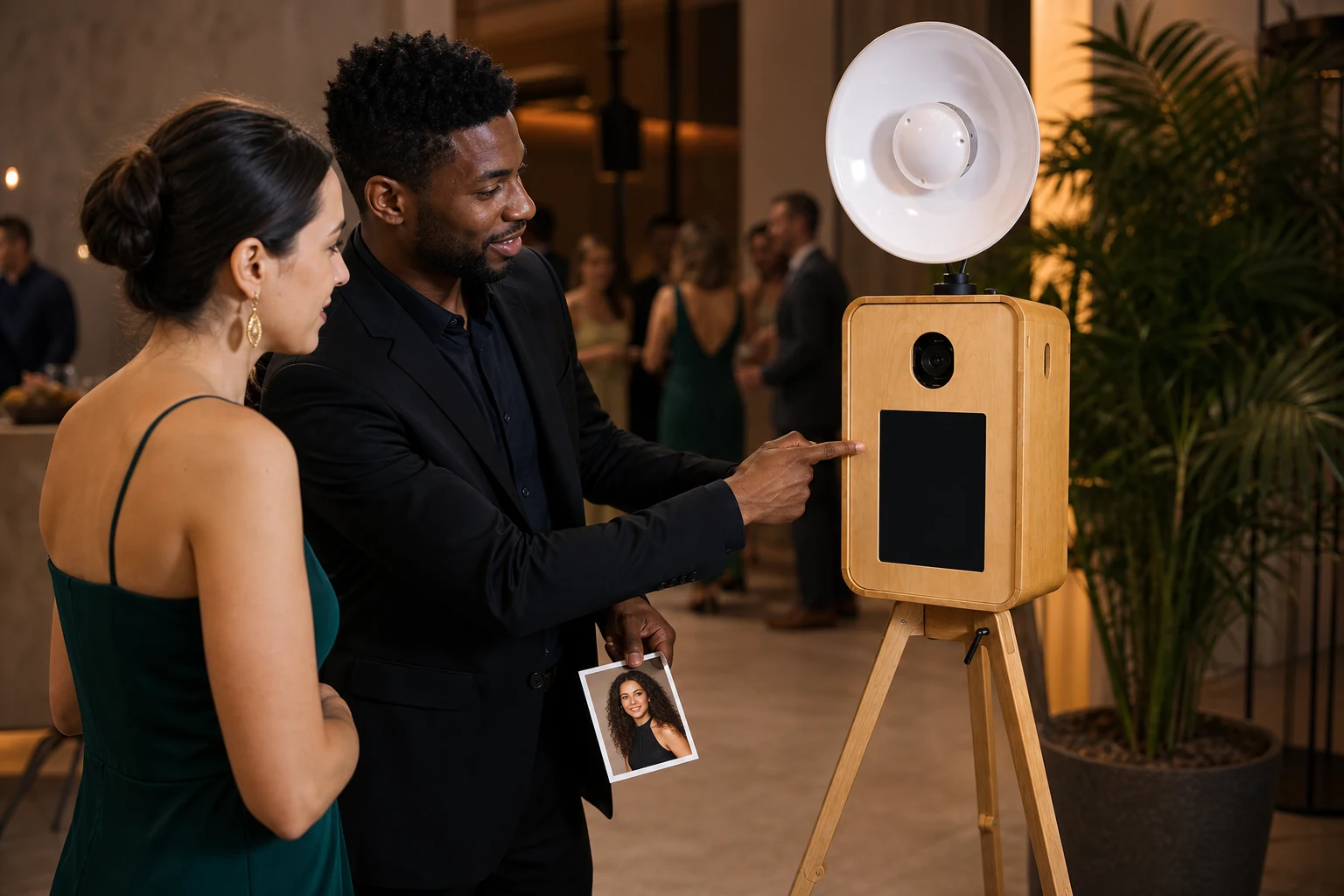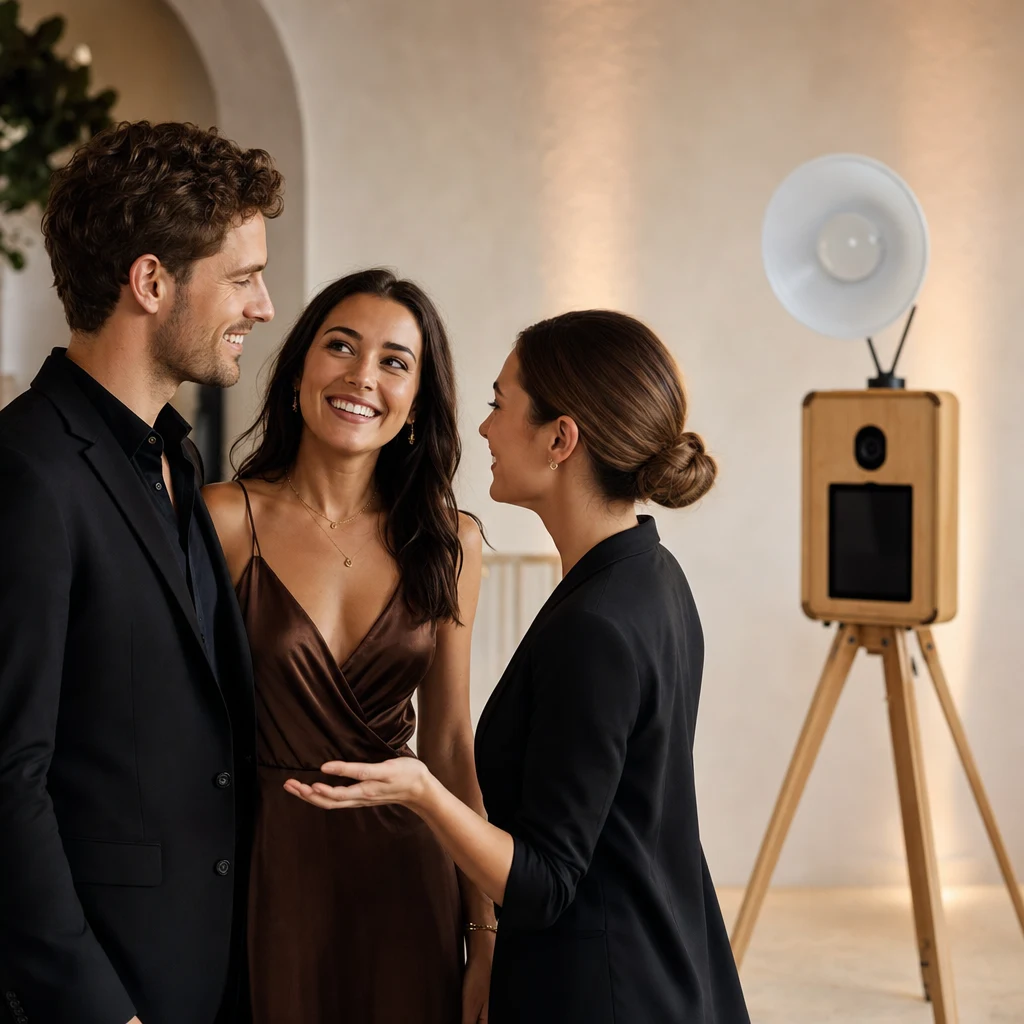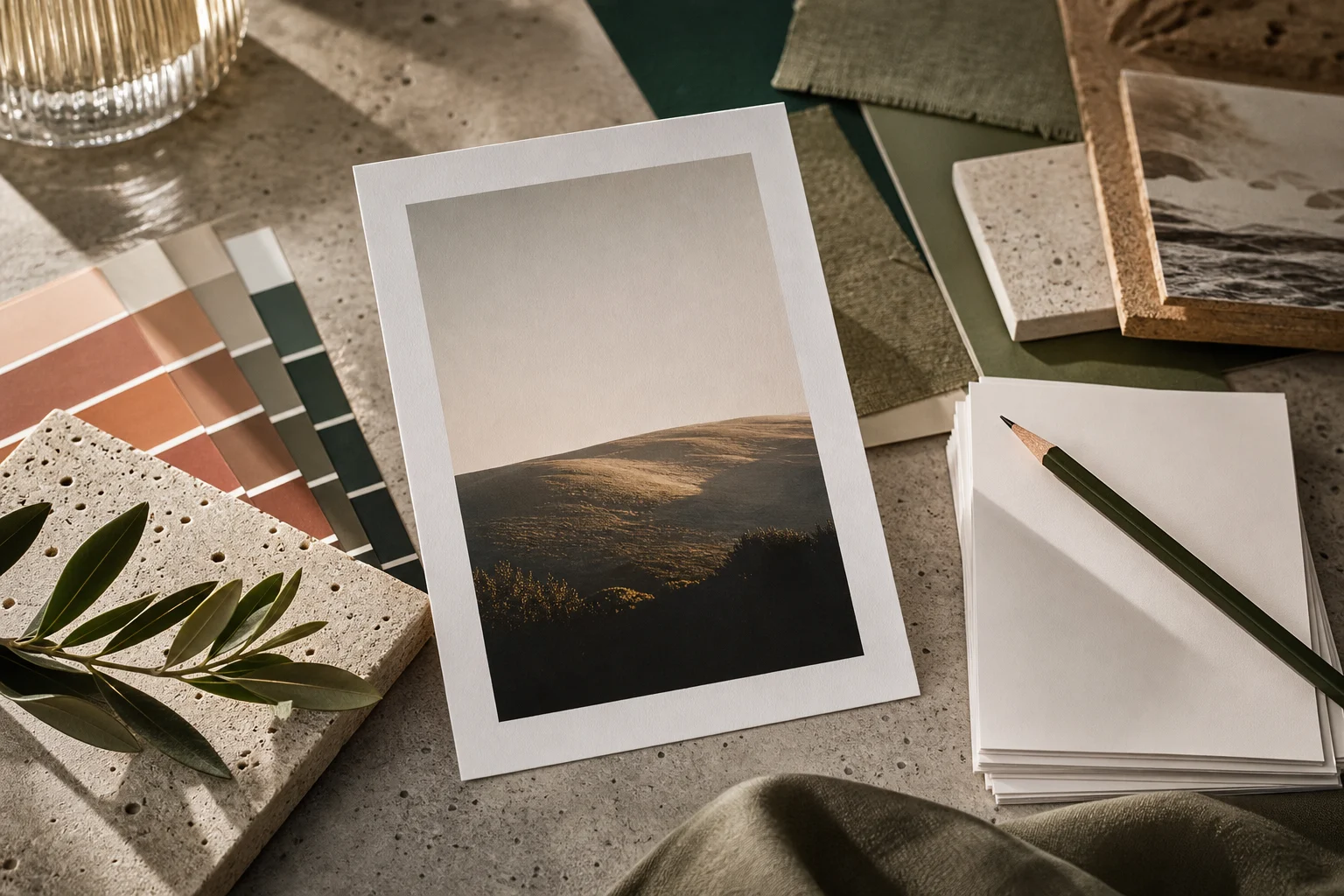
A 4 x 6 inch portrait print is approximately 102 x 152 mm. That is enough space for a strong image and a restrained campaign signature, but not enough for a poster’s worth of messaging. The practical rule is simple: design the object a guest would want first, then make sure the brand remains unmistakable.
Begin with the portrait, not the border
The transformed guest image should carry the campaign world through setting, colour, texture and mood. If all the branding sits in a heavy frame, the output can feel like a generic photograph dropped into an advert. A better handoff gives the creative team both the portrait direction and the output layout to approve as one system.
Useful source material includes the correct logo files, brand colours, type guidance, campaign line, visual references and any prohibited uses. Also name one person who can give final approval. Conflicting comments from several teams late in production are a common way to weaken a simple layout.
Proof at the size people will hold
Laptop previews hide problems. Print a real 4 x 6 proof and hold it at a normal viewing distance. Check the following before sign-off:
- Is the face clear and still the visual priority?
- Is the logo recognisable without dominating the image?
- Can the campaign line be read without squinting?
- Does small type survive printing, or should it move to a landing page?
- If there is a QR code, does it scan from the physical proof under ordinary light?
- Are important elements clear of the final trim and layout boundaries supplied for the job?
- Does the design still work for light clothing, dark clothing and different portrait backgrounds?
- Is contrast strong enough for guests with reduced vision?
Do not invent bleed, trim or printer specifications from a generic online template. The production artwork should follow the specifications confirmed for the actual print setup.
Account for glossy-photo glare
Glossy photographs reflect spotlights, flashes and overhead event lighting. A proof that looks excellent under flat office light can lose dark detail or make a small code difficult to scan on site. Test the sample at more than one angle and under lighting reasonably similar to the venue.
Very dark blocks, hairline rules and fine reversed type deserve particular attention. A clean, high-contrast mark usually performs better than a complex footer. If a QR code is important, give it a quiet area and a useful destination; do not add one merely because there is an empty corner.
Keep the copy disciplined
One short campaign line is usually enough. Terms, competition rules and detailed product claims belong on an accessible web page or in the campaign’s formal notice, not around a portrait. The print may include a short URL or QR code, but the portrait should remain worthwhile even if the guest never follows it.
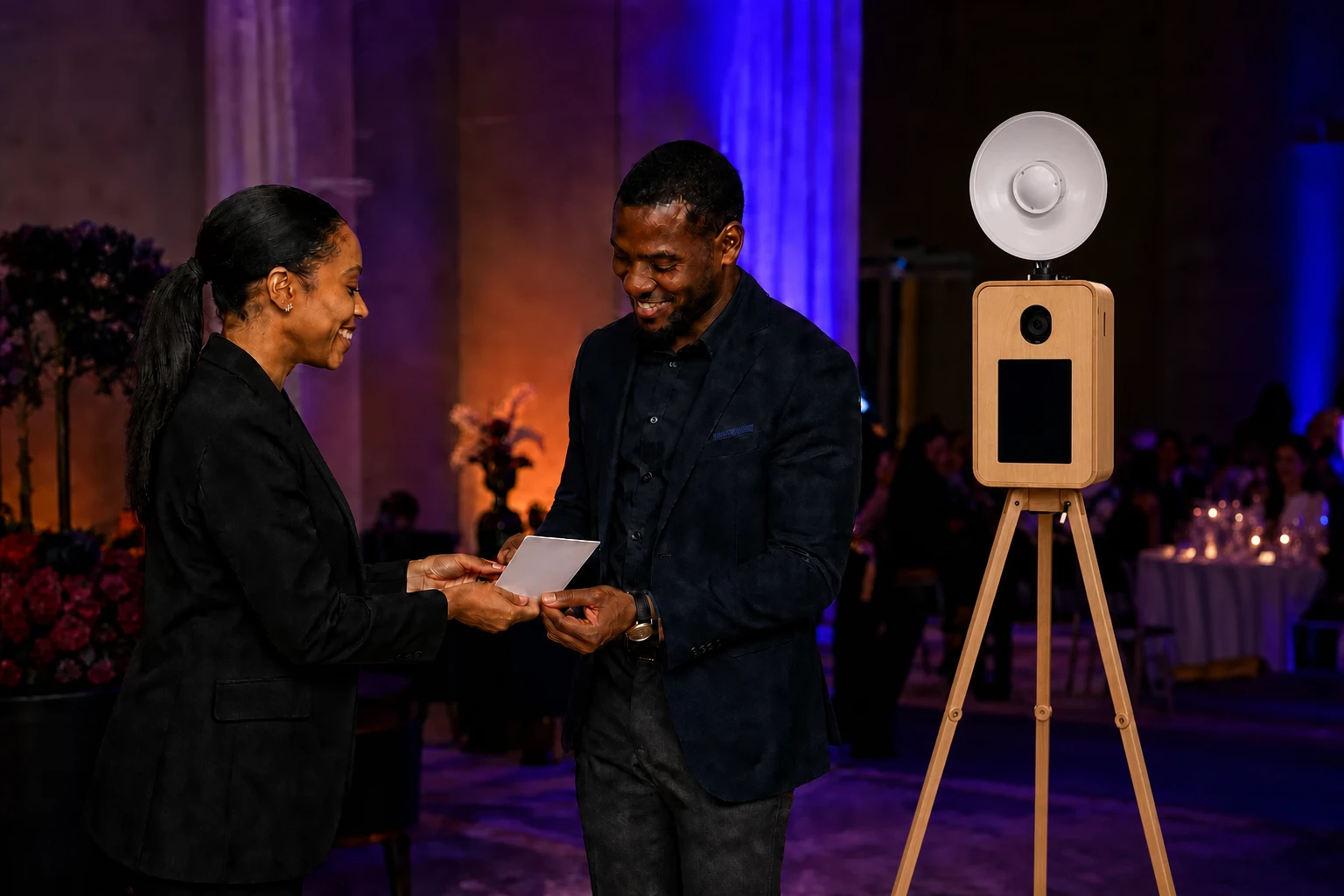
This restraint is commercial, not decorative. A print carried home or pinned up after the event gives the brand a longer life than an output that reads as immediate advertising.
Build print and digital as siblings
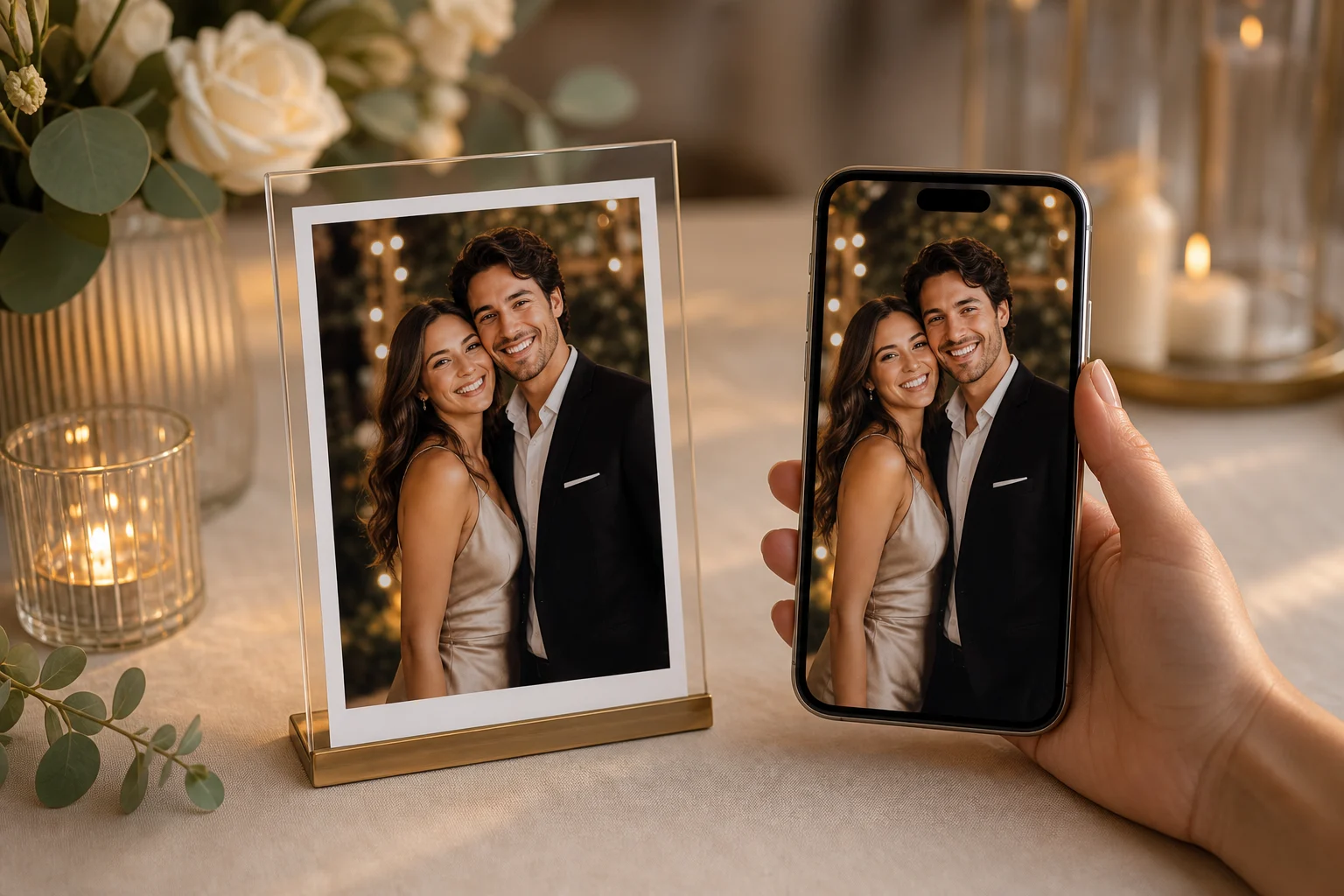
The digital portrait may need a different crop or safe area for a phone screen, but it should still belong to the same campaign. Approve both outputs before the event. Check logo size, text, orientation and whether the digital delivery method changes what information must be shown.
Do not assume a public gallery, indefinite storage or a fixed delivery process. Those details belong in the event-specific production and privacy brief.
Use a clean approval chain
A practical sequence is creative direction, initial layout, representative test portraits, physical proof and final production approval. The actual timing and number of revisions depend on the brief. Record the approved files and the approver so the host and production team are not resolving design questions during the event.
For the wider guest journey, read how an AI photo activation works. AI Booth provides portrait-format 4 x 6 inch prints as part of its hosted format; campaign-specific style development starts at R750 and is scoped according to the creative work required.