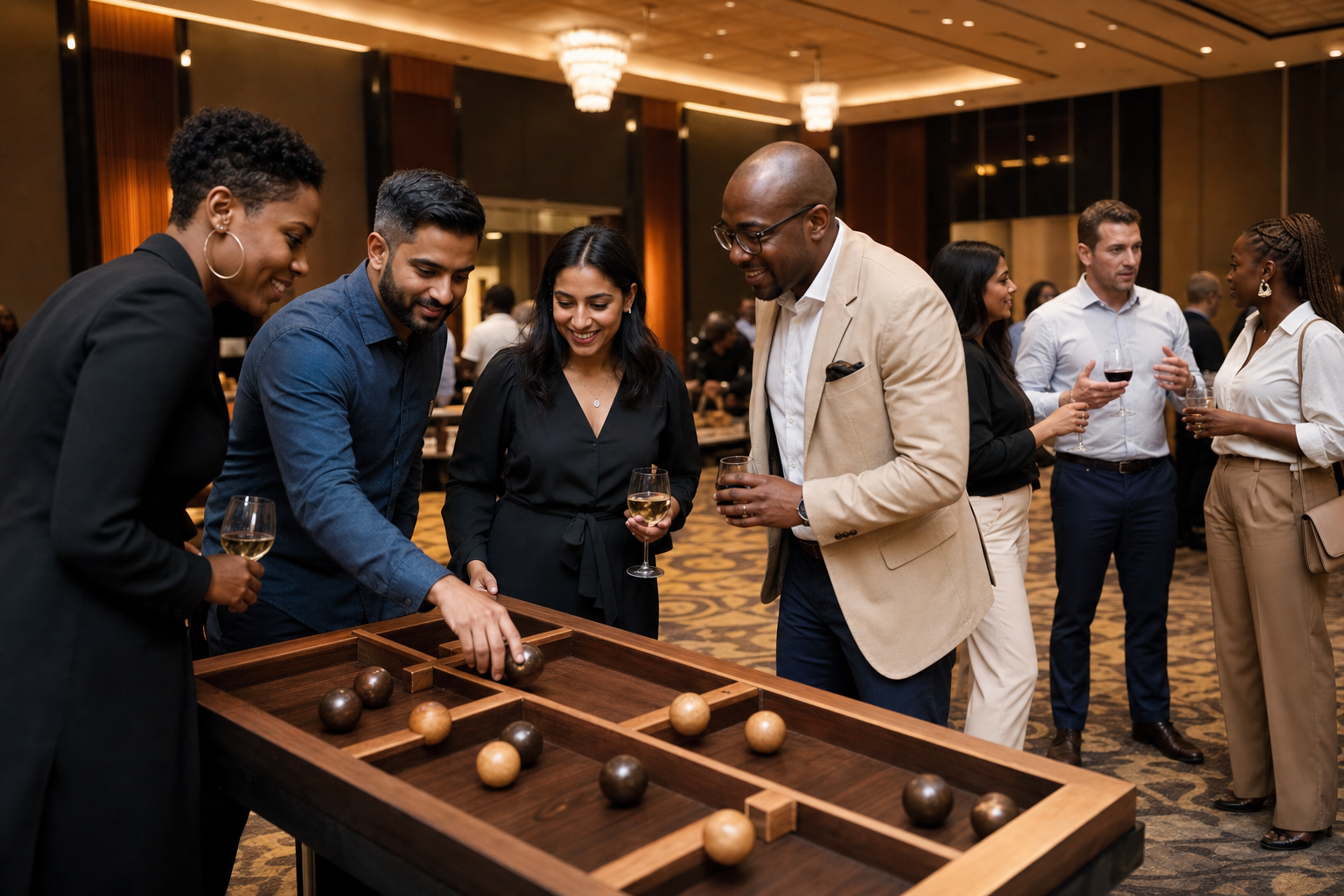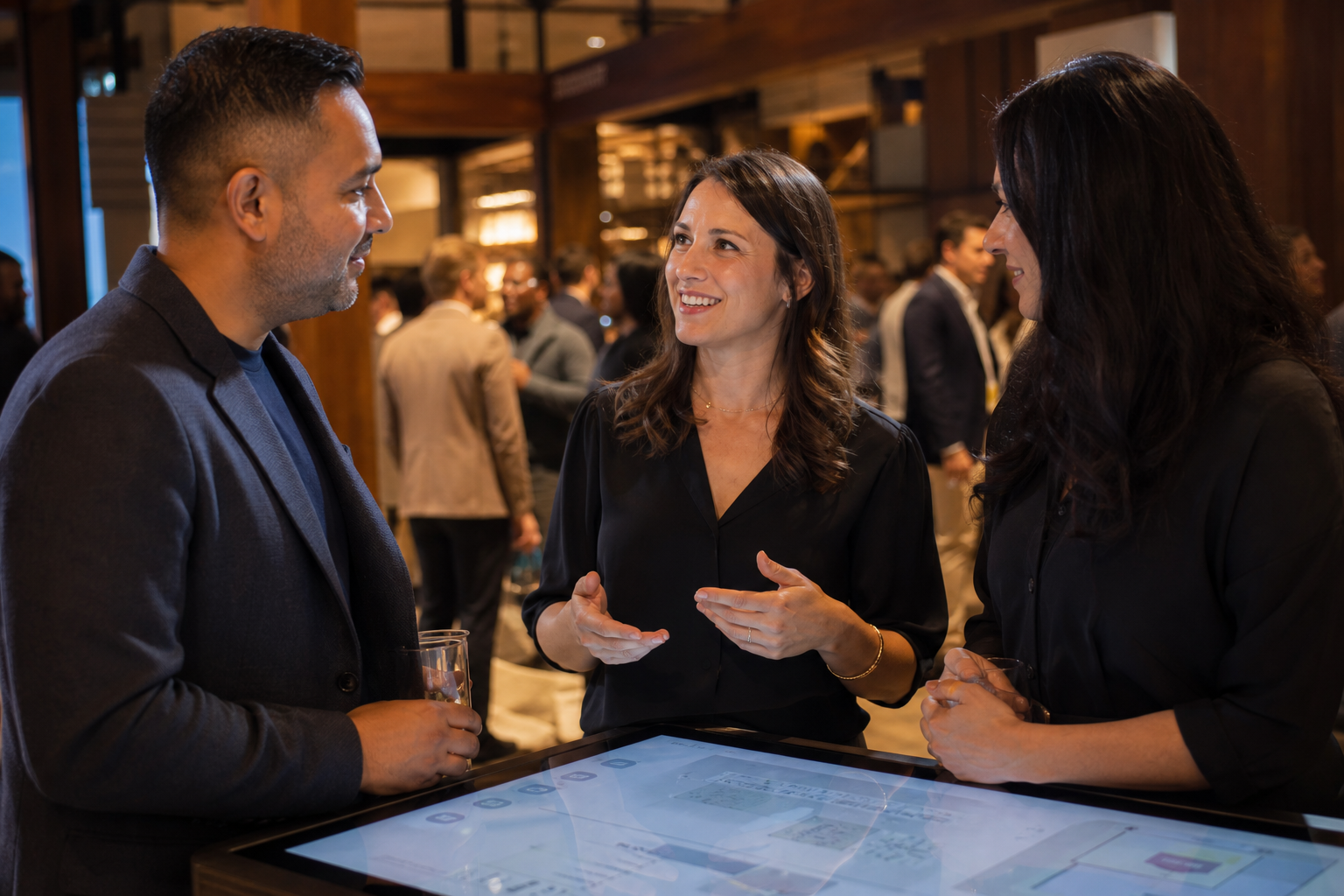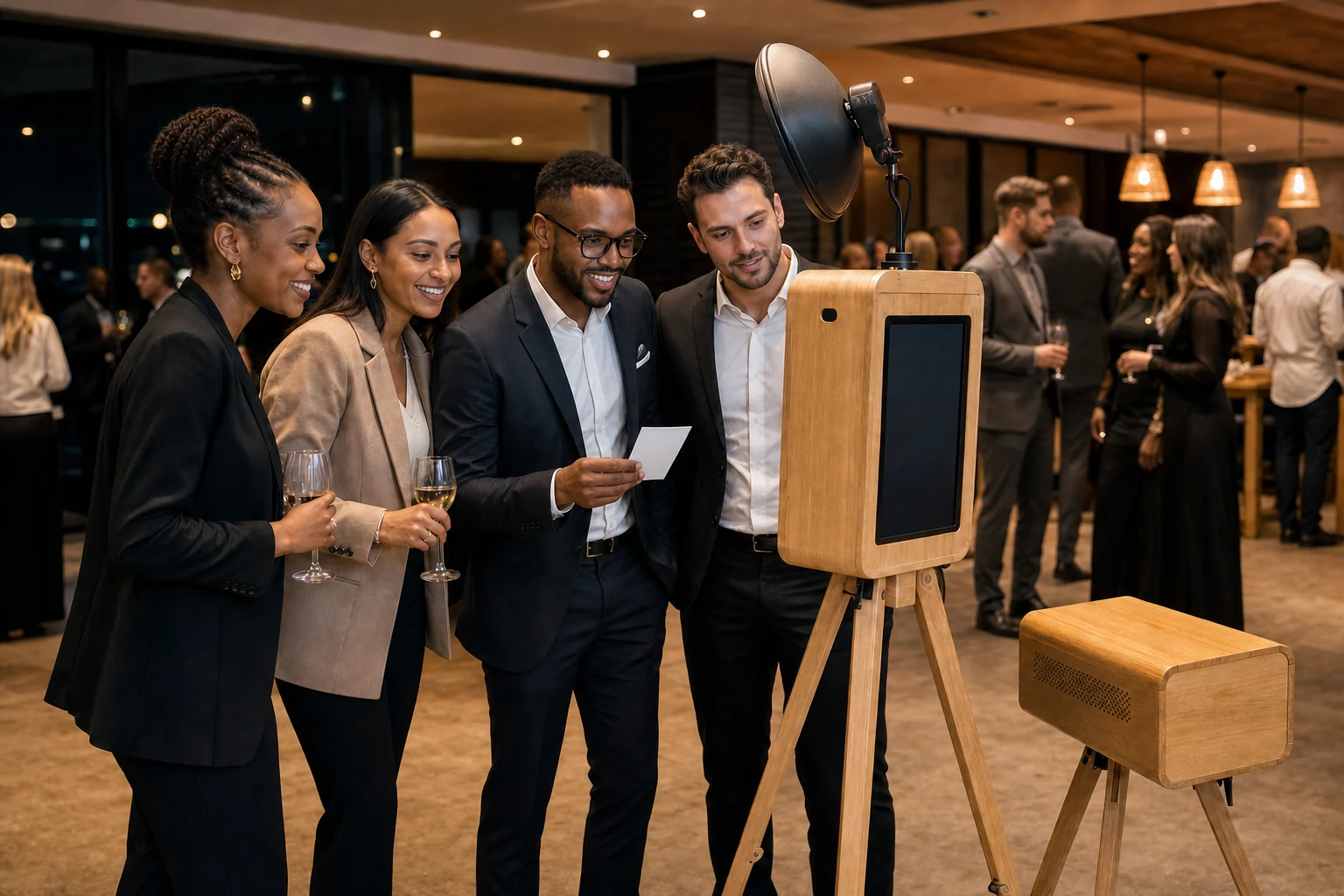
Corporate event activity ideas are easier to choose when the event has one primary job. A networking evening needs a reason to start conversations. An awards event needs energy between formal moments. A product session needs an activity that makes the product easier to understand. A team gathering needs participation without forcing the whole room into the same kind of fun.
Start with that job. Then choose a format that fits the guest mix, venue, timing and follow-up. This keeps an activity useful after the novelty wears off.
Start with the event objective
Write one sentence before you compare suppliers or save another list of ideas. “We want people to meet colleagues outside their usual team” is a more useful brief than “we need something fun”. The first sentence gives an activity a job; the second leaves every supplier to guess.
Use one primary objective and, at most, one supporting objective. A single activity can create conversation and a keepsake, for example, but it will struggle if it is also expected to deliver product training, lead capture, entertainment and a formal recognition moment.
| Event objective | Activity role | What good looks like | What to avoid |
|---|---|---|---|
| Networking and introductions | Give people a low-pressure reason to stand together or start a conversation | Guests can join, leave and continue talking without a long briefing | Loud, compulsory formats that take over the arrival window |
| Recognition and appreciation | Add energy around the formal programme or give the thank-you a lasting form | The activity reinforces the moment without competing with the stage | A queue or performance that distracts from awards and speeches |
| Product education | Help guests try, compare or explain something relevant to the offer | The guest leaves with a clearer answer or next step | A novelty challenge that has no connection to the product |
| Team connection | Create useful contact across departments or work circles | People participate at different comfort levels and still feel included | Forced vulnerability or physical competition with no alternative |
Corporate event activity ideas by objective
For networking and introductions
Networking activities work best when they create a small opening rather than demand a large performance. Use a short hosted prompt, a drop-in demonstration, a shared making moment or an output that gives two people something to discuss. Keep the sound at conversation level and make the next step obvious.
Place the activity where guests naturally circulate, but not in front of registration, the bar queue or the route to the formal room. The corporate event entertainment guide covers the same placement decision from an agenda and guest-mix perspective.
For recognition and appreciation
Recognition events have a visible rhythm: arrivals, welcome, formal acknowledgements, food and the later social period. An activity should support one of those windows. It can help guests settle before the programme, give people a reason to move after a long seated section or create a keepsake once the formal moment has landed.
Keep the recognition itself clear. Do not make people wait in an activity queue to receive an award, and do not add a second stage moment when the programme already has one. If the event includes a gift or printed output, decide who owns the handover and where it happens before the room opens.
For product education
Begin with the question the guest should be able to answer after taking part. Is the priority understanding how the product works, comparing two options, seeing a result or knowing what to do next? The activity format follows from that question.
Give the host a short explanation, a clear demonstration path and a way to hand an interested guest to the right person. If the event also needs an audience exchange or a measured follow-up, the event engagement planning guide provides a useful framework for connecting guest action to a business outcome.
For team connection
Team connection is not the same as making every colleague complete the same challenge. A quieter tabletop task, a shared food or making activity, a guided conversation or an optional portrait moment can all create contact without putting the most outgoing people in charge of the room.
The size of the group changes the flow. A small team may have one shared moment; a larger organisation may need several points of participation or a longer open window. The staff-party guide for different team sizes is the better companion when the guest count is the main planning constraint.
Check the activity against the real event
An idea that sounds good in a list can become difficult once the venue and run sheet are visible. Test it against these five questions:
- How much effort does the guest need to give? Can someone understand the activity in one sentence and opt in without embarrassment?
- Where does it fit in the programme? Name the opening window, pause points and final collection or departure time.
- What does the room need? Check the queue, sound, lighting, power, access route, seating and any service pinch points.
- Who runs it? Name the host, the event-side decision-maker and the person who can pause or move it when the programme changes.
- What happens afterwards? Decide whether the guest receives a keepsake, information, a follow-up route or simply a good shared moment. Record only the response that the agreed setup can actually collect.
If the activity needs a long explanation, blocks a circulation route or depends on every guest arriving at the same time, it is probably the wrong fit for a mixed corporate room. Simplify it, shorten the window or choose a format that can breathe around the event.
Write a supplier-ready activity brief
Give suppliers the same short brief so their proposals can be compared fairly. Include:
- the primary objective and the supporting objective, if there is one;
- who the guests are and what level of participation is reasonable;
- the action guests will take and what they receive in return;
- the operating window, pause points and expected traffic pattern;
- the proposed position, access route, sound level, power and queue space;
- the host, internal approver and final decision deadline;
- accessibility, dietary, privacy or consent questions that need a separate answer;
- the indoor, reduced-time or lower-energy fallback;
- the one useful observation or outcome the event team will review afterwards.
This brief also makes it easier to tell whether a supplier is recommending an activity for the event or simply listing everything they can provide.
Where a staffed AI portrait activity can fit
If the objective is to make introductions easier or give guests a shared output, a staffed AI portrait activity can be one option. Guests choose an available portrait style on the front screen, face the camera for one photograph and review the completed result on the larger rear screen. The agreed booking can include a 4x6 print and configured digital delivery.
That does not make it right for every corporate event. Keep the experience outside registration, speeches and service pinch points, and brief its opening window and creative direction alongside the rest of the programme. If you are considering this route, the corporate AI photo booth service explains the staffed format and the event details needed for a useful quote.
Treat lead capture, image use and marketing consent as separate decisions. The activity should give the guest value before the event team asks for anything beyond what is needed to deliver the agreed output.
Use a final decision test
Before you approve the activity, ask:
- Can the organiser state its job in one sentence?
- Can a guest understand the invitation without a long explanation?
- Does the activity fit a real programme window rather than filling empty space?
- Can people participate at different levels and still feel welcome?
- Have venue, supplier and event-side owners agreed the position, pause rule and fallback?
- Is the expected output or observation useful enough to review afterwards?
The best corporate event activity ideas make the event objective easier to achieve. Once the objective, timing and guest action are clear, share the event brief with AI Booth if a staffed portrait experience belongs in the plan.