A corporate event planning timeline is a reverse plan from event day. It turns a brief into a sequence of decisions: who approves the direction, when the venue and suppliers are confirmed, when guest information is locked, and what must be checked before people arrive.
The exact lead time varies by event size, programme, guest travel, production and venue. The useful constant is the handoff. Every stage should end with an owner, a decision and the information the next person needs.
Start with the decision brief
Before collecting quotes or choosing an activity, write a short brief that answers:
- What should the event help guests do, understand or remember?
- Who is attending, and what level of participation is reasonable for them?
- What date or date window, venue constraints and programme requirements already exist?
- Who approves the budget, brand direction, suppliers and final changes?
- Which decisions are fixed, and which are still open?
Name one event lead to maintain the master timeline. Other people can own finance, venue, programme, brand, guest communications, procurement and event-day operations, but the timeline needs one person who can see the dependencies between them.
The corporate event planning timeline from brief to event day
Use the stages below as a working sequence. They are planning checkpoints, not universal supplier lead times. Put actual dates against them once the event date, complexity and approval process are known.
| Stage | Main work | Decision owner and handoff |
|---|---|---|
| Brief and mandate | Confirm the objective, audience, format, date window, budget boundaries and non-negotiables. | Event lead hands an approved brief to finance, procurement and the programme owner. |
| Venue and date | Check the room, access route, loading rules, power, layout, accessibility, catering relationship and formal programme requirements. | Event lead and venue owner confirm the working plan before suppliers are asked to design around it. |
| Programme and creative direction | Draft the run-of-show, arrival and break windows, formal moments, activity role, visual direction and approval path. | Programme and brand owners hand one approved direction to production and suppliers. |
| Supplier shortlist and confirmation | Compare proposals against the same brief, clarify deliverables, confirm access and record dependencies between suppliers. | Procurement or the event lead confirms what is included, who supplies what and who makes changes. |
| Guest communications and detail lock | Send the right invitation or registration information, track responses, and lock final numbers, dietary needs, accessibility questions and guest logistics. | Communications hands the latest guest information to venue, catering, programme and event-day teams. |
| Production and final checks | Approve artwork, print files, floor plan, signage, cue list, technical requirements, supplier arrival plan and contingency triggers. | Brand, venue and production owners sign off one final version instead of circulating competing files. |
| Event week and event day | Reconfirm access, arrival contacts, setup sequence, power, programme cues, supplier handoffs and the person who can make an urgent decision. | The event lead briefs the on-site team and keeps changes visible to every affected owner. |
| Close-out | Confirm the agreed output or follow-up, settle supplier questions, collect feedback and record what should change next time. | The event lead closes the brief and shares the useful learning with the next event owner. |
Work backwards from the event date
The timeline becomes practical when each checkpoint has a “latest useful date”. Work backwards in this order:
- Event day: What must be true before guests arrive? Name the access contact, setup sequence, final room layout, programme cues and contingency decision-maker.
- Event week: Which suppliers need a final reconfirmation? Check arrival instructions, venue access, power, artwork, guest numbers, dietary information, privacy or consent questions and the current run sheet.
- Before production is locked: Approve the visual direction, floor plan, signage, activity position, sound and lighting requirements, and any materials that need printing or preparation.
- Before guest communications: Confirm the date, venue information, programme shape, RSVP fields, accessibility route and the information guests need to make a useful response.
- Before supplier confirmation: Give every supplier the same brief, decision deadline, access details, expected deliverables and fallback requirements.
- At the start: Agree the objective, audience, format, budget boundaries, decision owners and the first date or venue constraint.
If a decision is waiting on another decision, show that dependency in the timeline. “Creative approval” is not complete if production still needs the final format, dimensions or delivery date. “Supplier confirmed” is not complete if the venue has not confirmed where the supplier can load in and set up.
The handoffs most likely to fail
Finance to procurement
The event team may approve a direction while procurement is still comparing a different scope. Put the approved brief, budget boundary, quote assumptions and final approver in the same record. If a cheaper option changes the guest experience or delivery requirements, send that change back to the event owner rather than treating it as a like-for-like substitution.
Venue to suppliers
Share the practical venue information early: access route, setup window, power, floor surface, sound restrictions, loading instructions, furniture, lighting and the position of queues or service points. A floor plan is useful only when the people delivering it are working from the same version.
Brand to production
Creative direction needs a clear handoff into real formats. Confirm the approved logo treatment, colours, copy, artwork dimensions, file owner and sign-off route. Keep an unapproved idea out of the production pack so the on-site team is not forced to interpret a draft.
Communications to event-day operations
Guest responses affect catering, seating, accessibility, arrival flow and programme decisions. Set a cut-off for the information each supplier needs, then publish one current guest summary. Do not make the venue or supplier team infer final numbers from separate email threads.
Programme to optional experiences
If an activity is part of the event, define its job and operating window beside the run-of-show. The corporate event activity guide is useful when the team still needs to choose between networking, recognition, product education or team-connection roles.
Brief a staffed AI portrait experience early enough
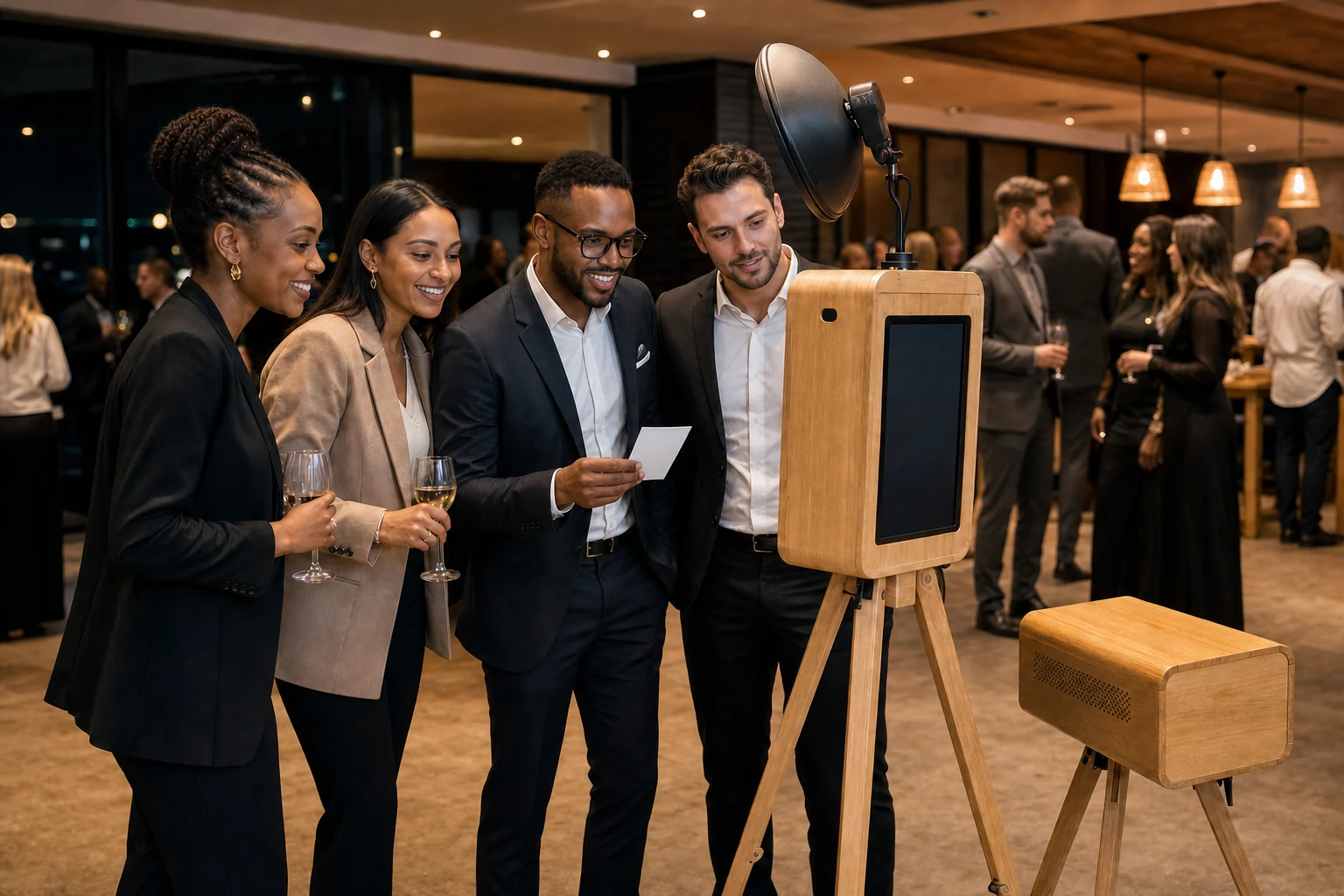
When a staffed AI portrait experience belongs in the event plan, include it before the final floor plan and creative lock. Guests choose an available portrait style on the front screen, face the front camera for one photograph, then review the completed result on the larger rear screen. The agreed booking can include a 4x6 print and configured digital delivery.
That sequence needs a real position, access route, operating window and queue plan. Keep it out of registration and formal programme pinch points, and confirm the exact event setup in the booking. The corporate AI photo booth service explains the hosted format and the event details needed for a useful quote. For the booth-specific space, power and access questions, use the corporate AI photo booth planning checklist.
Treat image use, guest privacy and marketing consent as separate decisions. The activity should give the guest value before the event team asks for anything beyond what is needed to deliver the agreed output.
Run the final corporate event planning timeline check
Before the room opens, the event lead should be able to answer these questions without searching through old messages:
- What is the event objective, and who can make a final decision if the plan changes?
- Is the venue, access route, floor plan and supplier setup position confirmed?
- Is the current run-of-show the same version held by programme, venue and suppliers?
- Are final guest numbers, dietary needs, accessibility questions and arrival instructions visible to the right owners?
- Are artwork, signage, print files and any activity direction approved rather than still in draft?
- Does every supplier know the arrival contact, setup window, deliverable and fallback?
- What is the trigger for moving, pausing or simplifying an activity if the programme or room changes?
- What will be reviewed after the event, and who owns that close-out?
A strong corporate event planning timeline does not try to predict every change. It makes the important changes visible early enough for the right owner to decide. When the brief, handoffs and final checks are clear, share your event details with AI Booth if a hosted portrait experience belongs in the plan.