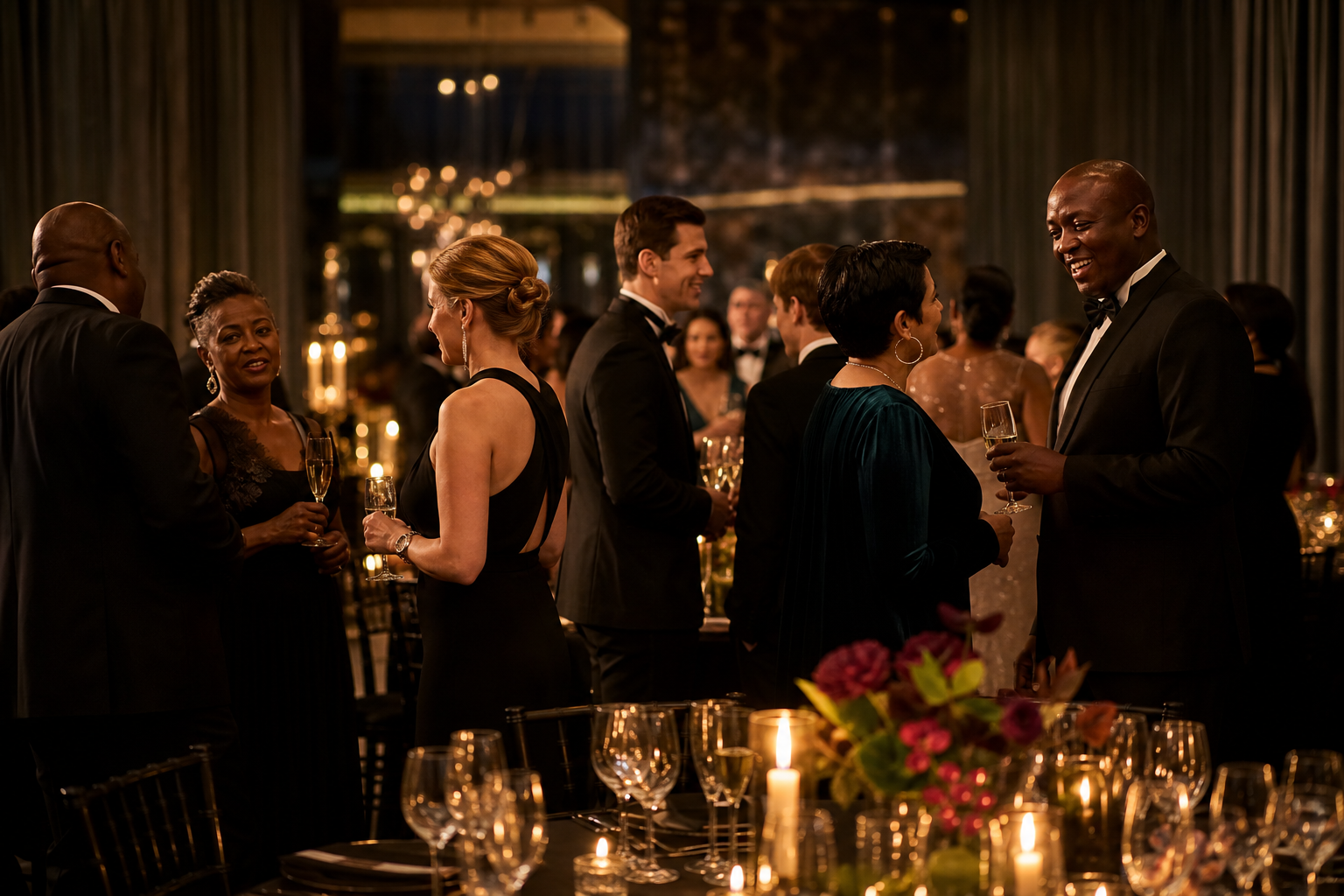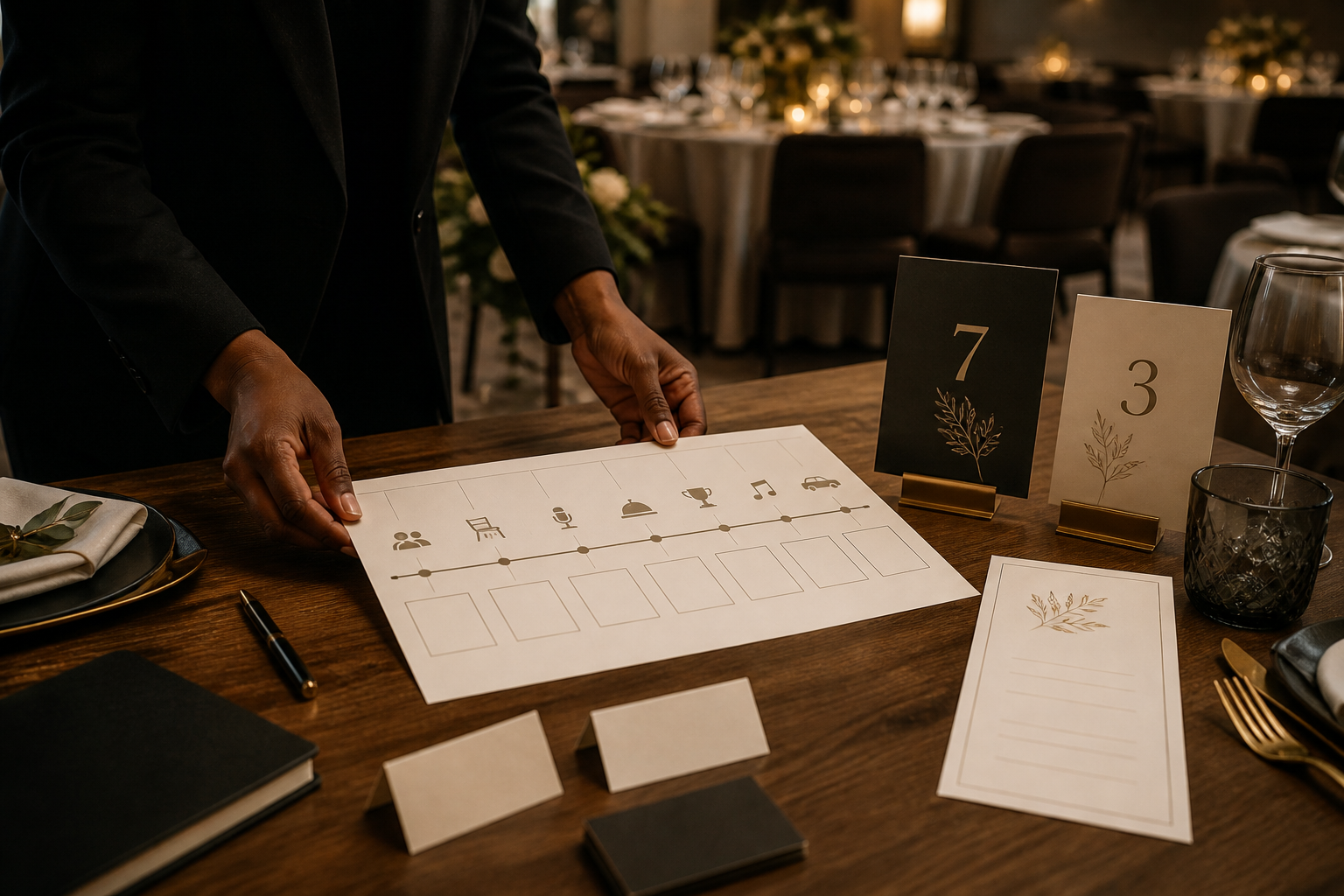
An awards ceremony for a work event should answer one practical question before anyone chooses a colour palette: what should colleagues feel recognised for, and how should that recognition happen in the room? The most useful awards ceremony ideas for work events combine clear categories, a manageable programme, moments of audience participation and an optional keepsake that does not compete with the people receiving the awards.
Use the guide below to choose the format first. Then shape the theme, run-of-show and suppliers around that decision. Actual timings, venue rules and supplier scope belong in the event brief.
Start with the recognition goal
“Employee awards” can mean very different things. A category that celebrates a measurable result needs a different citation from one that recognises quiet support or a team habit. Decide what the ceremony must reinforce before writing award names.
| Recognition goal | Award ideas to consider | Decision to make before nominations |
|---|---|---|
| Company values | Values champion, culture builder, or an award named after the behaviour you want repeated. | Which observable actions show the value in practice? |
| Results and performance | Sales, delivery, client service, innovation, growth or project achievement. | Which evidence period and criteria make the result fair? |
| Collaboration | Team player, cross-functional partner, mentor or problem solver. | How will you recognise contribution that is shared rather than individual? |
| Growth and milestones | Rising contributor, learning advocate, long-service or work-anniversary recognition. | Who checks dates, eligibility and the wording used in public? |
| Peer appreciation | Colleague choice, behind-the-scenes contributor or everyday difference-maker. | How will nominations be collected, moderated and closed? |
Name one owner for the criteria and one person who can resolve an edge case. That small piece of governance prevents the host from having to explain an unclear category on stage.
Choose the ceremony format before the theme
The format determines how much attention the awards can hold and what guests need from the venue. These are useful starting points for awards ceremony program ideas:
| Format | Best when | Strength | Watch for |
|---|---|---|---|
| Formal awards dinner | Recognition is the main purpose and guests expect a polished evening. | The room, dress code and programme can all support a shared moment. | Long speeches, slow transitions and an activity competing with the stage. |
| Awards block inside a wider company event | The event already includes a dinner, conference or year-end celebration. | Existing attendance and production can support the recognition moment. | The awards become an afterthought if the agenda is already crowded. |
| Light team awards | The aim is warmth, internal humour and broad participation rather than a high-formality gala. | More colleagues can contribute through peer categories and short citations. | Private jokes, vague criteria or humour that excludes part of the team. |
| Hybrid or remote ceremony | Teams are distributed or some recipients cannot attend in person. | Remote colleagues can still be part of nominations, presentation and response. | Audio, voting access, camera direction and a second run-of-show for remote guests. |
| Client-facing recognition evening | Partners, customers or industry guests are part of the audience. | The ceremony can build credibility around a clear achievement or shared standard. | Internal language, unverified claims or awards that are not meaningful to the wider room. |
If the ceremony sits inside a larger function, give it a visible start and finish. A short welcome, a recognition block and a defined close are easier to protect than a vague instruction to “fit the awards in somewhere”. For the wider brief-to-event-day handoffs, use the corporate event planning timeline.
Give every award a stage moment
An award feels considered when the recipient knows why it matters. For each category, prepare a small cue card or run-sheet entry with:
- the category name and one-sentence criterion;
- the recipient name, team and pronunciation check;
- the presenter and a short, specific citation;
- the point at which the recipient comes forward and where they stand; and
- the agreed photograph, acknowledgement or acceptance moment.
Keep the wording concrete. “Always goes the extra mile” is warm but difficult to distinguish from another category. “Rebuilt the client handover process so three teams could see the same next step” gives the audience a reason to remember the recognition.
Vary presenters where it helps the story, but do not create a new handoff for every sentence. The event lead, host, venue and production team should all work from one current order of awards. If the event also includes entertainment, the awards evening entertainment guide explains how to use arrival and post-formal windows without cutting across recognition.
Build an awards ceremony programme that breathes
The programme does not need constant stimulation. It needs a rhythm that lets people pay attention, celebrate a recipient and reset before the next block. A simple sequence could look like this:
- Arrival, welcome and a low-pressure social window.
- Opening remarks that explain the purpose and how the categories were chosen.
- A first set of awards while attention is fresh.
- A meal, conversation or short audience reset.
- A second set of awards, peer recognition or a featured achievement.
- Closing thanks, group acknowledgement and the next social or departure moment.
The exact number of award sets depends on the recipient list, venue and wider programme. Grouping related categories makes the ceremony easier to follow; alternating a long speech with another long speech does not. Agree a speaking limit, a backup presenter and a decision-maker who can pause or reorder a non-essential item if the evening runs late.
For a dinner-led event, map seating, service, speeches, awards and optional activities together with the corporate dinner event planning checklist. That keeps an awards idea from creating a surprise queue during food service or a sightline problem at the stage.
Add participation without taking over the recognition
Participation works best when the audience knows exactly what it is being asked to do. Choose one or two mechanisms rather than stacking every idea into the same night.
- Peer nominations: useful for everyday contribution and teamwork; publish the closing date and moderation rule.
- Audience choice: useful for a small set of clearly explained finalists; confirm eligibility and how the vote is counted before the host announces it.
- Table prompts: ask guests to share one contribution they noticed or one value they saw in action; collect only what the event team is prepared to use.
- Message wall or appreciation cards: gives quieter guests a route to participate without taking the microphone.
- A themed dress or arrival cue: creates energy before the formal programme without interrupting the awards themselves.
- A portrait or keepsake window: gives guests something personal to do before the opening, during a planned social reset or after the final award.
If you are considering an AI portrait experience, corporate AI photo booth hire is the relevant commercial route. In the standard guest flow, a guest chooses an available portrait style on the front screen, faces the camera for one photograph and reviews the completed result on the larger rear screen. A 4x6 print and configured digital delivery can be part of the booking; confirm the exact output, creative direction and operating window in the brief.
The rule is simple: do not put a queue beside the stage and do not invite guests to leave a presentation halfway through an award. An activity can increase the energy of the event while still giving recognition first claim on the room’s attention.
Choose a theme that supports the work event
Themes are most useful when they give the room a shared tone without replacing the reason for the ceremony. Try one of these directions:
- Polished gala: restrained metallics, formal place settings and a host-led programme for a high-recognition evening.
- Values in action: use the organisation’s values as the visual thread, with each award introduced by a real behaviour rather than a generic slogan.
- Editorial or studio night: use a clean backdrop, considered lighting and a portrait or arrival moment that feels more like a magazine profile than a prop station.
- Warm team celebration: use colour, music and peer-led categories to make the event feel generous and social while keeping the criteria clear.
Keep decorations, music and entertainment subordinate to speech clarity, recipient access and sightlines. The best awards ceremony decor ideas cannot rescue a room where guests cannot hear the citation or see the person being recognised.
Check the venue and supplier handoffs
Before the invitation or supplier brief is final, walk through the ceremony from the guest’s point of view. Confirm:
- where guests enter, wait and sit;
- where the stage, presenter route and recipient route sit on the floor plan;
- whether sound, lighting and screens support the citation and the photograph;
- which activity or supplier positions need power, access and a queue buffer;
- what happens if dinner, transport, speeches or the awards order changes; and
- who can approve a pause, move or close for each optional element.
If an optional experience is part of the evening, write its opening window, pause signal and close time into the same run sheet as the awards. This is especially important when arrivals are staggered or when the venue has a separate foyer, terrace or lounge available.
A quick approval checklist
Use this as the final decision pass with the organiser, host and venue:
- The recognition goal and criteria are written in plain language.
- Every category has an owner, recipient process and pronunciation check.
- The ceremony format matches the guest mix and the event’s purpose.
- The running order has grouped award blocks, reset points and a named timekeeper.
- The host, presenters, venue and production team share the same version.
- Any vote, nomination, message or privacy decision is closed before event day.
- Optional entertainment or portrait activity has a separate operating window and pause plan.
- The room layout protects stage sightlines, access routes and guest comfort.
- The close tells recipients and guests what happens next.
If those decisions are clear, the theme becomes easier and the supplier brief becomes shorter. Share the date, venue, guest count, recognition goal and likely programme window through the AI Booth quote form if you want to explore a hosted portrait keepsake alongside the event.