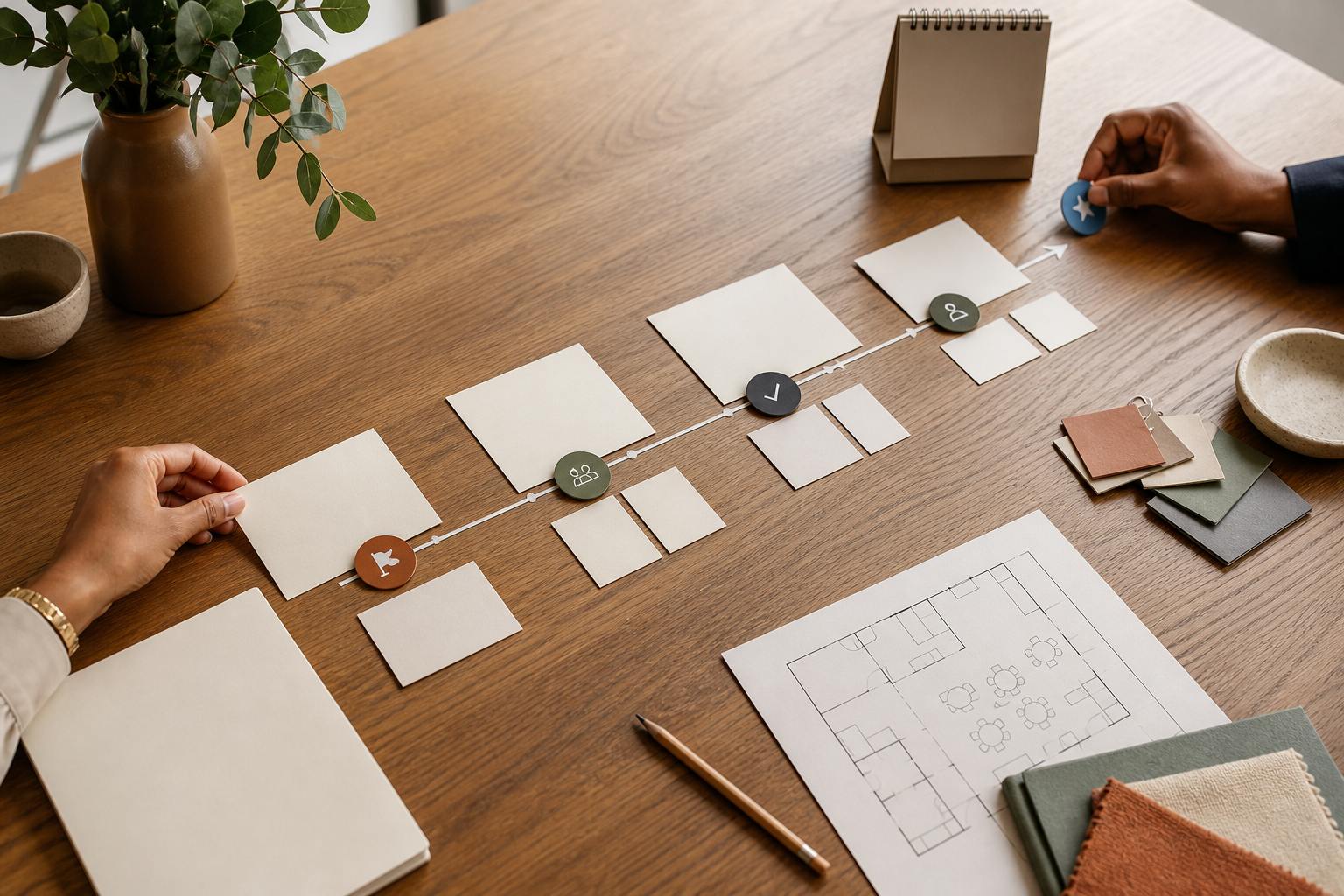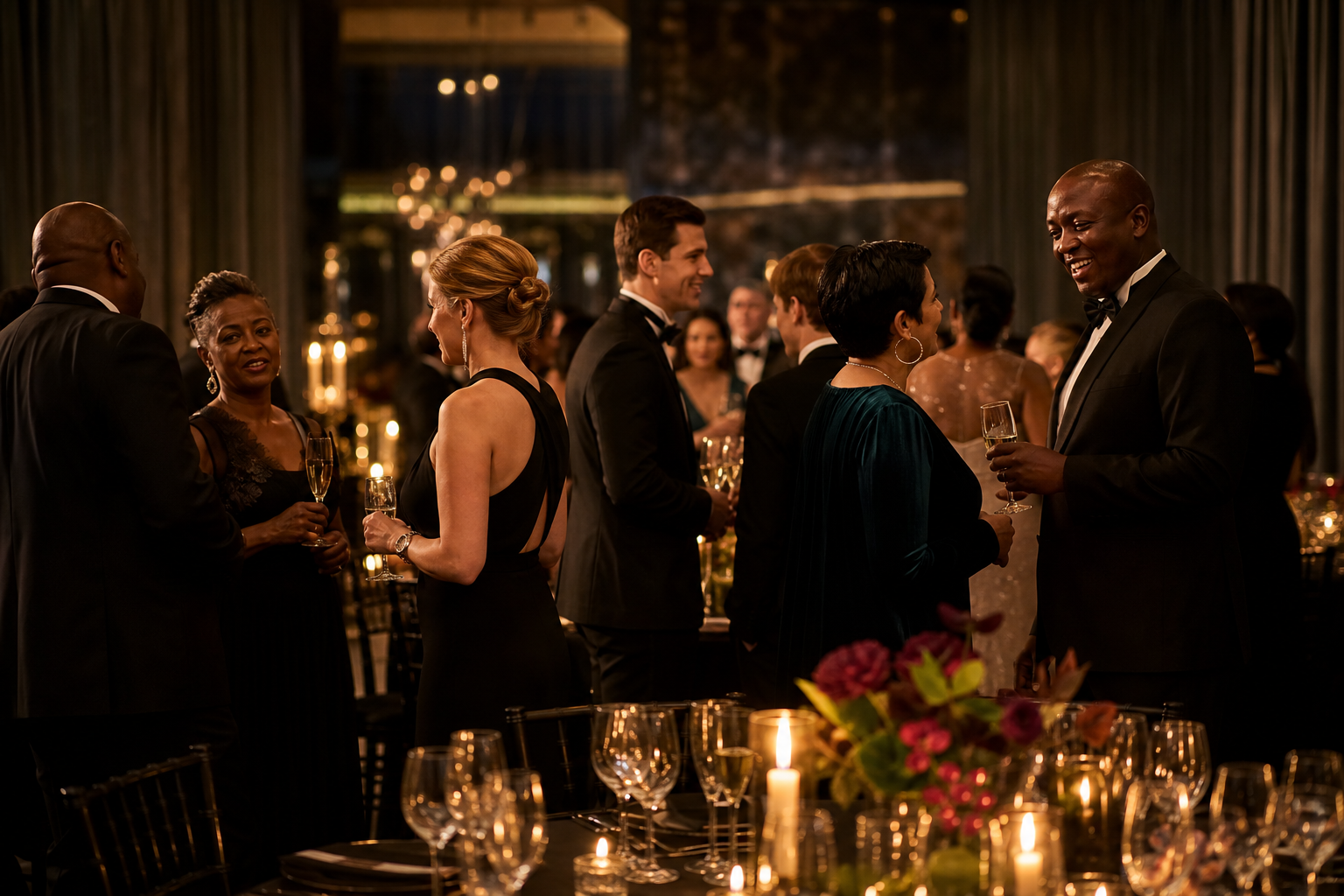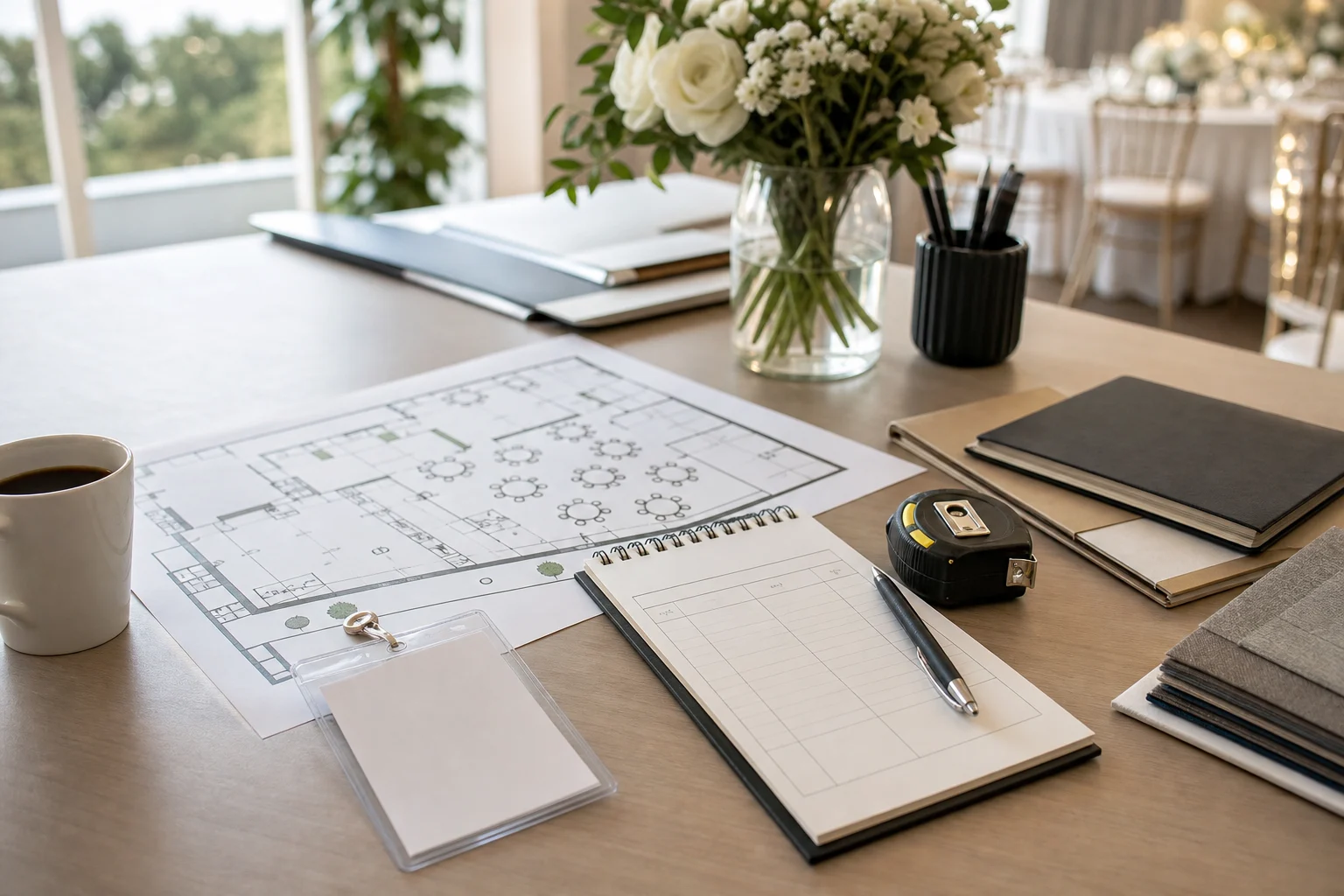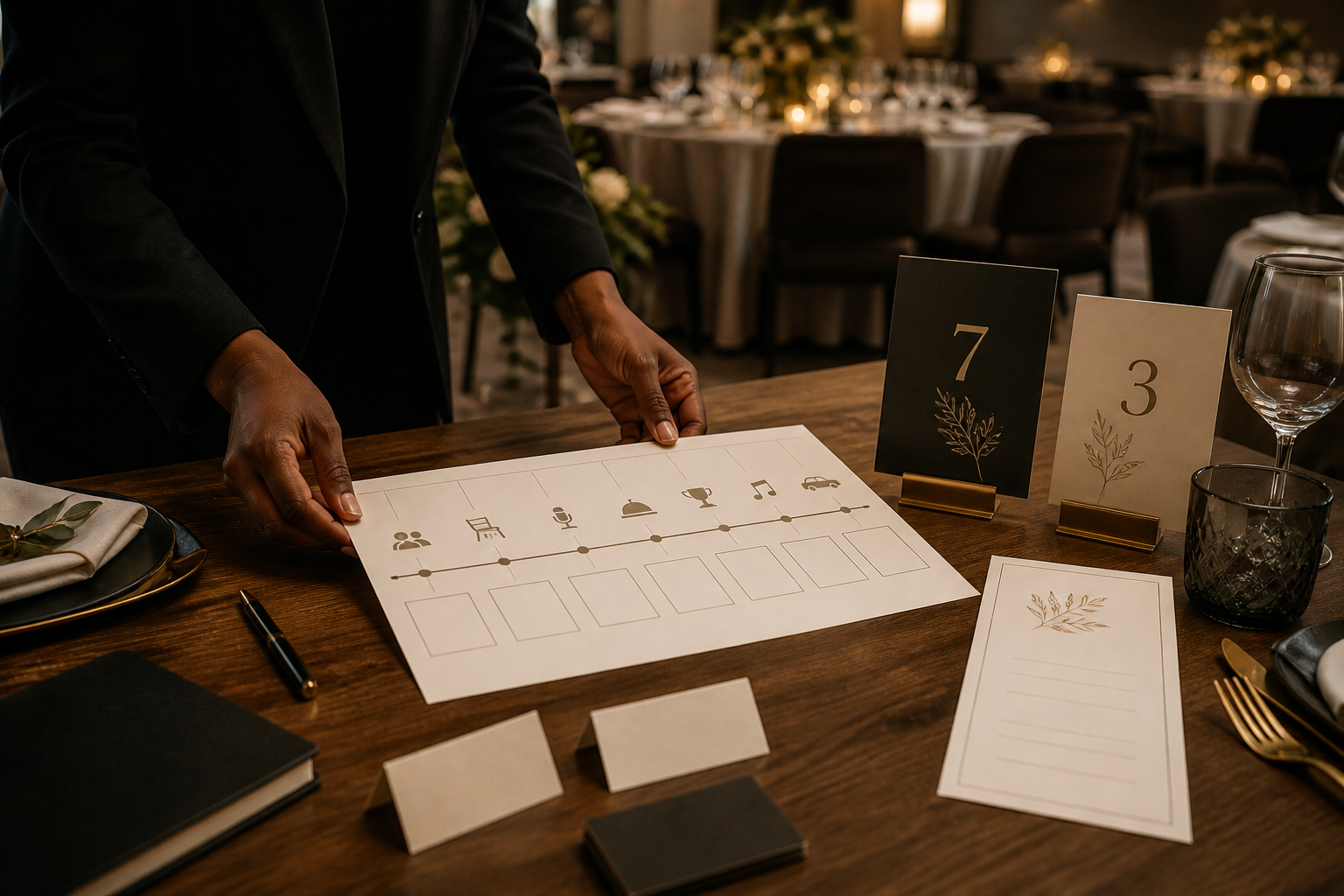
A corporate dinner event planning checklist should follow the guest journey, not just a supplier list. Start by agreeing the purpose and guest mix, then map arrival, seating, meal service, speeches, awards, optional entertainment and departure. Give each handoff one owner and a visible decision. That keeps a dinner-led programme welcoming for guests and usable for venue, catering, production and activity teams. Use the sequence below to turn a broad corporate dinner brief into an event-day plan; confirm actual timings, venue rules and supplier scope in the booking rather than relying on a generic template.
Start with the purpose and the guest decision
Before choosing a menu, entertainment option or room layout, write down what the dinner is meant to do. It might be a thank-you, a recognition evening, a client-hosting moment or a chance for colleagues to reconnect. The purpose changes what the room needs from the programme.
Settle these decisions first:
- What should guests understand, feel or remember when they leave?
- Who is attending, and which guests need a quieter, more accessible or less participatory route through the evening?
- Which parts of the programme are fixed, and which can move if arrivals or formalities change?
- Who approves the budget, programme, creative direction, guest information and supplier changes?
- What information must be collected through the RSVP so the venue and catering teams can plan responsibly?
One event lead should own the master version. Finance, venue, programme, brand, catering, privacy and supplier teams can each own their part, but the dinner needs one person who can see how a change in one part affects the rest.
Corporate dinner event planning checklist: map the evening
Build the run-of-show from the guest’s point of view. The exact clock times belong to the event brief, so use the phases below as planning prompts rather than universal timings.
| Guest phase | Decisions to lock | Handoff to make visible |
|---|---|---|
| Arrival and welcome | Arrival window, welcome point, host, registration or seating information, and what happens when guests arrive early or late. | Venue and event lead share the current guest and access information with the welcome team. |
| Seating and first service | Table plan, dietary and access notes, seating changes, service sequence and the point at which guests are asked to take their seats. | Guest or RSVP owner hands the final relevant details to venue and catering. |
| Welcome and formalities | Host, speakers, awards or recognition moments, cue order, sound checks and who can pause an activity. | Programme owner gives the venue, production and activity teams one current run sheet. |
| Dinner and conversation | The parts of the meal that need the room’s attention, the points when guests can move, and any planned reset between formal and social sections. | Catering and programme owners confirm where movement is welcome and where it would create friction. |
| Optional entertainment | Its job, operating window, location, queue route, access, power and pause plan. | Event lead and supplier confirm the position and the person who can make a timing call. |
| Departure and close | Departure information, remaining guest questions, output handover and the close-out owner. | Event lead confirms what is delivered, to whom and under which agreed permissions. |
This simple map exposes a common planning gap: the dinner has a start and a finish, but no owner for the transitions between them. Those transitions are where guests queue, move, wait, miss cues or need help.
Make arrivals useful without creating a bottleneck
The arrival period sets the tone for the rest of the dinner. Give the welcome team the current guest information, the venue access instructions and a clear answer to the first practical questions guests are likely to ask. If seating cards, a host or registration is part of the plan, show its position on the working floor plan.
Keep optional activity away from the check-in pinch point. A visible experience can attract interest, but a queue beside the welcome desk makes both the arrival and the activity harder to manage. Decide whether guests should be able to join immediately, after they have been seated or only once the formal opening is complete.
If arrivals are staggered, record what the first guests can do while they wait and how the team will signal the transition into the seated programme. Do not make the host reconstruct that decision while greeting people.
Settle seating, catering and access together
Seating is not only a table-plan exercise. It affects conversation, service, sightlines and the route guests take through the room. Before the plan is treated as final, confirm:
- the latest RSVP information that venue and catering actually need;
- dietary, accessibility and other guest requirements through the organisation’s approved process;
- who can authorise a last-minute seating change;
- whether the room layout leaves a clear route for staff and guests; and
- which moments require guests to stay seated or move to another area.
Keep one current version of the table plan and run-of-show. Separate email attachments create uncertainty when a late guest, changed table or programme adjustment affects several teams at once.
Protect speeches, awards and the dinner’s formal rhythm
Speeches and awards give the dinner its shared moments. Put the host, speakers, recognition order, cue points and sound or production checks into the same programme that the venue and suppliers receive. Confirm who makes the call if a speech runs long or an award sequence changes.
Any optional experience should pause, soften its promotion or remain outside the formal sightline when the room needs to listen. The awards evening entertainment guide has a useful test for choosing an activity that gives the room energy without competing with the stage.
The decision is not whether the dinner should contain entertainment. It is when guests can participate without splitting their attention between a speaker, a meal and a queue.
Give optional entertainment a defined window
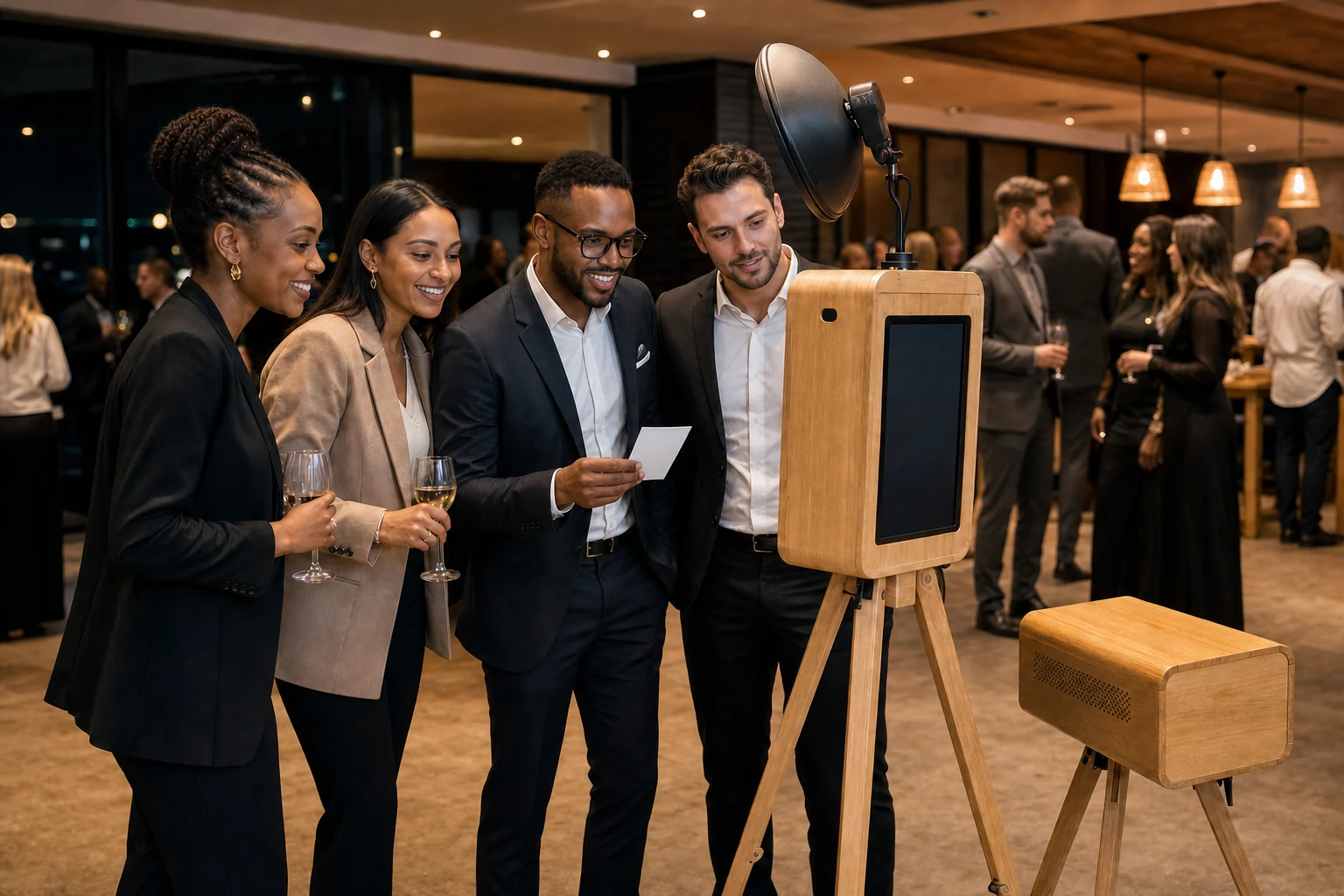
Choose an activity by the job it needs to do. Networking, recognition, a take-home keepsake and a social reset can all be valid objectives, but they do not require the same placement or guest instruction. Keep the activity optional and easy to understand for guests who want to join, watch or continue their conversation.
If a staffed AI portrait booth is part of the booking, the guest journey has a clear front-to-rear sequence: guests choose an available style on the front portrait screen, face the round front camera for the photograph, then review the completed result on the larger rear screen. Keep that operating window away from the arrival queue and seated speeches. Confirm the floor position, access route, practical power, queue plan and pause decision in the event brief.
The corporate AI photo booth service describes the hosted format and the event details needed for a useful quote. The specific style menu, print treatment, digital delivery and any custom work should follow the agreed booking, not an assumption made from a generic package description.
Plan departure and the final handoff
The close deserves as much clarity as the welcome. Give the event lead and venue the latest departure information that matters to the room, whether that means transport waves, a formal close or a final social period. Keep the route to exits clear and decide who answers last-minute guest questions.
If the event includes prints or configured digital delivery, confirm the intended handover and permitted use in the brief. A guest receiving an agreed portrait is a different decision from the organisation reusing that portrait for marketing. Keep delivery, privacy and any later campaign permission separate.
Record who closes the supplier conversation after the dinner: the person who confirms what was delivered, captures unresolved questions and stores the useful learning for the next event.
Write the handoffs before event week
Use one short handoff list alongside the run-of-show:
- Event lead: owns the current programme, guest decision and timing call.
- Venue contact: confirms access, room layout, service routes and practical supplier instructions.
- Catering owner: receives the final relevant guest information and service sequence.
- Programme or production owner: confirms speakers, awards, cues, sound and the formal pause points.
- Activity or entertainment supplier: receives the operating window, floor position, access route and named on-site contact.
- Privacy or brand owner: approves guest-facing wording, output use and any custom creative requirements.
The corporate event planning timeline is useful for the earlier brief-to-event-day decisions. This dinner checklist is the event-day layer: the sequence guests experience once the room is about to open.
Use a final corporate dinner sign-off
Before guests arrive, the event lead should be able to answer these questions without searching through old messages:
- What is the dinner’s purpose, and who can make the final timing decision?
- Is the latest guest, seating, dietary and access information with the people who need it?
- Are the arrival point, table plan, service routes and departure route clear to the venue team?
- Does the current run-of-show include speeches, awards, dinner service, pauses and the planned social windows?
- Does every optional activity have an agreed job, position, queue route, operating window and pause plan?
- If an AI portrait booth is included, do guests know the front capture side from the rear review side, and does the supplier have the correct access and contact details?
- Who confirms the final handover, privacy decision and post-event close-out?
A corporate dinner event planning checklist is working when every transition has an owner and guests never have to feel the handoffs behind the evening. If a hosted AI portrait experience belongs in the programme, share the corporate dinner brief with AI Booth and include the date, venue, event hours, guest estimate and likely operating window so the event-specific scope can be assessed.